


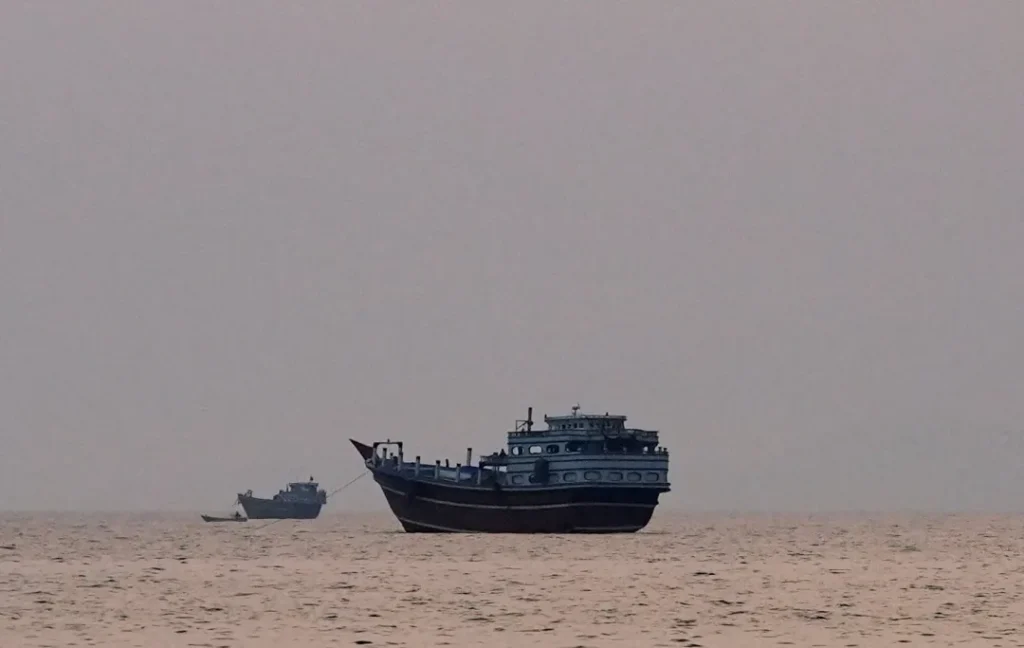
Manila, Philippines. U.S. Secretary of State Marco Rubio said the United States remains willing to negotiate an end to the Iran crisis, but Tehran is not serious about talks as the conflict disrupts major energy shipping routes.
Rubio made the comments during a meeting of Southeast Asian foreign ministers, as threats to shipping in the Red Sea and Strait of Hormuz raised concerns over Saudi oil exports.
Red Sea shipping disruption
Three oil tankers carrying Saudi crude to Asia reversed course in the Red Sea on Tuesday, apparently in response to threats from Yemen’s Iran-aligned Houthis.
The Houthis, who control the coast at the mouth of the Red Sea, announced a naval blockade on Saudi Arabia on Monday, opening a potential new front in the war that has killed thousands of people across the Gulf since U.S. and Israeli attacks on Iran began on February 28.
Iran has also threatened shipping through the Strait of Hormuz, the waterway leading out of the Gulf. The Red Sea has served as the main alternative route for millions of barrels of Saudi oil per day.
Diplomatic efforts
A senior Iranian official told Reuters on Monday that Tehran had received a proposal from mediators for a 10-day ceasefire, aimed at salvaging the interim ceasefire agreement signed by the United States and Iran in June. That agreement replaced an earlier April ceasefire.
Iranian Interior Minister Eskandar Momeni has also visited mediator Pakistan and asked Islamabad to continue its efforts, indicating that diplomacy remains active.
Rubio’s warning
Rubio said Washington was “always committed to diplomacy” but questioned whether Iran shared that commitment.
“The problem we’re having right now is that they’re not serious about talks. If they’re serious, we’re serious. If they’re not, then we will do what’s necessary to protect our interests, and also the interests of our allies,” Rubio said.
He said Iran could not be allowed to control the Strait of Hormuz, arguing that such a move would establish a dangerous precedent for other regions, including Southeast Asia, where several countries have territorial disputes with China in the South China Sea.
“If we create a precedent in the Middle East where a nation state can decide that they are going to control an international waterway, charge a toll, and if you don’t pay them blow up your ships, we have created a very dangerous precedent, which will repeat itself in other parts of the world, including in this region,” Rubio said.