


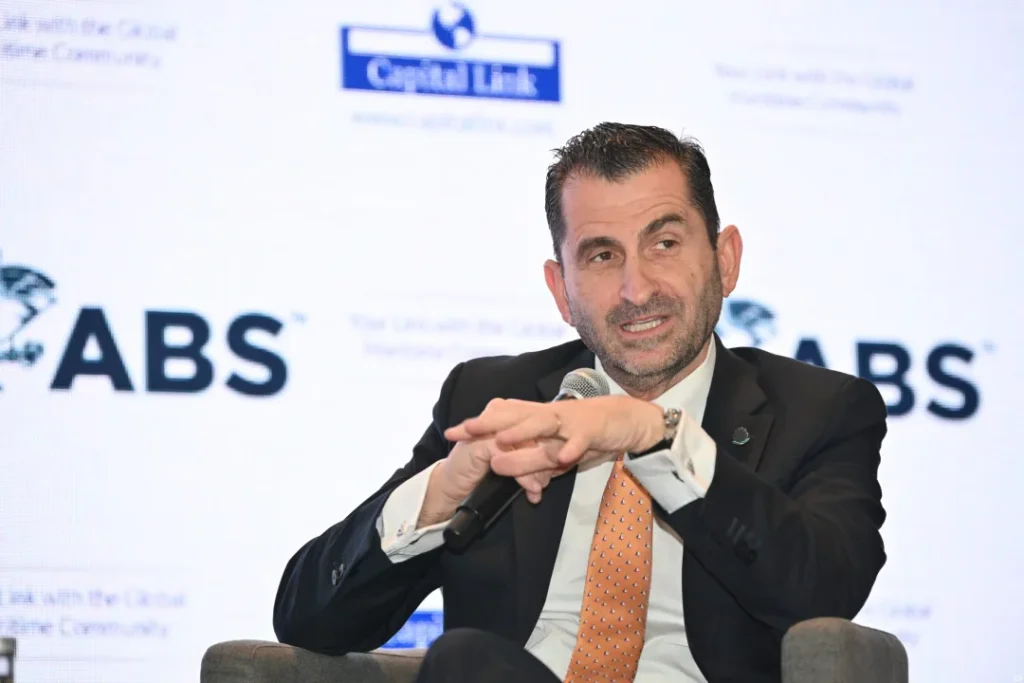
Singapore, Singapore. Global shipping leaders gathered in Singapore this week to discuss how geopolitical disruption, regulatory uncertainty, decarbonisation and digitalisation are reshaping the maritime industry. The talks came as the sector faces rising pressure across trade routes, finance, fuel choices and fleet operations.
Forum held during Singapore Maritime Week 2026
The 8th Annual Capital Link Singapore Maritime Forum took place this week at the Westin Singapore during Singapore Maritime Week 2026, attracting more than 600 participants from across the global maritime community, according to Capital Link.
Held in partnership with ABS, and in cooperation with Columbia Shipmanagement and Singhai Marine Services, the forum brought together shipowners, charterers, financiers, regulators, insurers, classification societies and technology providers.
Discussion topics and Singapore’s role
Discussions covered global trade disruption, Red Sea diversions, sanctions, decarbonisation, fleet performance, ship finance, the changing energy landscape and the role of charterers in a more volatile market.
Capital Link said the forum also highlighted Singapore’s role as a leading maritime hub at a time when shipping is being forced to respond to geopolitical tensions, market uncertainty and rapid technological change.
Speakers and keynote address
Opening remarks were delivered by Nicolas Bornozis, president of Capital Link, Demetris Chrysostomou, CEO Asia Region at Columbia Group, and Terence Zhao, managing director of Singhai Marine Services.
John McDonald, chairman and chief executive officer of ABS, delivered the keynote address, focusing on how Maritime Singapore enables innovation at scale.
McDonald said the industry was “all pulling in the same direction but not always for the same reasons, and not always at the same pace”, with owners, regulators, crews and ports all experiencing change differently. What they share, he said, is “a need for confidence”.
He said the real barrier to maritime progress was not ambition, or even capital, but confidence that new fuels and energy-saving technologies can be used safely, that digital systems can hold up under pressure, and that today’s investment decisions will still make sense tomorrow.
What do you see as the biggest source of uncertainty for the maritime industry right now?