


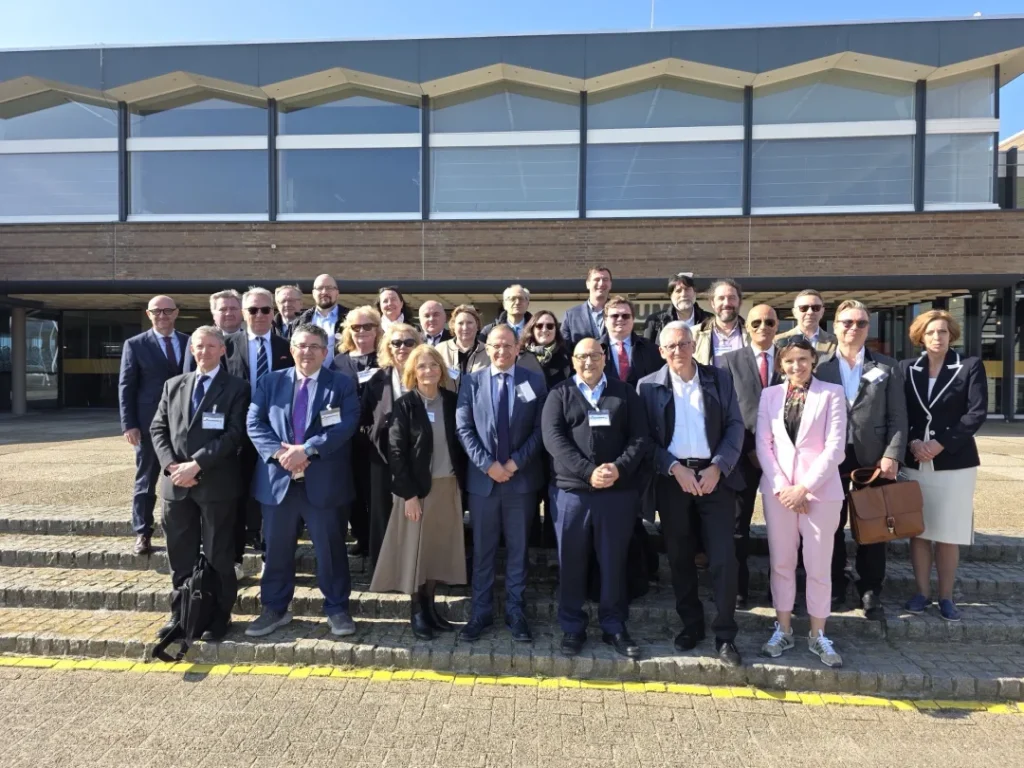
Brussels, Belgium. Cyprus Chief Scientist Demetris Skourides concluded a series of high-level meetings in Brussels and the Netherlands aimed at strengthening Cyprus’ role in artificial intelligence, ocean policy and science-for-policy collaboration within the European Union.
Engagements in Brussels
According to an announcement released on Thursday, the meetings followed Skourides’ participation in the Women Who Built Europe Summit in Brussels, where he engaged with European leadership and institutions on advancing innovation and policy integration.
During his visit, Skourides met European Commissioner for Fisheries and Oceans Costas Kadis, with discussions focusing on the role of artificial intelligence in supporting ocean-related policy and implementation.
Focus on the European Ocean Pact and Ocean Eye
Discussions placed particular emphasis on the European Ocean Pact and the Ocean Eye initiative, as well as the broader development of Europe’s blue economy.
The talks explored how AI-powered systems combined with advanced sensor-based technologies can enhance monitoring, forecasting and decision-making capabilities across marine environments. These technologies are designed to support Europe’s sovereign ambitions by enabling more effective and responsive policy implementation in ocean governance.
“The Ocean Eye initiative represents a powerful convergence of European sensor-based technologies and artificial intelligence, enabling a shift from predictive insight to actionable intelligence,” Skourides said. “This transition is critical in equipping policymakers and decision-makers with the tools required to address complex ocean challenges in real time,” he added.
Joint Research Centre meeting in Petten
On March 19 and March 20, 2026, Skourides represented Cyprus at the Board of Governors of the Joint Research Centre in Petten, Netherlands, where strategic discussions focused on the role of science in evidence-based policymaking.
Key topics included the work of JRC Unit C.4 on vehicle market surveillance, alongside advanced methodologies in the diagnosis and prognosis of hazards in nuclear emergencies.
What do you think the use of AI in ocean governance could change for EU policymaking?