


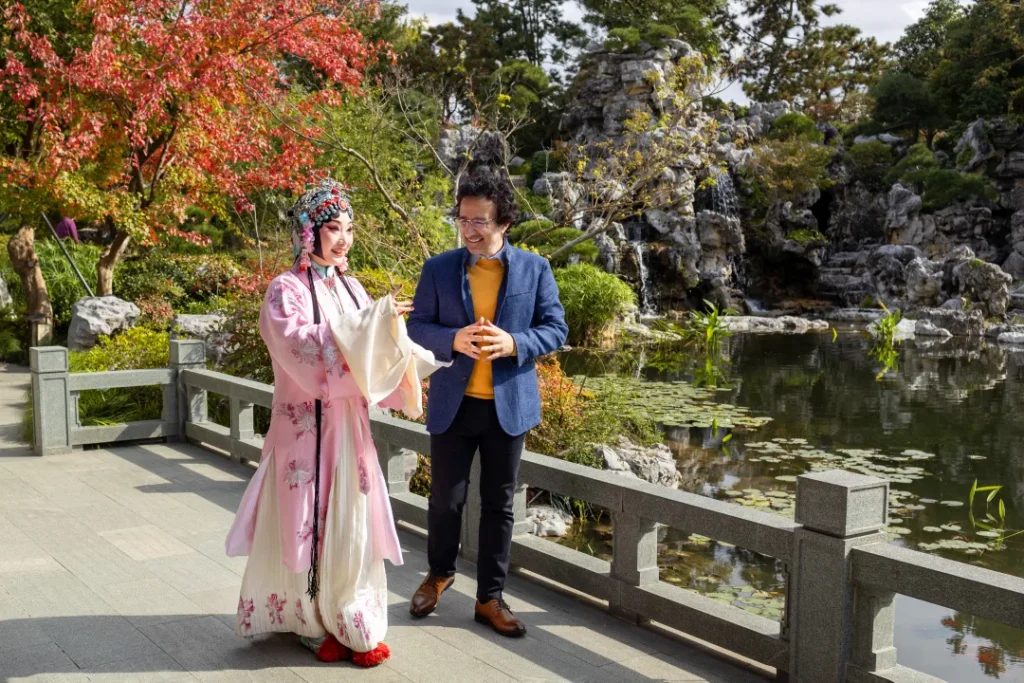
Shanghai, China. Cypriot composer Marios Joannou Elia has created Sound of Shanghai, a cinematic audiovisual project exploring the sounds of one of China’s largest technological and financial hubs. The work brings together recordings from across the city to transform its urban and cultural soundscape into music.
Project concept
Shanghai, whose name means City on the Sea, is presented in the project through the sounds of its modern seafront and ancient centre. Marios said the work was driven by the question of how a city can be transformed into music.
He described Shanghai as one of the defining symbols of contemporary China, where history, innovation, cultural heritage and future vision coexist with extraordinary intensity.
Scale of production
The project involved more than 250 musicians, more than 6,500 audiovisual fragments and over 700 audio tracks recorded in more than 90 locations. According to Marios, this created a three-dimensional sonic experience designed to surround audiences with the acoustic atmosphere of Shanghai.
Cultural connections
Although the project is centred on Shanghai, Cyprus is reflected in it through Marios’ approach to cultural parallels. One example is Gu Embroidery, a Chinese textile tradition dating back to the Ming Dynasty, which is represented through the recorded sounds of thread, needle and scissors interwoven with a traditional Chinese ruan orchestra.
A second example is traditional shadow puppetry, whose gongs, drums and accompanying instruments were authentically recorded and then layered with original percussive and melodic lines.
Marios said these artistic traditions have counterparts in Cypriot cultural heritage, including embroidery traditions such as Lefkara lace, crochet and needlepoint lace, as well as shadow theatre known as Karagiozis. He said these parallels show how culture connects people in different places.
Shanghai and Cyprus as crossroads
Marios said Shanghai and Cyprus, despite their different scale, share a functional identity as gateways of exchange. He said both developed through openness to external commerce and that their roles as commercial crossroads shaped their histories and cultural identities.
Urban soundscape
The recorded sounds in Sound of Shanghai combine echoes of the city’s past with contemporary and futuristic elements. These include everyday urban sounds such as the resonance of Huangpu ship horns and engines, as well as warning megaphones at the Bund, forming what the project describes as an acoustic cartography of one of Shanghai’s most visited areas.
Opera and musical composition
Kunqu opera singer Zhao Jinyu is central to the work. The contrast between this ancient art form and Shanghai’s globalised urban environment is reflected in the project’s subtitle, Opera of a Cosmopolis.
Marios said the work is rooted in original music and blends traditional Chinese instruments with European timbres, a combination he said reflects Shanghai’s history as a cultural crossroads.
Brainwave recordings
Marios also incorporated his own brain activity into the project. He recorded his brainwaves on arriving in China and again after three months in Shanghai, and the electrical activity was later converted through a specially developed algorithm into musical parameters, allowing neural activity to be turned into electronic sound.