


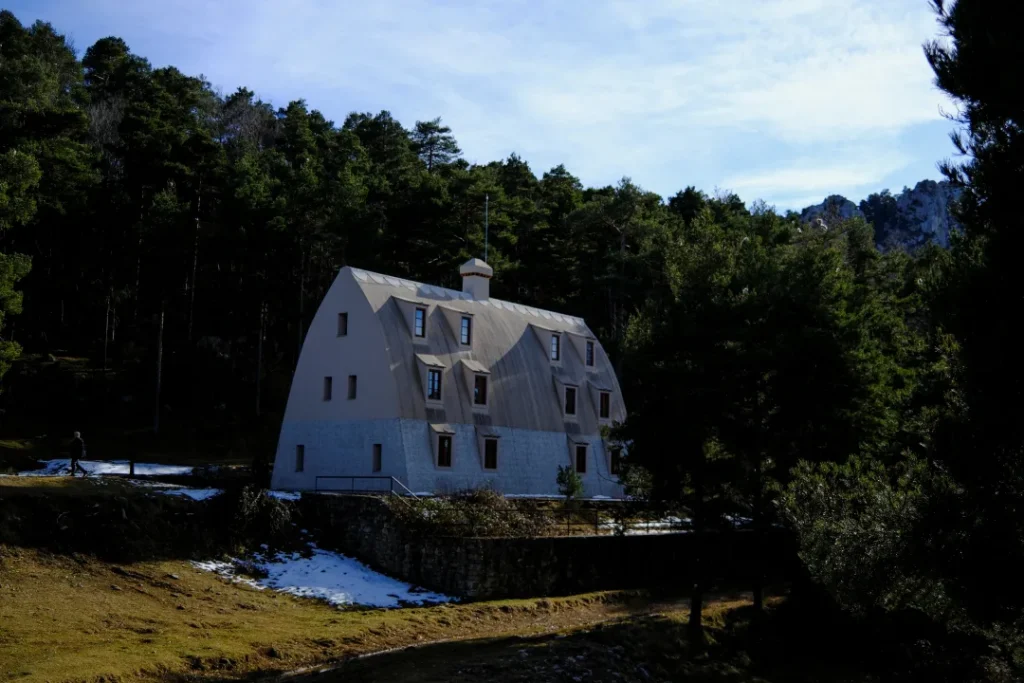
La Pobla de Lillet, Spain. Spanish authorities said an expert report has confirmed renowned modernist architect Antoni Gaudi designed the Xalet del Catllaras, ending speculation over the building’s authorship. The three-storey mountain shelter was built in the early 20th century in a remote forest area of Catalonia.
Long-standing link to Gaudi
Gaudi (1852-1926) had long been linked to the Xalet del Catllaras, built for workers at a cement factory about 125 kilometres (78 miles) north of Barcelona, because the factory was owned by industrialist Eusebi Guell, for whom Gaudi built several projects. Authorities said there had been no thorough technical and historical analysis to confirm Gaudi’s role until a report was commissioned from a Gaudi scholar in 2023.
Findings and evidence
The report’s author, Galdric Santana, said the building shows a new architectural approach by Gaudi. Santana, who also chairs commemorative events planned throughout 2026 to mark a century since Gaudi’s death, determined Gaudi designed the house, built between 1901 and 1908, because it contains structural elements used only by Gaudi at that time.
He cited specific types of arches, vaults and rooms separated by walls positioned at 45-degree angles, and said these techniques would not be followed by Gaudi’s disciples until 10 to 15 years later. Santana said he identified geometric, structural and compositional evidence by analysing floor plans for other Gaudi buildings, using 3D techniques, and examining old documents and photographs.
Supervision and changes to the plan
Santana said it had been feasible to consider Gaudi might not be the designer given the building’s remoteness and the fact that he had several prominent projects underway during those years, including Barcelona’s Park Guell and Casa Batllo. He said he believes Gaudi did not supervise construction because the completed building was modified from the original plan.
Santana said this could explain why Gaudi never publicly acknowledged designing the Xalet. He added that it was common at the time for architects to withhold their signature from a building if the finished work deviated from the original blueprint.
What do you think the report’s findings mean for how this building will be studied and presented to the public?