


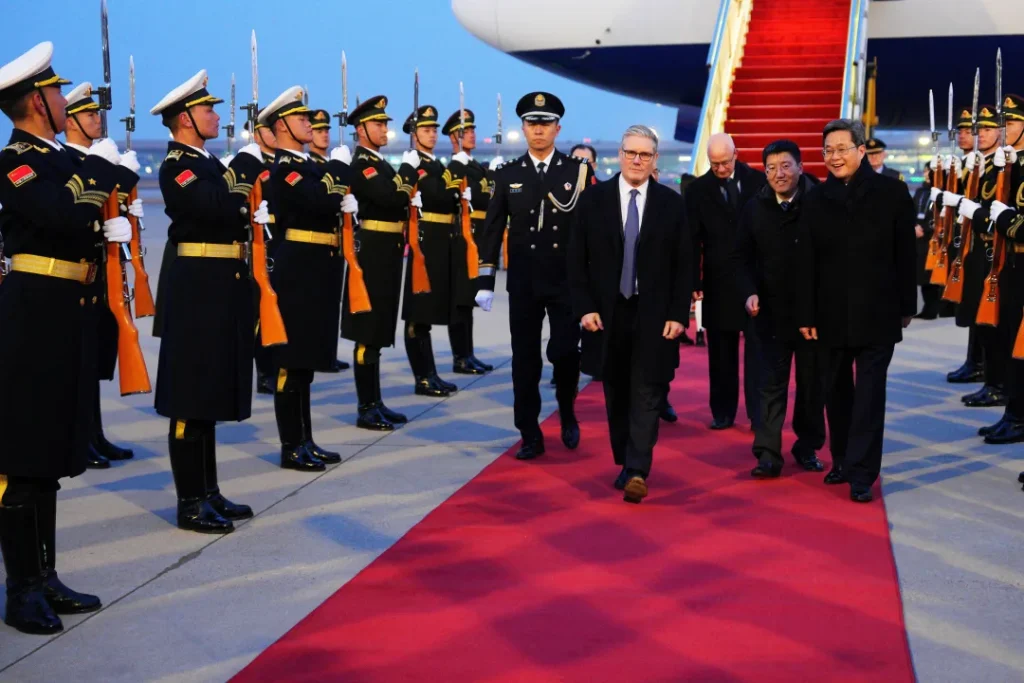
Beijing, China. Keir Starmer began the first visit to China by a British prime minister since 2018 on Wednesday, aiming to strengthen political and business ties with Beijing as relations between Western countries and the U.S. become more volatile.
Engagement and security concerns
Starmer, whose approach to China has been criticised by some British and U.S. politicians, said Britain must remain vigilant about potential security threats but could not afford to ignore the opportunities presented by the world’s second-largest economy. He told reporters on the plane that “it doesn’t make sense to stick our head in the ground and bury it in the sand when it comes to China,” adding that the trip would be important and that “we’ll make some real progress.”
Meetings with Chinese leaders and business delegation
Travelling with a delegation of more than 50 business leaders, Starmer is scheduled to meet President Xi Jinping and Premier Li Qiang on Thursday, before travelling to Shanghai on Friday for talks with local executives.
Potential shift after years of acrimony
The visit could mark a shift in ties between Britain and China after years of deep acrimony over Beijing’s crackdown on political freedoms in Hong Kong, China’s support for Russia in the Ukraine war and allegations by British security services that China regularly spies on politicians and officials. For China, the visit offers a chance to portray itself as a stable and reliable partner at a time of global disorder.
Tensions with Trump and wider Western diplomacy
European and other Western countries have engaged in increased diplomacy with China as they hedge against unpredictability from the United States under President Donald Trump. Starmer’s trip follows tensions with Trump over his threats to seize Greenland, his criticism of Britain’s deal to cede sovereignty of the Chagos Archipelago, including an island with a U.S.-UK air base, to Mauritius, and his comments that NATO allies avoided front-line combat during the war in Afghanistan. On Saturday, Trump threatened to impose a 100% tariff on Canadian goods if Canada’s prime minister, Mark Carney, signed a trade deal with China.
What do you think this visit could mean for future UK-China relations?