


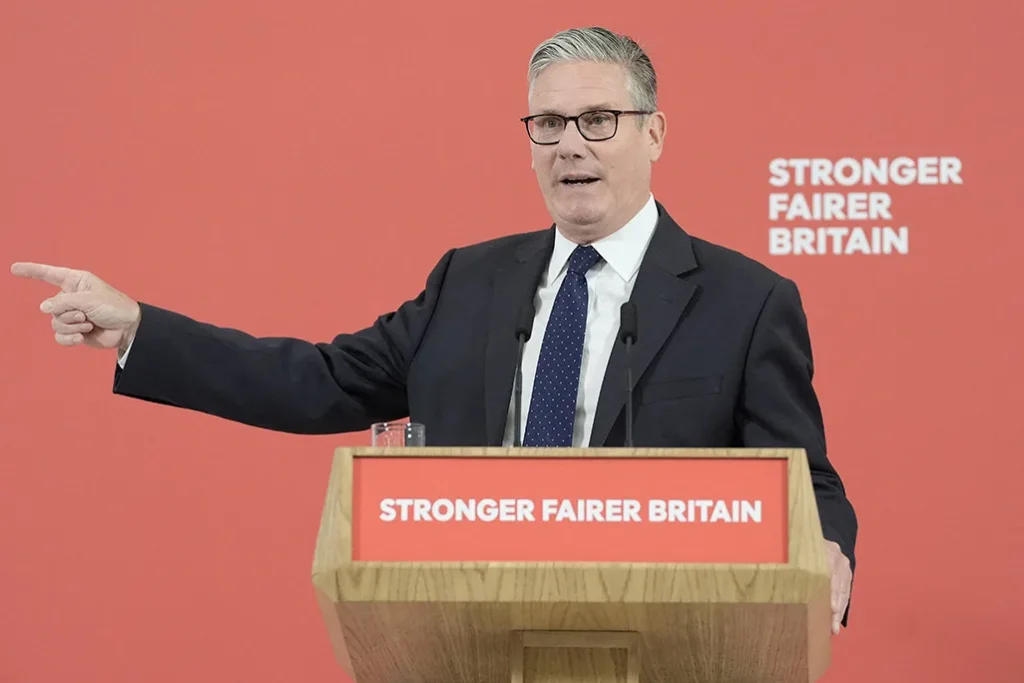
London, United Kingdom. Prime Minister Keir Starmer on Tuesday unveiled a long-delayed Defence Investment Plan, promising an extra £15 billion in funding to better equip Britain for future warfare. He described the blueprint as his legacy ahead of what is likely to be his last major policy announcement.
Plan and spending targets
Starmer said the plan had been strengthened after last-minute discussions between the finance ministry and Britain’s new defence minister, Dan Jarvis. He said it went further than a previous document that had prompted his ally, John Healey, to resign.
The plan foresees defence spending of nearly £80 billion a year by 2029. Starmer is due to take the proposal to Ankara for a NATO meeting on July 7-8, where he is expected to signal that Britain is on course to meet its commitment to raise defence spending to 3.5% of GDP by 2035.
Political context
With his expected successor Andy Burnham due to take power as soon as July 20, Starmer said future governments could “build” on the blueprint. Some critics said the plan, which was delayed for more than nine months, was too little and too late.
Military capabilities and industry support
Speaking to an audience at a defence company in southern England, Starmer said the plan would strengthen Britain’s defence.
“When the world is arming and aggression is rising the best way to avoid war is to prepare for it, the best way to defend is to deter – to have the strength to make your adversaries to think again before they act,” Starmer said.
He said the blueprint would provide £5 billion for investment in drones and autonomous weapons, create a hybrid Navy and make the army more lethal.
The plan would also strengthen Britain’s nuclear deterrent and support a programme to build a next-generation stealth fighter jet for the Royal Air Force. Starmer said it would also create jobs and support economic growth.
Reaction
Matt Roberts, national officer of the GMB trade union, welcomed the plan and said it offered “some stability for a sector besieged by insecurity”.
“The challenge now is delivery – workers will judge this plan on real jobs, real investment, and real outcomes.”