


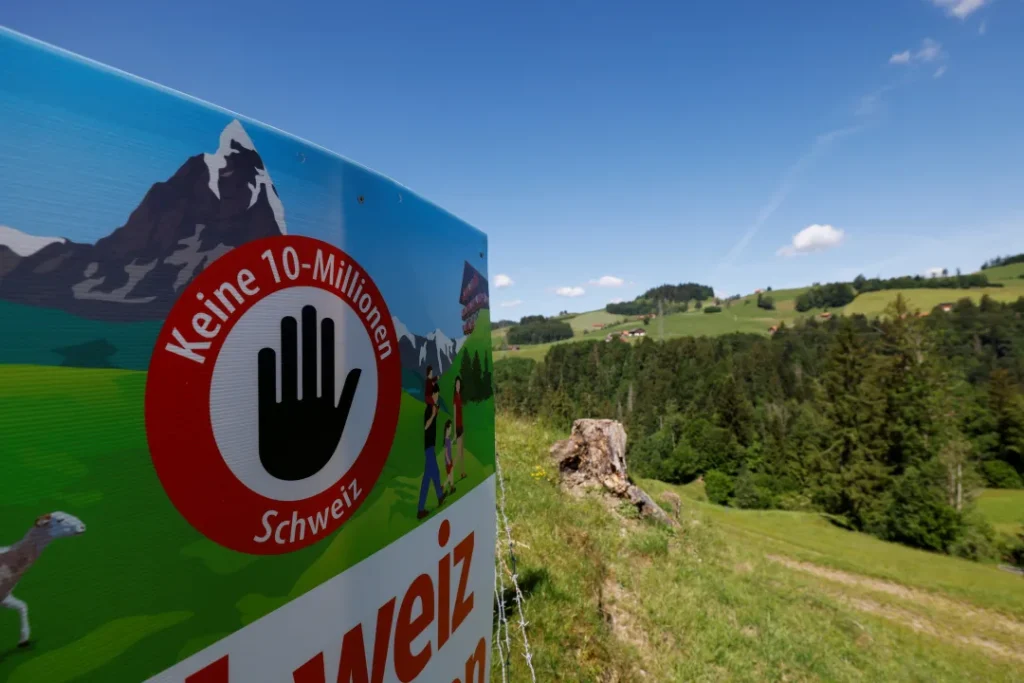
Bern, Switzerland. Swiss voters on Sunday rejected a proposal to cap the country’s population at 10 million, according to a projection by national broadcaster SRF. The result showed voters prioritised economic stability and relations with the European Union over concerns that immigration was straining public services and increasing rents.
Projected result
SRF, which traditionally calls referendum votes, projected that about 45% of voters supported the proposal and 55% opposed it.
Economic and EU concerns
The vote had drawn comparisons with Britain’s 2016 Brexit referendum and had raised concerns among businesses that it could jeopardise the free movement of labour between Switzerland and the EU, the country’s main trading partner.
What the proposal said
The proposal was championed by the right-wing Swiss People’s Party. It stipulated that Switzerland’s population must not exceed 10 million before 2050 and that, if it did so for two years, the country should end freedom of movement with the EU.
Why the initiative failed
Urs Bieri of polling firm GFS Bern said the initiative did not pass because, although concern about population growth is widespread, voters were not persuaded by the plan and were concerned about its possible side-effects.
“Voters were worried about negative consequences for Switzerland’s relationship with the EU and for the labour market,” he said.
“People are also worried about things like having enough care and health workers. Also there’s a feeling that in the current international environment it’s not sensible for a small country to do this,” Bieri added.
Population trends
Switzerland’s population stands at 9.1 million and has grown more quickly than in the surrounding EU. Foreigners account for nearly 28% of the population, and official projections forecast the total will reach 10 million by the early 2040s.
Campaign context
Polls had forecast a close outcome, and the projected result matched a final survey by GFS Bern, which had predicted the proposal would be narrowly rejected.
Support for the measure reflects broader backing across Europe for policies aimed at curbing immigration. Campaign posters said only 10% of newcomers were skilled workers and that asylum seekers were more likely to be rapists.