


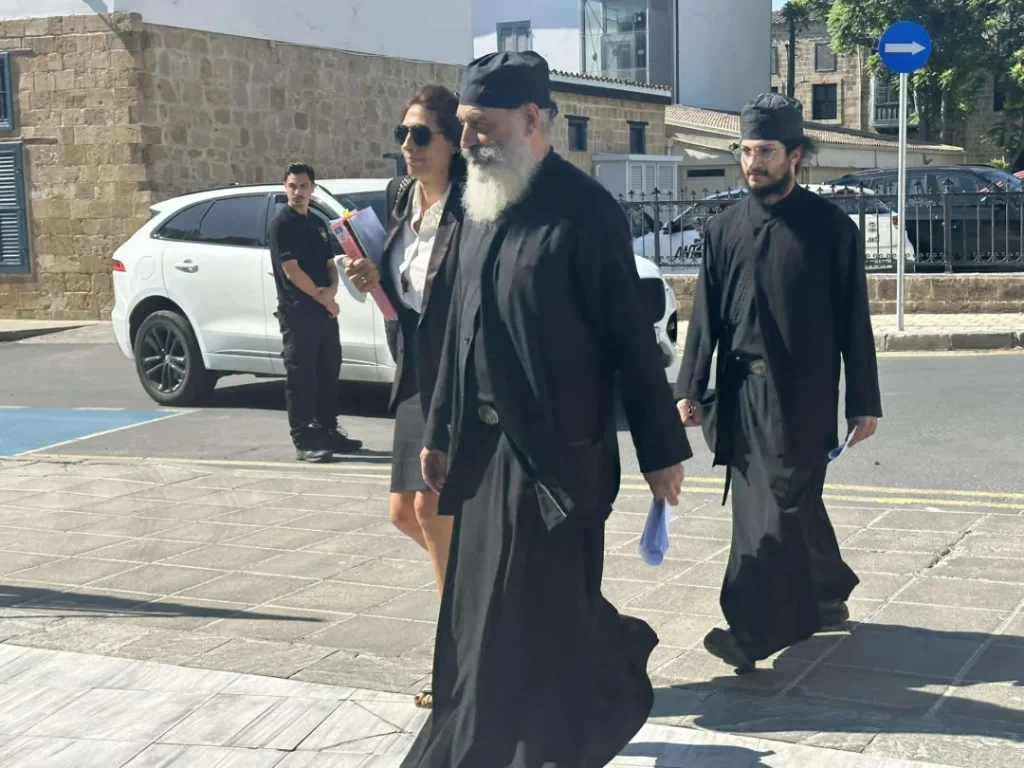
Nicosia, Cyprus. The trial of two monks from the Osiou Avakoum monastery continued on Tuesday at Nicosia criminal court, with defence lawyers objecting to a number of evidentiary items presented by prosecutors. The defence argued that the evidence was obtained illegally by police.
Charges before the court
The defendants, monks Nektarios and Porfyrios, face charges including conspiracy to defraud, forgery and use of false documents, theft by proxy, handling stolen goods, money laundering, interfering with judicial proceedings, and submitting fraudulent tax returns.
Defence challenges evidence
In court on Tuesday, the lawyers for the two monks argued that several items the prosecution seeks to submit should be ruled inadmissible. The objection mainly concerns photographs taken by police who, according to the defence, entered the monastery without a warrant.
The attorney for Nektarios referred to photographs depicting a briefcase, personal items, safes, envelopes containing cash, religious symbols, holy relics, crosses and other artifacts. He said these had been illegally removed from the monastery and taken to the Tamasos bishopric.
Claims over removal of items
According to the lawyer, on the night of March 5, 2024, after the monastery had closed its gates, a number of individuals wearing hoods entered the premises and removed various objects, which later ended up at the Tamasos bishopric.
He said the items subsequently came into the possession of police and called for a trial within a trial to determine whether they had been obtained unlawfully.
Similar arguments were made by the attorney for the second defendant, Porfyrios.
Prosecution response
The lead prosecutor said that if a trial within a trial is to be held, the defence must specify each individual item it claims was obtained unlawfully.
In response, Nektarios’ lawyer said that most of the items in question are his client’s personal property. He added that the remaining items were under the monk’s legal possession and management.
Link to prosecution case
The lawyer also told the court that various ecclesiastical artifacts, as well as the monastery’s reliquary, are tied to the way prosecutors are presenting their case, namely the allegation that the two monks exploited the religious items for personal financial gain.