


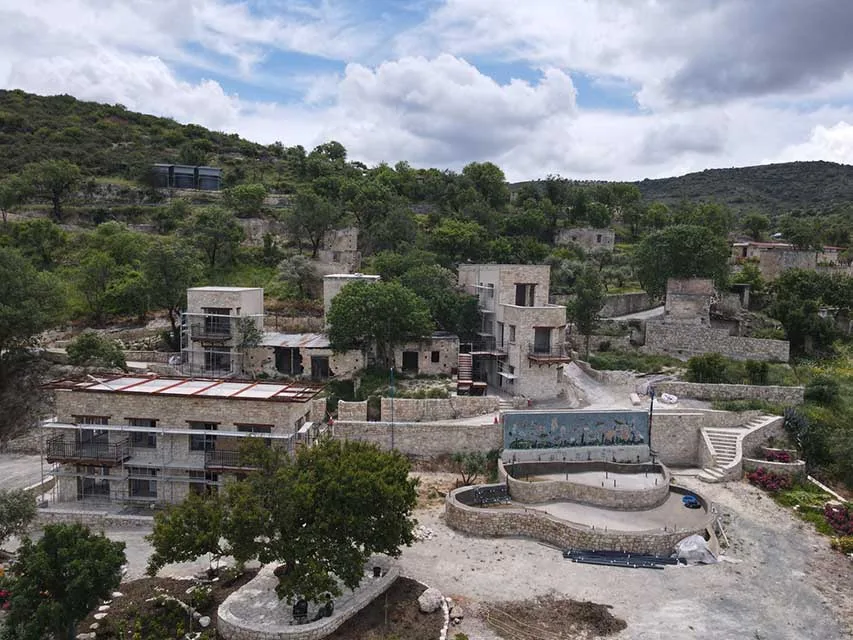
Limassol, Cyprus. Trozena, an abandoned village in the Diarizos valley, has in recent weeks become the centre of a debate involving foreign investment, environmental protection, public access and national identity. The village’s history is also presented as part of Cyprus’ wider geography of abandonment.
Arrival in Trozena
The account describes travelling along small winding roads through the wine villages of Limassol and descending into the Diarizos valley. From the road, Trozena appears as a scattering of stone ruins, silent and largely forgotten for decades, but the view changes upon entering the village.
Debate and broader context
The village is described as the focus of a multifaceted public debate, while the account argues that understanding Trozena requires stepping back from the surrounding discussion. It notes that Cyprus has a long and often forgotten geography of abandonment, with historical records documenting dozens of villages emptied mostly by conflict, displacement, economic decline and neglect.
How villages were emptied
Some villages are described as casualties of intercommunal violence in the 1960s and the upheaval of 1974, while others faded as younger generations left for cities. Trozena is placed in the latter category.
Trozena’s decline
Trozena is described as a small Greek Cypriot village that was never a thriving settlement and gradually emptied during the late 20th century. Its final residents are reported to have left in the 1990s.
Gerovasa in view
From the bottom of Trozena, the account says the nearby village of Gerovasa is visible across the valley. Gerovasa is described as a Turkish Cypriot village abandoned in 1964 when residents fled intercommunal violence, and the account reflects on how the two villages, linked by geography and history, once coexisted.
A surviving memory
The account says that the memory of Trozena survives in 86-year-old Ellou Nikolaides, who was born in Trozena in 1939.
What do you think should be prioritised in decisions about Trozena: investment, environmental protection, or public access?