


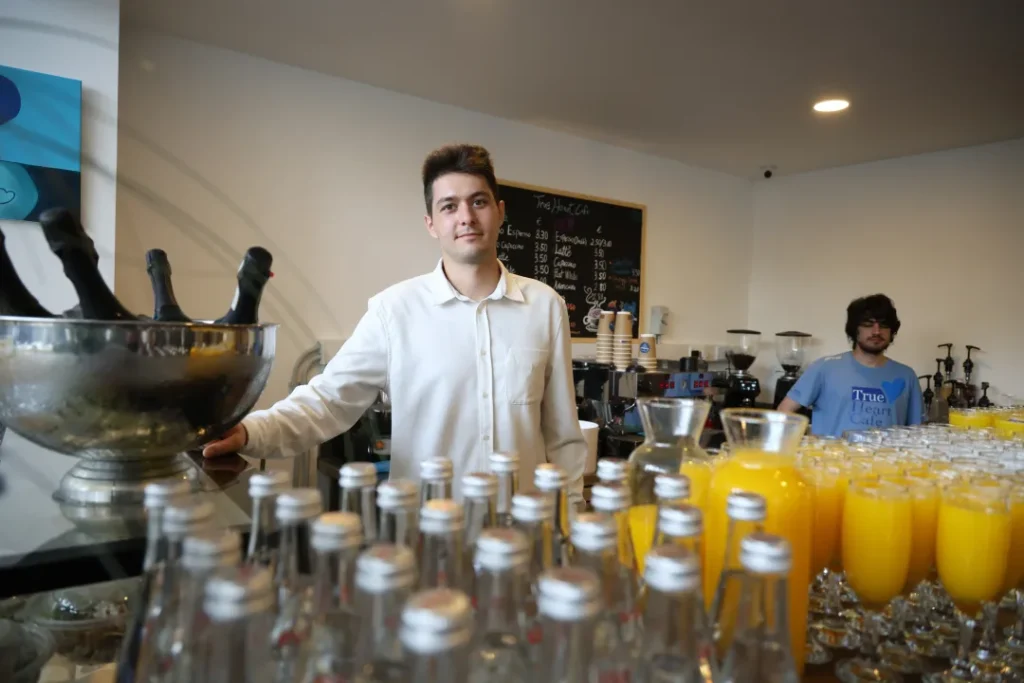
Nicosia, Cyprus. True Heart Café, described as Cyprus’ first social enterprise, officially opened at the beginning of last month and is run by and employs young adults with autism. The project was established by the Voice for Autism NGO and currently operates at full capacity.
Employment and ownership model
According to Voice for Autism founder Ellen Georgiou Pontikis, the café’s business model includes 18 young people with autism, with a waiting list of 12. She said the waiting list reflects continuing demand for similar opportunities.
Pontikis said five of the young people with autism are shareholders in the business. She said the deputy ministry of social welfare suggested having some of the youth as shareholders and provided them with a grant to invest in the business. Pontikis is one of the guarantors, while most of the staff live in the group homes set up by the NGO.
She said the ownership structure gives the young people a sense of responsibility and participation in the business.
Challenges in establishing the enterprise
Pontikis said there were significant challenges in setting up the enterprise in Cyprus, including navigating legal issues and covering legal costs. She said the European Union does not provide a single template for social enterprises, leaving the matter to member states.
She also said the model is more expensive to establish than a traditional business, requiring training, adaptive workspaces and an in-house support team.
According to the article, other attempts to establish social enterprises in Cyprus had faced obstacles including government bureaucracy and the risks associated with being the first to adopt the model.
Government support and funding
Pontikis said the project advanced after her plans aligned with the guidelines of the deputy ministry of social welfare, which has access to European funding. She said the ministry now provides financial support for carers in the homes and for two dedicated trainers in the café through the European Cohesion Policy welfare fund.
She said discussions were needed on issues including wages, maintaining access to government support, suitable working hours and the type of assistance required for employees to learn the trade and use their skills.
Background of Voice for Autism
Three years ago, Voice for Autism established two group homes in Lakatamia, Nicosia, providing independent and supported living services for young adults with autism. The homes support residents through professional staff offering life skills and recreational activities.
Pontikis, a founding member of Voice for Autism, returned to Cyprus from the United States with her autistic son. She said she had seen the benefits of independent living, employment opportunities and inclusion in the United States and wanted to establish an NGO in Cyprus focused on the rights of young people with support needs.
Link between independent living and work
Pontikis said employment opportunities are closely linked to independent living. She said her son lives in one of the group homes and lives independently, with dignity and respect.
She said that while residents have their own daily programmes, they also need meaningful employment opportunities rather than remaining in a group home without work.