


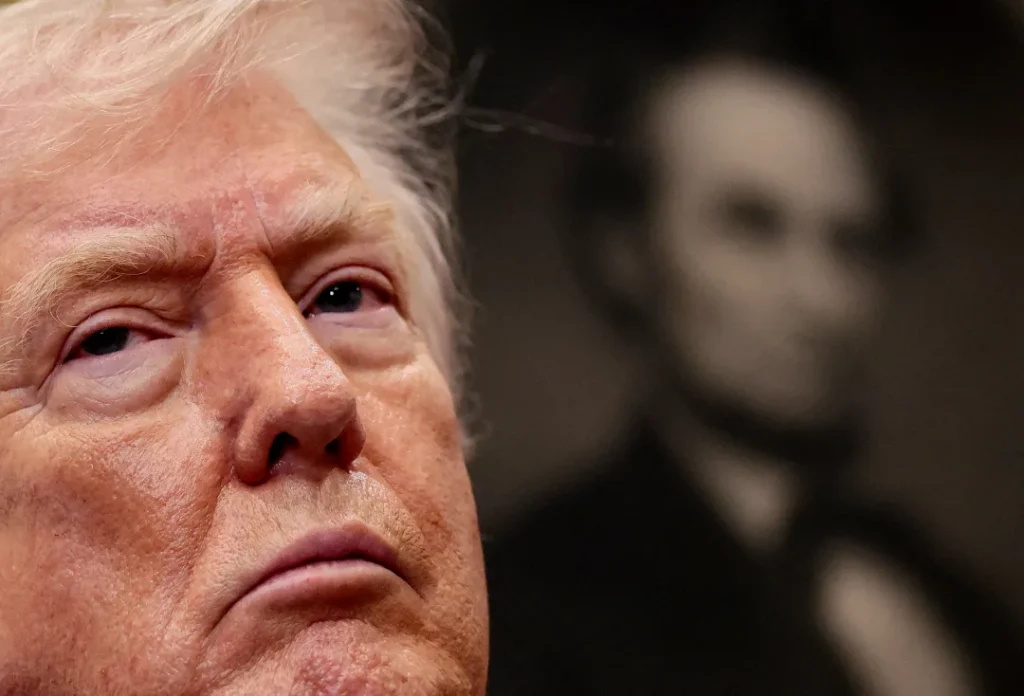
Washington, United States. The international environment is described as increasingly unstable heading into 2026, with rising tensions spanning Venezuela, Ukraine, Iran and other flash points. The Trump administration is presenting a Western Hemisphere-focused strategy widely referred to as the ‘Donroe’ Doctrine.
Volatility and shifting power dynamics
The geopolitical landscape is portrayed as marked by persistent tension, with established norms challenged and traditional structures of international relations described as in decay. The text cites the capture of Venezuela’s President Nicolas Maduro in early January 2026, the ongoing war in Ukraine and stalled negotiations, protests in Iran following the collapse of the rial, and disputes involving Greenland as signs of broader instability.
The article also describes a multipolar world in which the relative power of the United States compared with countries such as China is declining, prompting Washington to focus more on its immediate region. It says the outlook for 2026 points to a global environment that will be more unpredictable and volatile than 2025.
Venezuela as a focal point and Operation Absolute Resolve
Within this framework, Venezuela is presented as a central concern, described as a Latin American country with significant potential wealth that has spent decades countering US influence while strengthening ties with China and Russia. The article says the current administration in Washington views this alignment as a national security threat.
It describes Operation Absolute Resolve on Jan. 3, 2026 as a surgical strike that abducted Maduro and transported him to New York for trial. It adds that the move did not lead to a democratic “Spring,” and says Washington backed Delcy Rodríguez as a stabilizing figure while sidelining the opposition, signaling a priority on oil-secured stability. The article characterizes these actions as the start of an intensified cycle of confrontation.
Ukraine war and European security challenges
The article says the global cycle of war has accelerated since Russia’s invasion of Ukraine in February 2022 and argues that NATO’s eastward expansion played a fundamental role in the lead-up to hostilities, noting that Donald Trump has acknowledged this. It says failed peace initiatives have reinforced the expectation that the conflict will be decided on the battlefield rather than through negotiations.
It further states that without a viable peace agreement Russia will likely seek to take more territory, and that a battle for Odessa is increasingly likely. The article describes Odessa as central to control of the Black Sea and says its loss would leave Ukraine no longer a viable state.
It describes European powers as facing a severe predicament, stating that preventing a Ukrainian collapse and fighting Russia directly would require European ground troops and the reintroduction of conscription, which it says would face strong public resistance and could fuel civil unrest in major capitals. It adds that European elites appear committed to continuing the conflict despite the lack of a clear path to victory, and says a coherent European security architecture remains absent.
The ‘Donroe’ Doctrine and hemispheric strategy
The intervention in Venezuela is presented as part of a broader effort to reassert US hegemony in the Western Hemisphere and counter China’s influence in Latin America. The article says the strategy is intended to dictate terms of trade in the region and describes it as the most consequential shift in US foreign policy since the end of the Cold War.
It traces the concept to the Monroe Doctrine of 1823, which declared the hemisphere closed to further European colonization, and cites Theodore Roosevelt’s 1904 corollary asserting a US right to intervene in Latin America to stabilize economies or prevent European intervention. The article describes the ‘Donroe’ Doctrine as a further evolution and a reorientation of US global priorities.
According to the text, the doctrine’s practical application includes designating the Western Hemisphere as Washington’s top priority. It cites Trump’s December 2025 National Security Strategy as identifying non-hemispheric competitors—China, Russia and Iran—as existential threats within the region, and says the strategy states the United States will use leverage in finance and technology to encourage regional countries to reject Chinese infrastructure projects and loans.
What do you think the Trump administration’s Western Hemisphere-first approach will mean for relations across Latin America?