


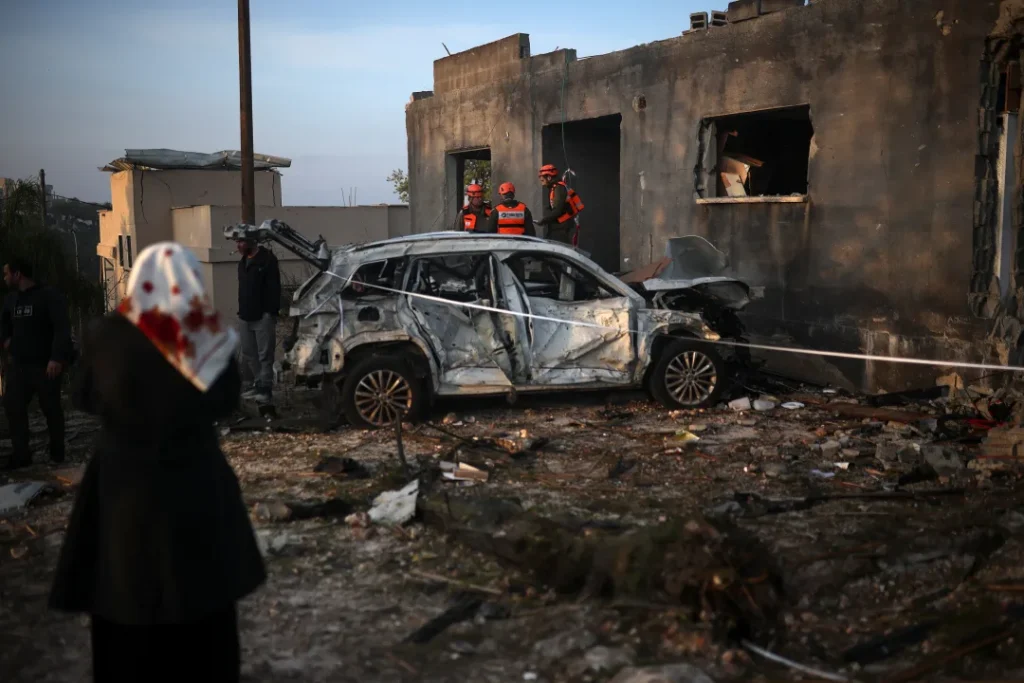
Washington, United States. President Donald Trump said the U.S. was “totally destroying” Iran’s leadership as the Israel-Iran conflict neared the two-week mark on Friday amid heavy exchanges of drone and missile strikes across the region.
Trump comments on conflict
In a social media post late on Friday, Trump derided Iran’s leaders as “deranged scumbags” and said it was his “great honor” to kill them, citing U.S. “unparalleled firepower” and “unlimited ammunition.”
The conflict began with joint Israeli-U.S. strikes on Iran at the end of February and has killed more than 2,000 people, disrupted the lives of millions, and shaken energy and financial markets globally.
Iran’s new supreme leader issues warnings
New Iranian Supreme Leader Mojtaba Khamenei, in his first comments on Thursday, vowed to keep the Strait of Hormuz shut and urged neighboring countries to close U.S. bases on their territory or risk being targeted by Iran.
He said Iran would not neglect “avenging the blood of your martyrs.” His comments were read by a television presenter, and it was not clear why he did not appear in person. Iranian officials have said he was lightly wounded, and Trump said he thinks Khamenei is alive but “damaged.”
Israel strikes and Netanyahu statements
Israel said it struck 200 targets in Iran in the past day. Israeli Prime Minister Benjamin Netanyahu held his first news conference since the U.S. and Israeli airstrikes began on February 28, issuing a veiled threat to kill Khamenei and defending the military assault.
Netanyahu said Israel was creating “the optimal conditions for toppling the regime,” while adding he could not say with certainty that the people of Iran would topple it, describing regime change as something that happens from within.
How do you think the escalating rhetoric from leaders could affect the risk of a wider regional conflict?