


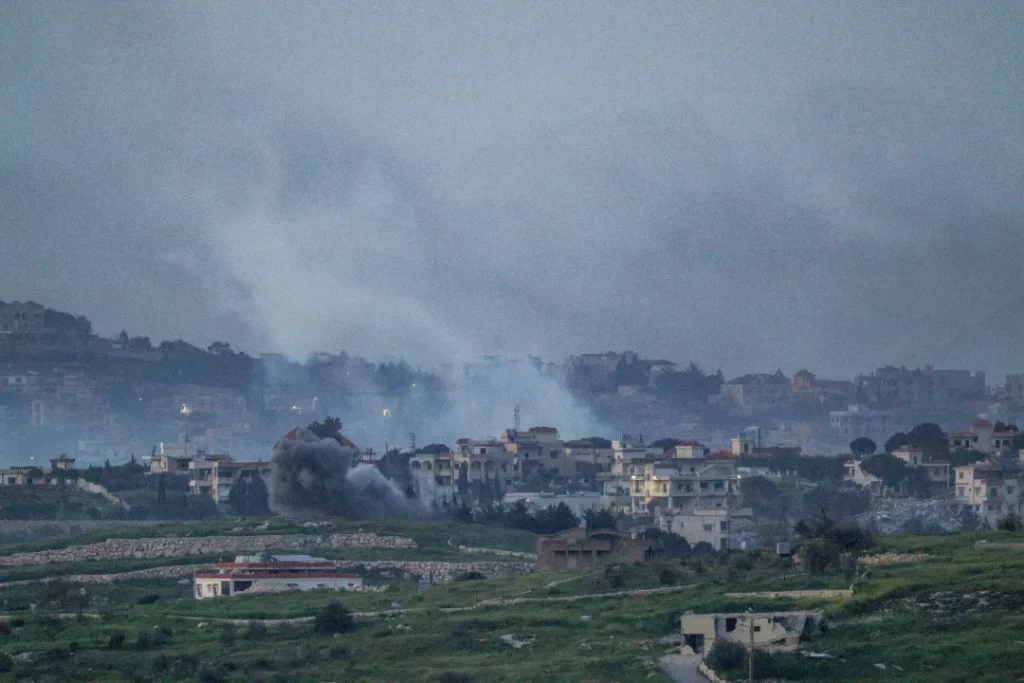
Washington, United States. U.S. President Donald Trump announced that Lebanon and Israel had agreed on a 10-day ceasefire, as optimism grew that the Iran war may be nearing an end. He said the ceasefire would start at 5 p.m. EST (2100 GMT).
Ceasefire announcement and timing
Trump said in a social media post that the ceasefire aimed to halt a conflict between Israel and the Iran-aligned Lebanese group Hezbollah that was reignited by the U.S.-Israeli war against Iran. He said he had held “excellent conversations” with Israeli Prime Minister Benjamin Netanyahu and Lebanese President Joseph Aoun.
U.S. officials tasked with follow-up
Trump said he had directed U.S. Vice President JD Vance, Secretary of State Marco Rubio and Chairman of the Joint Chiefs of Staff Dan Caine to work with the two countries to achieve lasting peace.
Conflict background and regional impact
The war with Iran spilt into Lebanon on March 2, when Hezbollah opened fire in support of Tehran, prompting an Israeli offensive in Lebanon 15 months after the last major conflict. Thousands of people have been killed, mostly in Iran and Lebanon, since U.S.-Israeli attacks on Iran began on February 28, triggering Iranian airstrikes on Iran’s Gulf neighbours and reigniting the Israel-Hezbollah conflict.
International reaction and economic fallout
European Commission President Ursula von der Leyen welcomed the ceasefire announcement, saying on X: “This is a relief, as this conflict has already claimed far too many lives.” Soaring energy costs have rattled investors and policymakers globally since Iran effectively closed the Strait of Hormuz, through which a fifth of the world’s oil and gas supply flows.
What do you think the ceasefire could mean for regional stability and energy markets?