


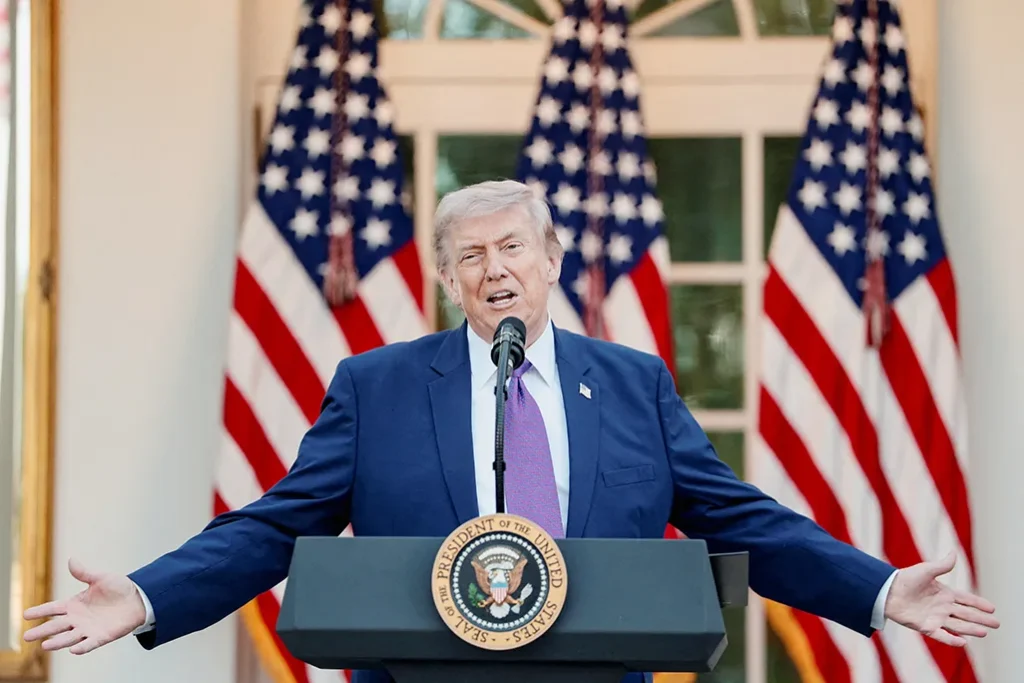
Washington, United States. U.S. President Donald Trump’s coercive diplomatic approach toward Iran has failed to produce a breakthrough in an 11-week-old crisis, analysts say, raising concerns the standoff could persist and continue disrupting world energy supplies.
Deadlock despite broader negotiating gains
During his first year back in office, Trump’s negotiating style secured concessions from countries on issues ranging from tariffs to armed conflict, but analysts say the same tactics have hit a wall with Iran. The approach has been marked by public threats, insults and ultimatums, and Trump has shown little inclination to soften it despite growing frustration.
Risks of a prolonged standoff
With the two sides deadlocked, analysts say prospects for a quick negotiated settlement appear limited. They say this is fueling fears that the standoff and its shock to world energy supplies could drag on indefinitely with periodic bouts of brinkmanship.
Obstacles tied to Iran’s domestic considerations
Analysts cite the mindset of Iran’s rulers, including the need to save face domestically, despite U.S.-Israeli strikes having killed many top leaders and heavily degraded Iran’s military capabilities. They also note that Iran has essentially maintained a chokehold on the Strait of Hormuz, providing it leverage.
Maximalist demands and victory framing
Analysts say Trump has continued a diplomatic playbook characterized by maximalist demands, unpredictability, mixed signals and scathing language. They add that Trump’s insistence on presenting an outcome as an absolute U.S. victory, while Iran must accept total defeat, complicates prospects for an agreement.
“That inevitably gets in the way of reaching a reasonable deal because no government, not just Iran’s, can afford to be viewed as having capitulated,” said Rob Malley, a former Iran negotiator in the Obama and Biden administrations.
Domestic pressure on the White House
The impasse comes as Trump faces domestic pressure over high U.S. gasoline prices and low approval ratings after embarking on an unpopular war ahead of November’s midterm elections, with Republicans struggling to maintain control of Congress.
White House defense of approach
White House spokeswoman Olivia Wales defended Trump’s strategy, citing what she called a “proven track record of achieving good deals,” and said Iran was showing increasing “desperation” for an agreement.
What do you think would be required for both the United States and Iran to claim enough success to reach an agreement?