


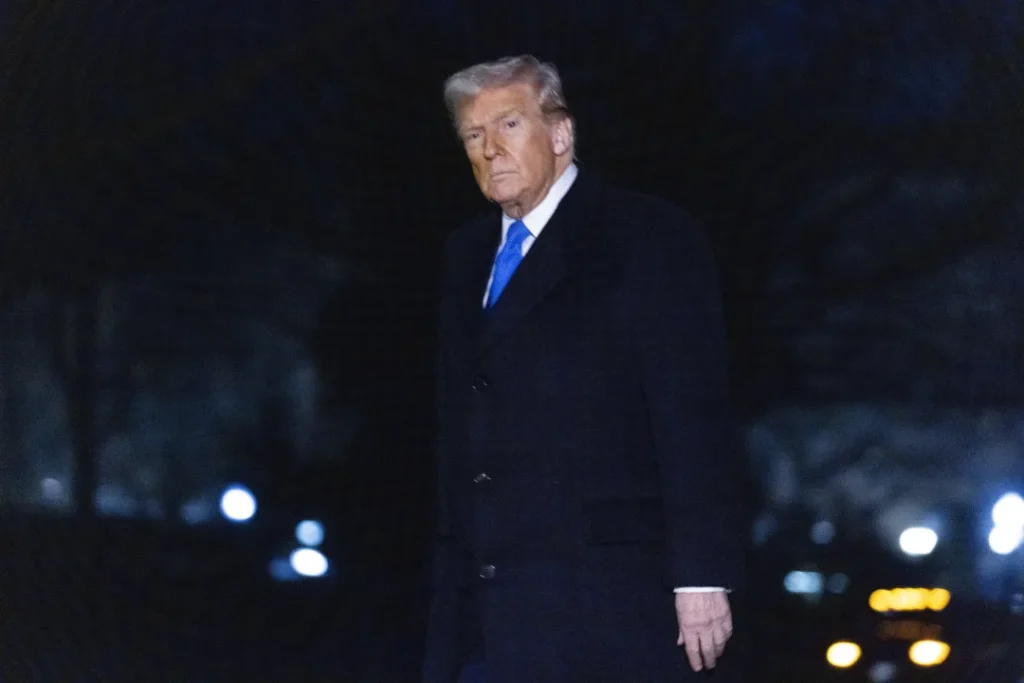
Washington, United States. Seven weeks of war with Iran have not toppled Tehran’s rulers or delivered all of President Donald Trump’s stated objectives, while exposing what critics and supporters see as a key vulnerability: U.S. public tolerance for economic pain. With gasoline prices high, inflation rising and approval ratings falling, Trump is pressing for a diplomatic settlement.
War aims and economic fallout
Trump joined Israel in attacking Iran on 28 February, citing imminent security threats and Tehran’s nuclear programme. Iran has suffered heavy military losses but has shown an ability to impose economic costs that Washington underestimated, analysts said, by effectively closing the Strait of Hormuz, through which roughly a fifth of the world’s oil trade passes.
The resulting disruption triggered what analysts described as the worst global energy shock on record, and the International Monetary Fund has warned of recession risk.
Shift from strikes to diplomacy
Brett Bruen, a former Obama administration foreign policy adviser and head of the Global Situation Room consultancy, said Trump was feeling the economic strain. Trump’s pivot on 8 April from airstrikes to diplomacy followed pressure from financial markets and parts of his MAGA base, according to the report.
U.S. farmers, a core Trump constituency, have been hit by disrupted fertiliser shipments, while higher jet fuel costs have pushed up airfares. Republicans are also defending narrow congressional majorities ahead of November’s midterm elections.
Strait reopening and unresolved gaps
Iran’s partial reopening of the strait on Friday sent oil prices sharply lower and lifted financial markets, which Trump frequently cites as a measure of success. Trump declared the waterway safe and said a deal was imminent and largely on U.S. terms, but Iranian sources told Reuters that significant gaps remained.
Nuclear negotiations in Islamabad
The two sides remain far apart on Tehran’s nuclear programme. At talks in Islamabad last weekend, described as the highest-level U.S.-Iran negotiations since the 1979 Islamic Revolution, Washington proposed a 20-year suspension of all Iranian nuclear activity, while Tehran countered with three to five years.
Trump said the emerging deal calls for Iran’s highly enriched uranium stockpile to be transferred to the United States, but Iran denied agreeing to any transfer outside its territory.
Miscalculations and implications for allies
U.S. officials have said privately that Trump expected a limited operation comparable to January’s raid in Venezuela or June’s strikes on Iranian nuclear sites. Instead, Iran retaliated by targeting Gulf energy infrastructure and choking the strait, a development described as a miscalculation with far-reaching consequences.
Analysts said the war has sent a sobering signal to allies. European governments, which were not consulted before the attack and are bearing a large share of the economic burden, are expected to become more sceptical of Washington’s reliability on Ukraine. Asian allies including Japan, South Korea and Taiwan may also recalibrate their security assumptions.
Gregory Poling, an Asia expert at the Center for Strategic and International Studies, said the war had highlighted concerns among allies about erratic decision-making and limited regard for consequences.
How do you think rising energy prices could affect public support for U.S. foreign policy decisions?