


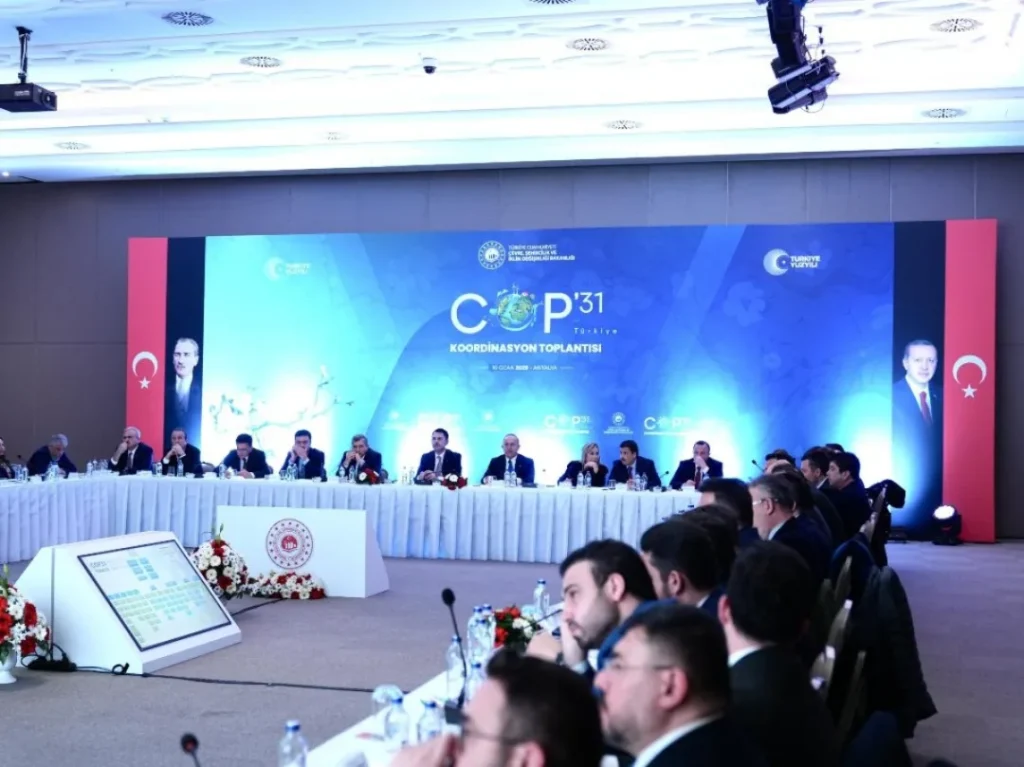
Antalya, Turkey. Turkey is facing criticism over its handling of preparations for this year’s United Nations climate summit after reports emerged that Cyprus was excluded from a series of informal contacts and briefings linked to COP31, which will be hosted in Antalya in November.
Reports of exclusion
According to a report by Politico, Ankara allegedly ignored or rejected requests for bilateral meetings submitted by the government on behalf of the EU as part of Cyprus’ current EU Council presidency. The publication cited five European diplomats and officials who said Cyprus was not invited to a number of informal preparatory meetings despite institutionally representing the bloc’s 27 member states during its rotating presidency.
Concerns in Brussels
The issue has reportedly raised concerns in Brussels, with European officials questioning whether the exclusion is compatible with the responsibilities of a host nation for a UN conference.
The EU’s climate spokeswoman for climate action and energy, Anna Kaisa Itkonen, condemned Turkey’s exclusionary conduct as “unacceptable and inconsistent with the status of the country hosting COP31” and said Turkey should invite “all UN member states, including Cyprus”.
She also said Turkey had given her assurances that “Cyprus would not be excluded from future preparatory meetings for COP31”.
Briefing at UN headquarters
Particular attention has focused on an incident at UN headquarters in New York in March, where the Turkish presidency of COP31 allegedly did not invite Cyprus to a briefing attended by other delegations.
According to diplomatic sources cited by Politico, Turkish officials also objected when a Cypriot delegation attended alongside representatives of the EU mission.
EU reaction
In April, the EU expressed “serious concern” after Cyprus was reportedly denied participation in a COP31-related meeting held at the UN on March 27 and chaired by Turkey’s environment minister Murat Kurum.
During a subsequent UN session, the EU reiterated that “all UN member states enjoy equal recognition and participation in UN processes,” stressing that participation should be guided by the principle of sovereign equality and inclusiveness.