


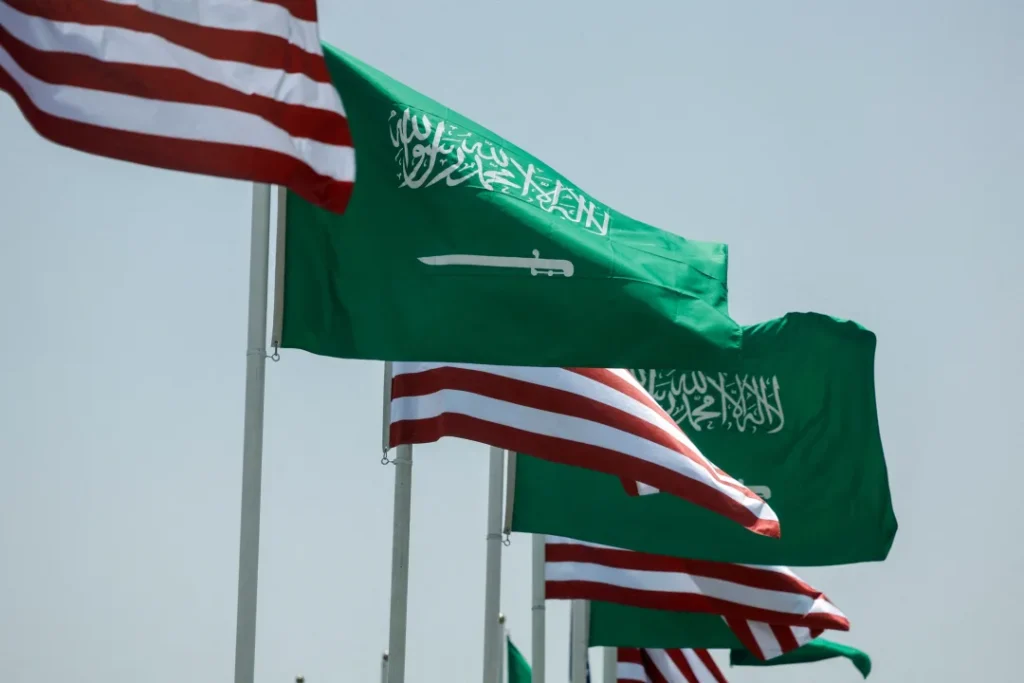
Washington, United States. The United States and Saudi Arabia have signed a civil nuclear power agreement allowing the kingdom to build reactors using U.S. technology and enrich uranium, the U.S. Energy Department said Wednesday. The agreement will be submitted to Congress for review.
Agreement details
U.S. Secretary of Energy Chris Wright and Saudi Energy Minister Prince Abdulaziz bin Salman signed the pact, known as a 123 Agreement, alongside a bilateral safeguards agreement, according to the Energy Department.
The agreement permits Saudi Arabia to enrich uranium and reprocess nuclear waste, both of which can provide pathways to producing nuclear weapons. The United Arab Emirates agreed to forgo uranium enrichment and nuclear waste reprocessing when it signed a similar agreement with the United States in 2009.
Nonproliferation provisions
The Energy Department said the agreement complies with nonproliferation requirements under the U.S. Atomic Energy Act, which it described as among the world’s strongest.
Unlike a plan pursued under former President Joe Biden, the current agreement does not include an Additional Protocol allowing the International Atomic Energy Agency to conduct intrusive snap inspections.
A civil nuclear agreement between the United States and Saudi Arabia had been under discussion during President Donald Trump’s first administration and the Biden administration. Previous efforts did not result in an agreement, partly amid concerns from nonproliferation groups that such a deal could provide Saudi Arabia with a route to develop nuclear weapons.
Saudi Arabia has said that, if it does not partner with the United States, it could work with China or Russia, which have different proliferation standards.
Congressional review
The agreement will go into force unless Congress votes to object within 90 session days. A two-thirds majority would be required to override a presidential veto.
Some nuclear experts urged lawmakers to reject the agreement.
“We urge all members of Congress on both sides of the aisle to recognize the risks and to exercise their power to reject or modify Trump’s proposed nuclear deal with Saudi Arabia so as not to open the door for nuclear proliferation in the Middle East even wider,” said Kelsey Davenport, director for nonproliferation policy at the Arms Control Association.