


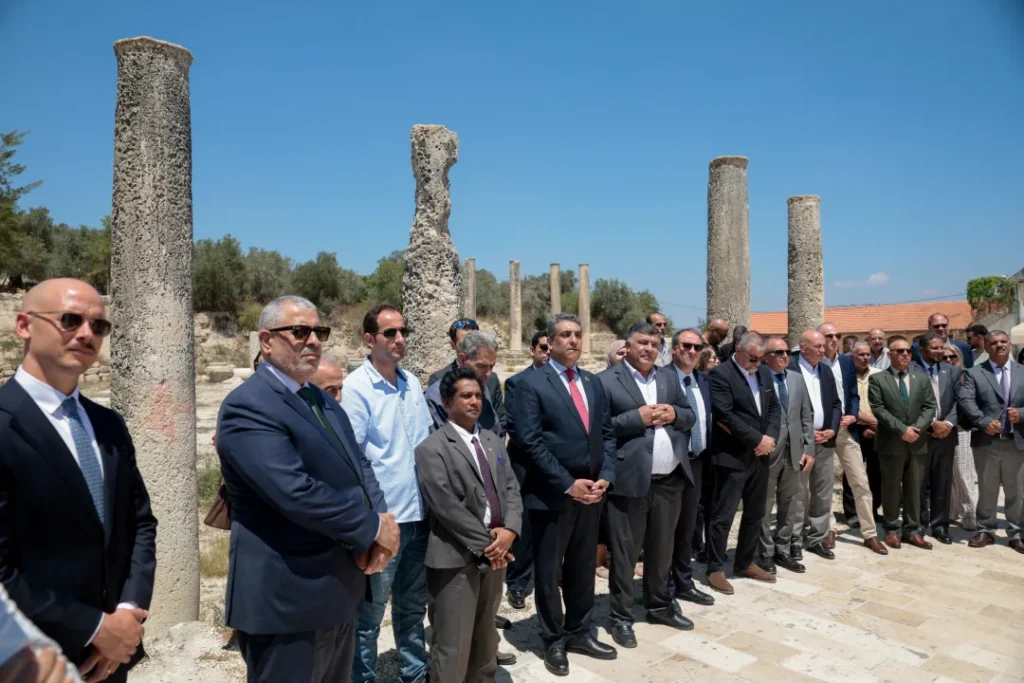
Sebastia, Palestine. UNESCO has added Sebastia in the occupied West Bank to its World Heritage List and List of World Heritage in Danger, drawing praise from Palestinian officials and condemnation from Israel.
Heritage designation
UNESCO added Sebastia to both lists on Friday, using the World Heritage in Danger mechanism to identify listed sites facing serious threats and support their safeguarding.
The northern West Bank site contains archaeological remains from successive periods, including the Israelite kingdom’s capital from at least the ninth century BC, as well as Hellenistic, Roman, Byzantine, Islamic, Crusader and Ottoman eras, according to the United Nations cultural organisation.
The site is surrounded by olive trees and includes Roman columns, ancient walls, stone steps and an amphitheatre. It is traditionally regarded as the burial place of John the Baptist.
Land seizure concerns
Palestinian residents of the adjacent village, many of whom depend on tourism, are facing land confiscations after Israel announced plans to seize about 1,800 dunams, or 445 acres, at the site for its development.
Nizar Kayed, the village deputy mayor, said he hoped the UNESCO decision would help preserve Sebastia. He said Israel’s land seizure decision, announced in late 2025, formed part of an Israeli push to expand settlements in the area.
The Palestinian tourism and foreign ministries said they hoped the designation would mobilise international support against Israeli measures at the site.
Israeli response
Israeli Foreign Minister Gideon Saar said the UNESCO decision was part of a Palestinian effort to obscure Jewish ties to the land.
“No vote in an international organization can change history,” Saar said in a statement.
Palestinian officials also raised concerns over a proposed Israeli bill that has not yet become law and would extend Israeli civil control over ancient sites in the West Bank.
They said the measure would effectively remove oversight of the sites from the Palestinian Authority, which has exercised limited self-rule in parts of the West Bank under the 1990s Oslo peace accords. Israel captured the territory in the 1967 war.