


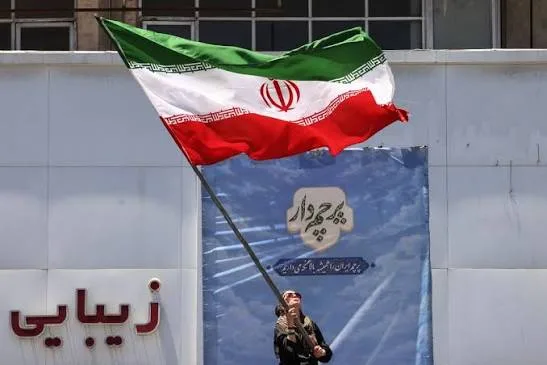
London, United Kingdom. The agreement that ended hostilities between the United States and Iran has raised hopes of de-escalation across the Middle East, but major issues remain unresolved. Analysts say the deal may prove either the start of a sustainable diplomatic process or a temporary pause before renewed tensions.
Unresolved regional questions
Jonathan Hill, Director of the Institute of Middle Eastern Studies at King’s College London, told Phileleftheros that despite the apparent calm, critical matters remain open, including Tehran’s nuclear programme, the security of the Strait of Hormuz and the broader balance of power in the region.
He said the crisis had also exposed the limits of American power while demonstrating the resilience of the Iranian regime, which avoided collapse and appears to have emerged from the confrontation with its confidence intact.
Implications for regional actors
According to Hill, the developments have immediate implications for Israel, the Gulf states and regional alliances, while also reviving debate over the future of Iran’s nuclear programme and the risk of a new regional arms race.
For Cyprus and the Eastern Mediterranean, he said, the crisis underscored their geostrategic importance during a period of growing international uncertainty.
“With the British Sovereign Base Areas on its soil and as the EU member state closest to the Middle East, Cyprus plays a decisive role in projecting Western influence towards the Middle East and North Africa,” Hill said.
Economic and shipping disruption
Hill said that although most people were relieved that the fighting had stopped, it would take considerable time before shipping traffic through the Strait of Hormuz returned to normal, and several years before oil and gas production in the Gulf recovered to pre-conflict levels.
He said this showed that while the agreement was an important first step, it did not resolve all the serious problems caused by the conflict.
Outlook for the 60-day timeframe
Asked about the likely scenarios if the two sides failed to reach a deal within the 60-day timeframe that has been set, Hill said the United States would be extremely reluctant to resume hostilities, particularly with the midterm elections approaching.
He said Iran was almost certain to understand this and might look for ways to test American resolve and staying power.
Prospects for Iranian concessions
Hill said he did not believe Iran was likely to make concessions, including on issues linked to the Strait of Hormuz.
He said the crisis had made clear the limits of Washington’s military, political and economic resolve. In particular, he said the United States had shown it was unwilling to invade Iran, which he described as a prerequisite for regime change.
Hill also said it had become clear how strongly domestic political dynamics in the United States shape its foreign policy, and that the current US administration had shown little appetite for bearing the prolonged economic costs associated with higher energy prices.
In those circumstances, he said, Tehran was likely to conclude that it had more room to manoeuvre and fewer incentives to make meaningful concessions.