


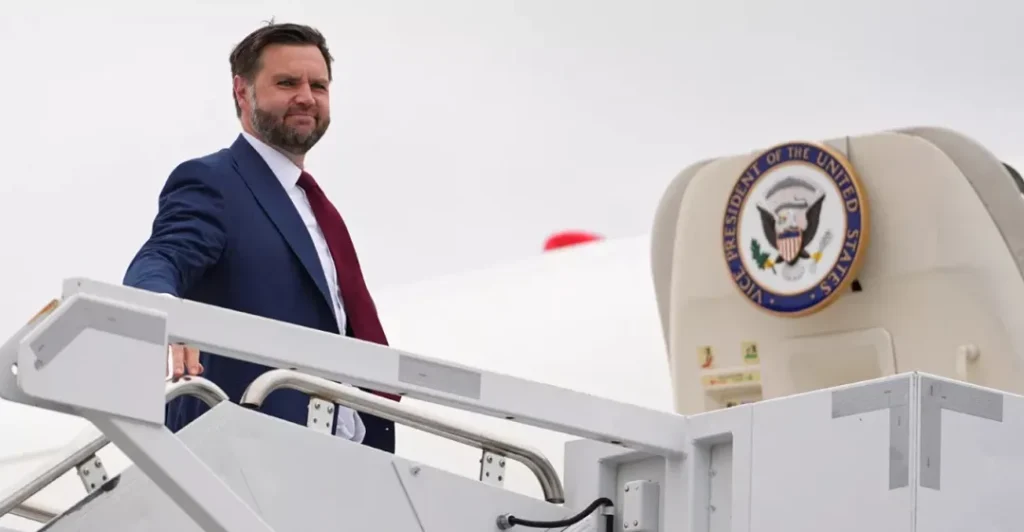
Bern, Switzerland. Planned talks between US and Iranian negotiators in Switzerland will not take place on Friday, Swiss authorities confirmed, adding to uncertainty over whether a lasting truce can be secured. Vice President JD Vance has also abandoned plans to travel to Switzerland.
Talks postponed in Switzerland
A White House spokesperson said, “The logistics of these negotiations have never been simple or predictable.” Switzerland’s foreign ministry said the talks had been postponed, but that it remained ready to facilitate negotiations and that preparatory work at the Burgenstock mountain resort was continuing.
Iran signals conditions for further negotiations
Iran had said it was ready for technical talks after Wednesday’s 14-point accord extended the ceasefire by at least 60 days, but said it first needed to see signs that the United States was implementing the interim deal. There was no confirmation that Iran’s delegation would travel to Switzerland, according to the semi-official Tasnim news agency before Thursday’s US announcement.
Iran’s foreign ministry also questioned the need for a formal signing ceremony, saying it was unnecessary after both presidents had already signed the pact.
Warnings from Iranian leadership
Iran’s Supreme Leader Ayatollah Mojtaba Khamenei said President Donald Trump had signed the deal “out of desperation” and indicated that talks on Tehran’s nuclear programme would be difficult. “If the American side wants to be too demanding, we will not accept it,” he said.
Iran’s Supreme National Security Council said it would deliver a “reciprocal response” to any violation by the “untrustworthy” American side and would show “no leniency” until the nation’s full rights were secured.
War aims and nuclear provisions
When the United States and Israel launched the war nearly four months ago, Trump said his aims were to destroy Iran’s nuclear capabilities, end Tehran’s ability to strike its neighbours, prevent it from backing regional militias and create conditions for Iranians to topple their government. The article said none of those objectives had been met when Trump signed the agreement.
Iran repeated its longstanding position that it does not seek nuclear weapons, a claim doubted by successive US presidents. It agreed to on-site “down blending” of its highly enriched uranium stockpile and inspections by the International Atomic Energy Agency as a Non-Proliferation Treaty member, but rejected Trump’s demand to remove the material from the country entirely.
Sanctions relief and political reaction in Washington
The memorandum provides Iran with sanctions relief, the unfreezing of assets worth tens of billions of dollars and immediate US waivers on its oil exports. The article contrasted this with Trump’s March demand for “UNCONDITIONAL SURRENDER.”
In Washington, some Republican allies in Congress questioned whether Trump had conceded too much, as the war remained unpopular among Americans ahead of the November midterm elections. The Wall Street Journal reported separately that the US Department of Defense had told lawmakers it needed $80 billion to cover war costs and other bills.
Strait of Hormuz and oil markets
Critics said Iran was now in a stronger position than before the war, having withstood a US attack, demonstrated its control of the Strait of Hormuz and secured financial concessions. Iran said it would continue to exercise joint control of the strait with Oman and intended to charge ships service fees, though not during the 60-day negotiating period.
Oil prices dipped on Friday as tankers began moving through the reopening waterway.
Prospects for a broader agreement
US officials said negotiations could still produce a strong agreement on Iran’s nuclear programme, potentially going beyond the 2015 accord that Trump withdrew from during his first term. Vance said Washington would also seek limits on Iran’s long-range missiles in the coming talks.
Continued conflict in Lebanon
In Lebanon, where more than 1 million people have been displaced, fresh Israeli strikes on Friday killed at least 18 people, Lebanon’s state news agency NNA reported. Israel said the attacks targeted Hezbollah.
The deal calls for the “permanent termination” of the war in Lebanon, but Israel has said it does not intend to withdraw and released a new map showing an expanded occupation zone. Prime Minister Benjamin Netanyahu has kept Israel separate from the US-Iran accord, and Israel was excluded from the peace talks.