


Ankara, Turkey. The United States launched fresh strikes on Iran on Wednesday, saying the action was aimed at keeping the Strait of Hormuz open to shipping. Iran responded with attacks on Kuwait and Bahrain, while President Donald Trump said a ceasefire memorandum signed on June 17 appeared to be effectively over.
US action and Trump remarks
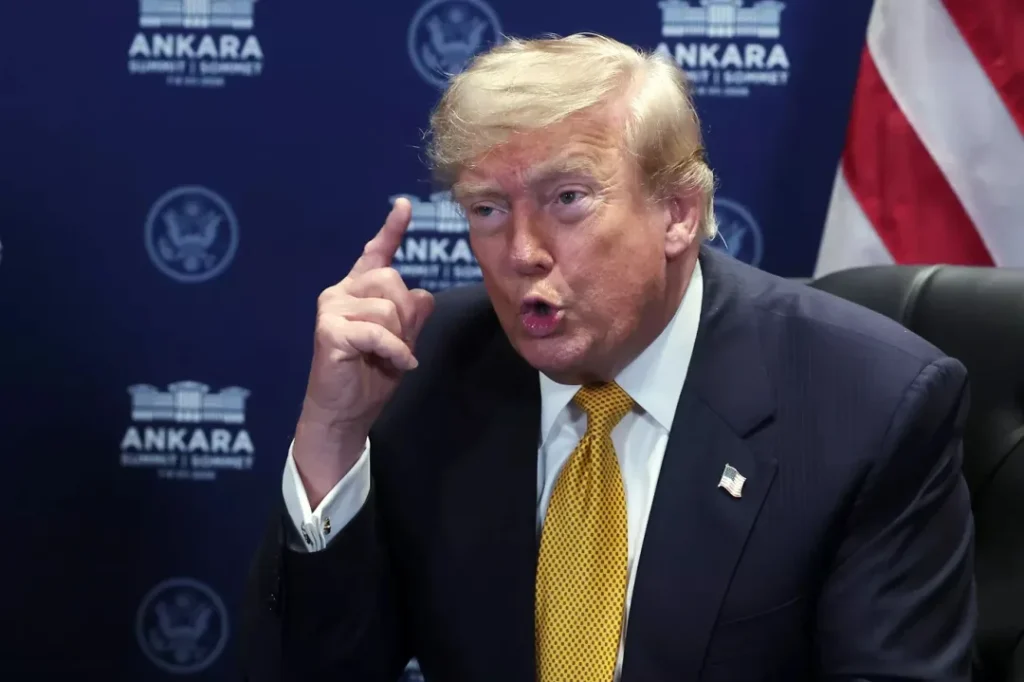
Trump, speaking ahead of a NATO summit in Turkey, said he no longer believed the memorandum of understanding signed on June 17 remained in force.
“To me, I think it’s over. I don’t want to deal with them,” Trump said when asked whether the memorandum remained in force. “If we make a deal with Iran I’m not sure that will stick. I found them to be very dishonourable people.”
U.S. Central Command said on X that its forces had begun additional strikes against Iran “to further degrade their ability to threaten freedom of navigation in the Strait of Hormuz.” It said the strikes were in response to Tuesday’s assault on three cargo ships transiting the waterway.
A US official, speaking anonymously, said Wednesday’s strikes would exceed those carried out on Tuesday in scale. Trump later wrote on Truth Social that the operation was retaliation for “yesterday’s bombing of ships by Iran” and warned that any repeat would bring a stronger response.
Impact in Iran and regional response
The strikes shook several cities along Iran’s southern coast and caused power cuts in some areas.
Iranian media reported attacks along the southern coast from the Strait of Hormuz to the Gulf of Oman. Locations hit included Bandar Abbas, home to Iran’s largest port and key navy and Revolutionary Guards facilities, as well as the coastal cities of Konarak and Chabahar.
A maritime traffic control tower in Chabahar was struck, and a firefighter was killed in a strike on the airport in the southeastern city of Iranshahr. Mehr news agency said power was knocked out in parts of Chabahar before being largely restored. Press TV reported that a US strike also hit a railway bridge near the northern town of Aqqala.
Iran responded for a second consecutive day with attacks on Kuwait and Bahrain, both of which host large US military bases. Kuwait’s defence ministry said it was intercepting missiles and drones. Qatar briefly issued an “elevated security threat” alert before later giving the all-clear.
Iranian position and possible retaliation
Iran’s foreign ministry said the US strikes violated the memorandum of understanding by challenging a clause that it said recognised Iran’s responsibility over shipping arrangements in the strait.
A spokesperson for parliament’s National Security Commission said possible retaliatory measures included withdrawing from the nuclear Non-Proliferation Treaty, changing Iran’s nuclear doctrine and closing the Bab-el-Mandeb Strait at the mouth of the Red Sea.
In a letter to the UN Security Council, Iran’s mission accused Washington of a “blatant violation of the Charter of the United Nations and its international obligations.”
Iran’s chief negotiator, Mohammad Baqer Qalibaf, said on X that the United States had not learned that “bullying and breaking its commitments no longer come without a cost.”
“Let me be clear: If you strike, you will be struck back,” he wrote. “The Strait of Hormuz will be reopened only under Iranian arrangements, not through U.S. threats.”
Outlook for the conflict
Despite his remarks on the memorandum, Trump said he did not expect a full return to war.
“Anything that happens is going to be over very quickly and will only make it safer, including for oil,” he said, without clarifying whether negotiations toward a permanent agreement would continue.
The Strait of Hormuz carried a fifth of global oil supplies before the war. Control of the waterway has given Tehran significant leverage, contributing to a stalemate with the United States, while analysts say Iran uses attacks on commercial shipping to gain negotiating advantage.