


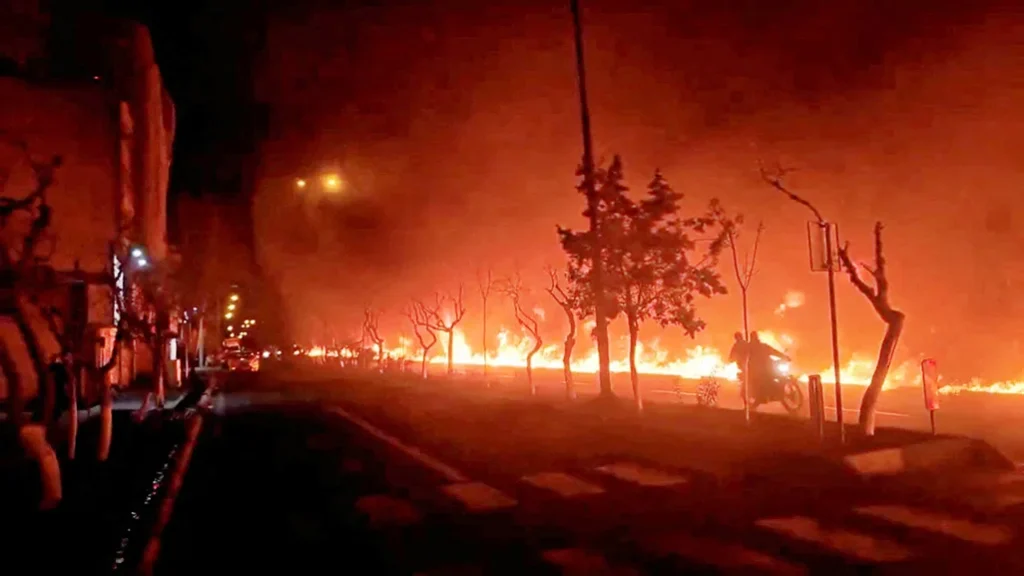
Geneva, Switzerland. The World Health Organization warned that “black rain” and toxic compounds in the air in Iran after strikes on oil facilities could cause respiratory problems and backed Iran’s advisory urging people to remain indoors.
Reports of oil-laden rain and air quality concerns
The U.N. health agency said it has received multiple reports of oil-laden rain this week. Tehran was choked in black smoke on Monday after an oil refinery was hit, in an escalation in strikes on Iran’s domestic energy supplies as part of the U.S.-Israeli campaign.
WHO spokesperson Christian Lindmeier told a press briefing in Geneva that the black rain and accompanying acidic rain posed a danger to the population, mainly affecting respiration. He said Iran had advised people to stay indoors.
WHO supports advice to stay indoors
Asked whether the WHO backed that advice, Lindmeier said that given the risk from struck oil storage facilities and refineries triggering fires and serious air quality concerns, staying indoors was “definitely a good idea.”
He said the strikes had caused the massive release of toxic hydrocarbons, sulfur oxides and nitrogen compounds into the air. Scientists said inhaling or touching the smoke or particles could cause headaches, skin and eye irritation, and difficulty breathing, and that longer-term exposure to some compounds increases the risk of some cancers.
Video and explanation of “black rain”
A video sent to Reuters by a WHO employee showed another staff member mopping up black liquid at the WHO office entrance in Tehran on March 8. Reuters was not able to independently verify the footage.
Scientists said the black rain was caused by a weather pattern bringing rain that combined with particles in the air.
Scientists cite uncertainty and short-term outlook
Akshay Deoras, a research scientist at the University of Reading, said the rain was an eye-opener to people, but that long-term exposure to toxic air was likely more of a health risk. He said people could protect themselves by staying indoors, or by wearing masks and covering their skin outdoors.
Deoras said data was lacking about air quality in the area, but weather forecasts suggested dry conditions were likely for the rest of the week, and that air quality was likely to improve over time. He said the risk of exposure would fall provided there were no fresh strikes, adding that fresh strikes would be problematic.
Will you follow public health guidance to stay indoors during periods of hazardous air pollution?