


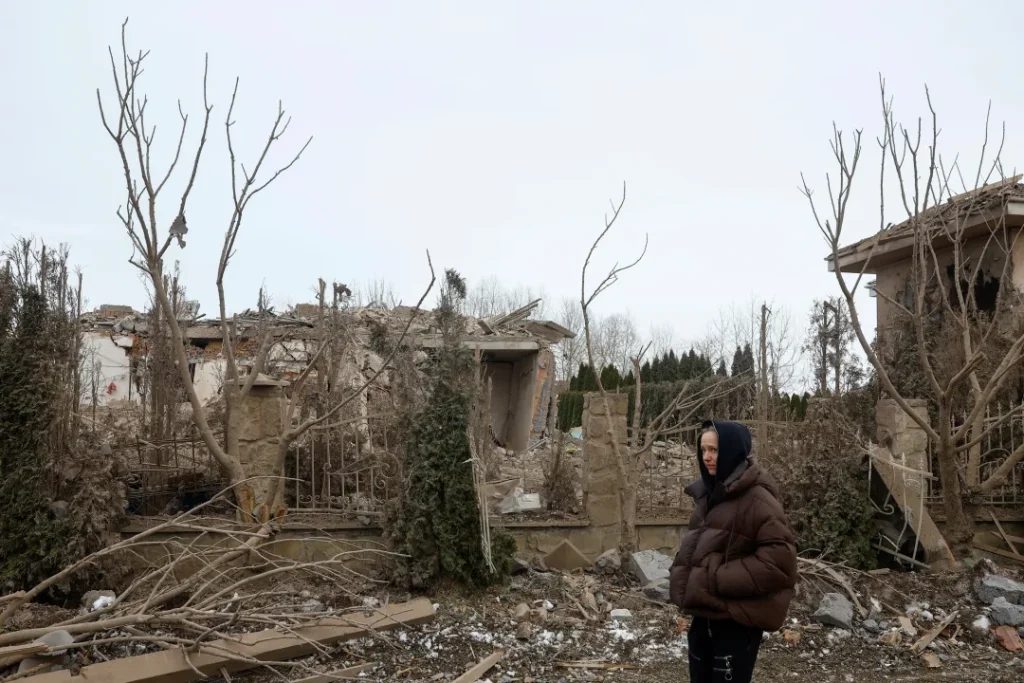
Kyiv, Ukraine. President Volodymyr Zelensky urged Ukrainians to stay calm a month before Russia’s February 24, 2022 invasion, as some intelligence services warned an attack was coming. Several Ukrainian and European officials later described widespread disbelief that Russia would proceed.
Warnings and disbelief before the invasion
Zelensky told Ukrainians: “Breathe deeply, calm down, and don’t go running to stock up on food and matches,” one month before Russian forces crossed the border on February 24, 2022.
American and British intelligence services warned that Russia was going to invade, but Zelensky and his generals did not believe it, according to the account. Most European Nato members also did not believe an invasion would happen.
A European intelligence official later said: “We didn’t believe it would happen, because we thought the idea that (the Russians) would be able to walk into Kyiv and just install a puppet government was completely insane.” The official added: “As it turned out, it was indeed completely insane.”
Putin’s expectations and early war assessments
The account says Russian President Vladimir Putin was insulated by people who avoided displeasing him, leaving him without personal contact with external reality.
On the day the invasion began, Putin spent the morning with visiting Pakistani Prime Minister Imran Khan, discussing bilateral relations and inviting him to lunch, according to a report cited from The Guardian. When Khan mentioned the invasion, Putin dismissed it, saying: “Don’t worry about that. It’ll be over in a few weeks.”
Territorial control and estimates of losses
The account says Putin’s expectation proved wrong, with estimates ranging from 200,000 to 400,000 dead Russian soldiers over four years. It says the Russian army holds about 20 per cent of Ukraine’s territory.
It adds that Russia at one point in late March 2022 controlled 27 per cent of Ukraine’s land, but two Ukrainian counteroffensives reduced that to 19 per cent by April 2022. Further fighting since then has increased Russia’s holdings by about one additional percentage point, to 20 per cent.
Drones and the battlefield stalemate
The text attributes the stalemate to drones, describing them as the dominant new technology that makes surface movement highly dangerous and citing a kill zone up to 30 km deep. It compares the effect to machine guns and long-range artillery in the First World War, saying drones have forced fighters to take shelter below ground level.
How has drone technology changed the way you think about the prospects for movement on today’s battlefields?