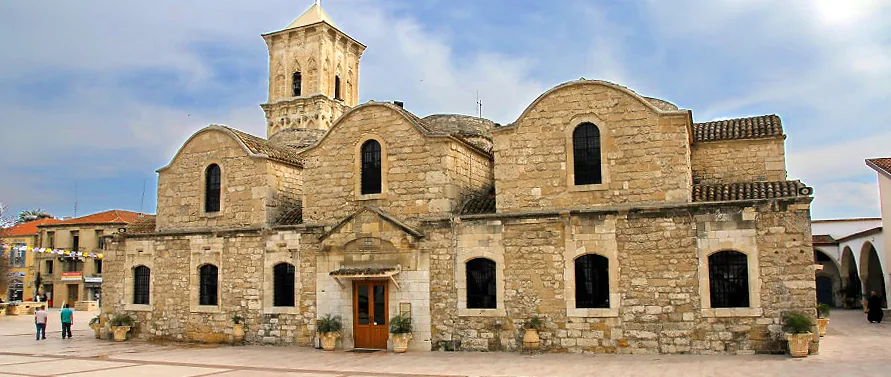
‘Visiting Saint Lazarus’. Holy Sites of Eastern Cyprus
Description
Larnaca, Saint Lazarus and the Monastery of Saint George
 You’ll agree that any trip is more enjoyable when shared with like-minded people. It really doesn’t matter how far you’re travelling.
Whether it’s just a day trip or a round-the-world journey, everyone has a specific aim: some want to have fun and unwind, others want to make new friends, whilst some simply want to see new places and boost their spirits.
Visiting holy sites is a distinct form of travel. When setting out on a pilgrimage, a person attunes their thoughts and feelings to a sublime state.
By worshipping and touching the holy relics and miraculous icons, a person not only honours the shrine, but also offers prayers to the Original Model – God and His saints – and sanctifies their thoughts and body. This brings about spiritual enrichment, lifting a person above the hustle and bustle of everyday life.
And it is very important that the tour guide leading the trip is a sincere believer who also has a deep and genuine connection to the subject of their narrative.
With Fyodor Lavrikov, our trip to Larnaca took on precisely this kind of profound meaning. The small coastal town appeared to us in a completely different light.
We covered the 60-kilometre journey from Limassol in one go, listening to the guide’s fascinating narrative. Many people know that modern-day Larnaca stands on the site of the ancient city of Kition, but the fact that the city changed its name several times came as a revelation to me.
From Kition to Larnaca
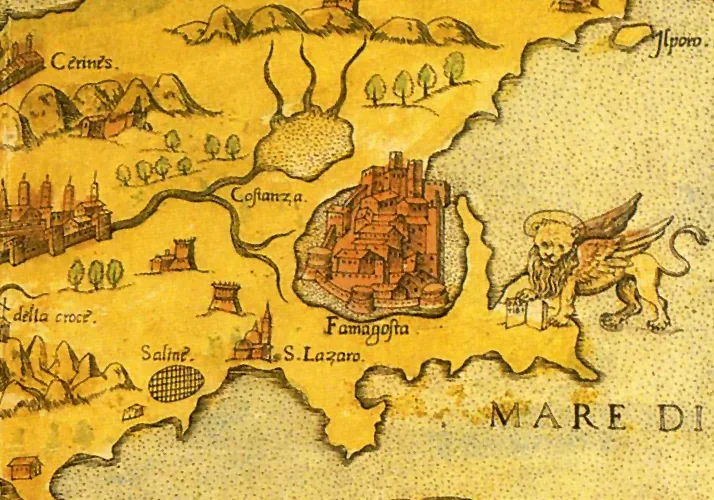 The exact date of the city’s foundation is unknown, but historians and archaeologists believe it was in the 14th century BC.
Kittim, the grandson of Noah, is considered the founder of the ancient city. The city was named after him. For a time, the whole island was known as Kittim. Throughout history, power changed hands many times, and with it the city’s name. When the Achaean Greeks arrived on the island, the city came to be known, in the Greek manner, as Kition.
Today, echoes of antiquity remain in the name of the village of Kitti, situated 5 km from Larnaca, near the airport.
During the Roman Empire, the city was renamed Citium. During the reign of the Lusignan dynasty, the city was known as Salana due to the salt extracted from the local lake. The Genoese gave the city the amusing name of Skala, which translates from Greek as ‘staircase’. This name for Larnaca is still used by locals in everyday speech.
The city’s current name, however, derives from the Greek word λαρναξ, which translates as ‘tomb’.
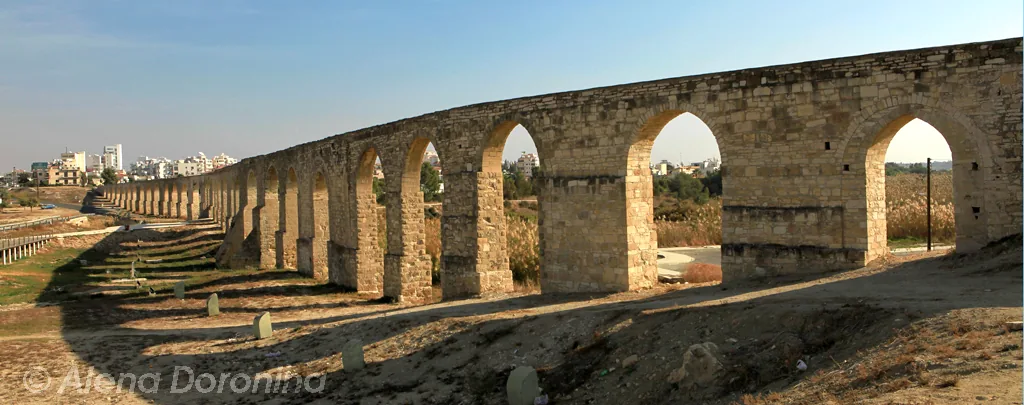
The first thing we notice as we enter the town from the Limassol side is the ancient aqueduct on the right. It dates back to the period of Ottoman rule in Cyprus.
Larnaca, like most coastal towns, stretches along the coast, so having entered from the rear, we head towards the sea along the town’s main street, Griva Digeni. General Grivas led the Cypriot resistance movement against British colonialism.
Visiting Lazarus the Four-Day-Old
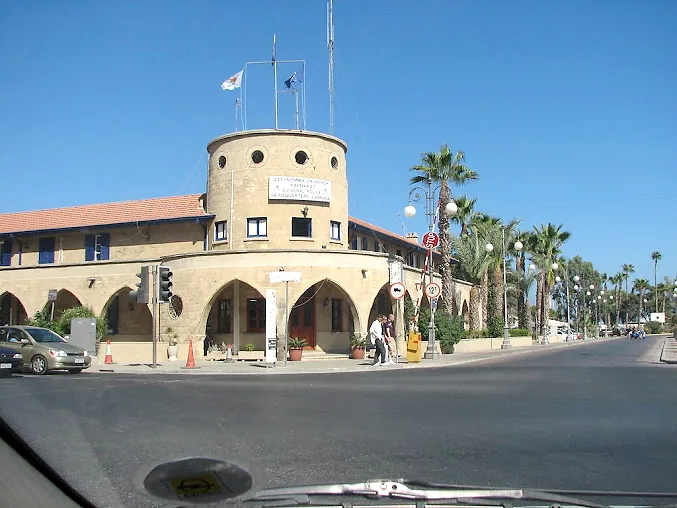 Upon reaching the Finikoudes Promenade, we got off the bus and set off on foot towards the Church of Saint Lazarus. It’s worth noting that the Palm Promenade – which is what its name translates to – is also a city landmark and the town’s cultural and social hub.
Although not very long, it connects Vasileos Pavlos Square with the medieval fort. Nearby are the police headquarters, the city council and other administrative offices.
Right on the square stands a monument to the famous philosopher Zeno, a native of ancient Kition and founder of the Stoic school, whilst almost directly opposite you can see the city harbour and jetty with its numerous yachts and small boats.
During festivals, the square hosts large-scale events and concerts, whilst numerous cafés, bars and restaurants line the waterfront.
Just before reaching the medieval fort, we turn right and walk down a narrow street that leads straight to the Church of Saint Lazarus. The church is small in size, but, standing next to two- or three-storey buildings, it certainly dominates the scene.
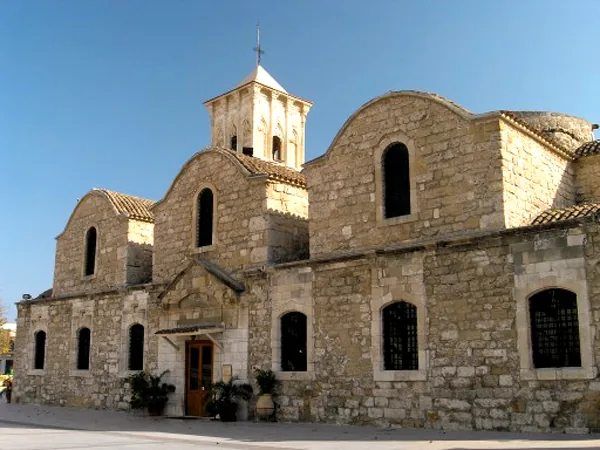 The limestone facades and the bell tower – which is uncharacteristic of the Byzantine style – give the cathedral a unique appearance. Although the interior was severely damaged during the Ottoman period and in the 1972 fire, the church’s current iconostasis makes a tremendous impression.
In some older sources, the Church of Saint Lazarus is referred to as a monastery. This is most likely due to the numerous church buildings and the cemetery situated next to the church. One of these buildings now houses a museum.
After visiting the church, you can head to the medieval fort, which now houses a history museum, or take a stroll through the narrow streets to the city’s shopping centre, where we bought some wonderful Cypriot muscat wine and traditional sweets from one of the shops.
To ‘Black Mountain’
Another stop on our journey was the Monastery of St George Mavrovouni.
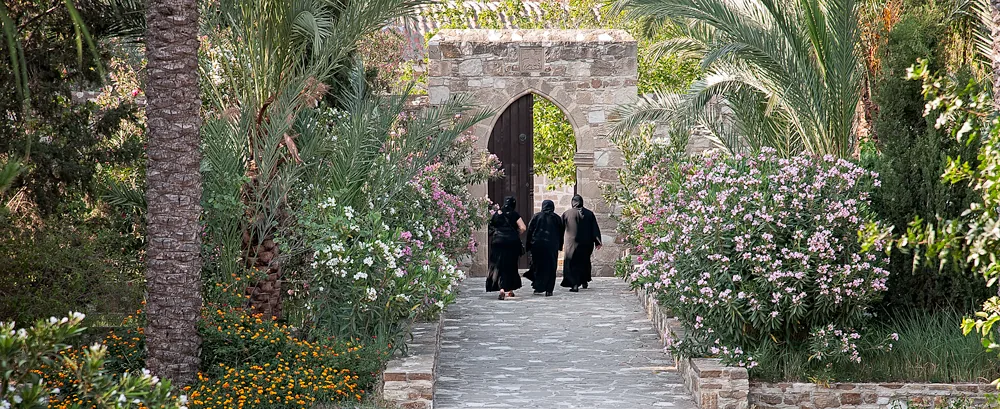
It is situated just 15 km from Larnaca, so we reached it quickly. The monastery stands in isolation, far from any villages and the main road, so it’s not easy to get there on your own. But it’s definitely worth a visit.
The monastery’s cosy, peaceful atmosphere undoubtedly has a beneficial effect on visitors.
 The trip turned out to be surprisingly easy and enjoyable. There was none of the usual tourist hustle and bustle. We managed not only to visit the planned places of worship, but also to see the town. I would recommend it to anyone travelling with children.
Cost of the tour:
- adults €50;
- child €25.
To book the tour, you can fill in the online booking form, email us at: or call us on: +357 25 310 692.


