Emergency assistance in Cyprus: 112 and on-duty pharmacies
When to call 112, what to tell the operator, where to go in an emergency, and how to find the nearest open pharmacy using the official list.
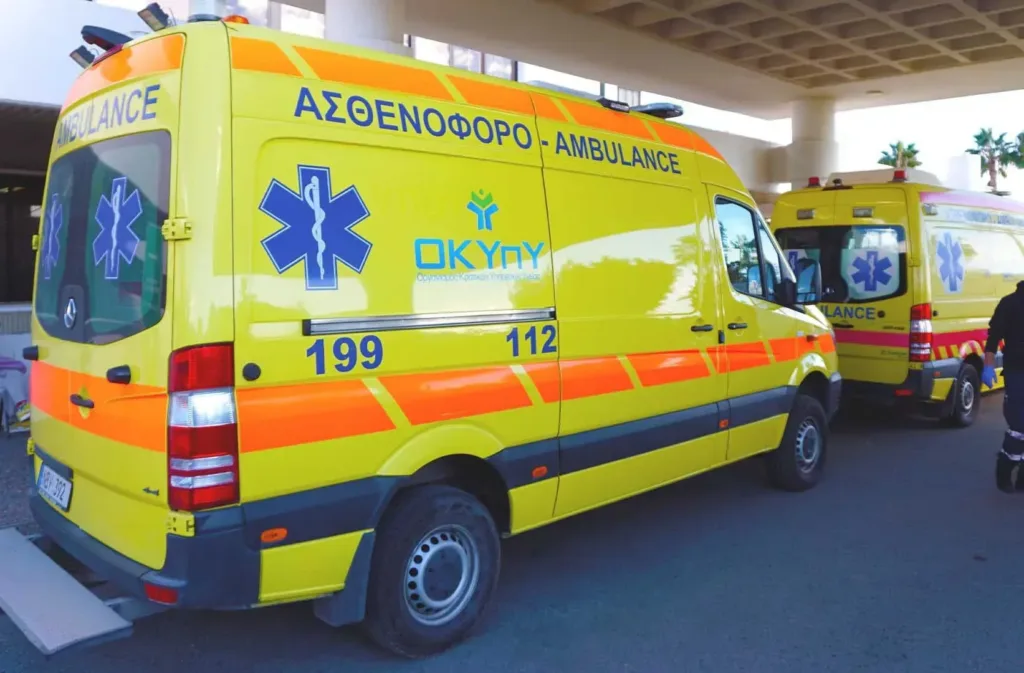
Checked: 24 September 2026.
When to call 112
Call 112 in the event of an immediate life-threatening situation or a sudden serious medical condition: difficulty breathing, loss of consciousness, signs of a stroke or heart attack, severe bleeding, serious injury, convulsions, severe burns or a life-threatening allergic reaction. Do not delay calling to try to find a diagnosis yourself on the internet.
112 is the single emergency number and is available free of charge. To coordinate ambulance services, the state service also publishes the number 22887171, but in a dangerous or unclear situation it is easier to use 112. The dispatcher determines the appropriate response based on the reported symptoms, location and available resources.
If the condition is not life-threatening, contact your GP, the out-of-hours service or another appropriate channel within the healthcare system. An ambulance is not a convenience transport service. If in doubt, describe your symptoms honestly to the dispatcher; do not downplay or exaggerate your symptoms in the hope of a faster response.
What to tell the dispatcher
Start with the exact location: town or city, street, house number, floor, entrance, landmarks and coordinates if the address is difficult to find. Then state what has happened, the approximate age, level of consciousness and breathing, any nearby hazards and a contact number. Do not hang up until the dispatcher tells you to do so.
Answer questions and follow first aid instructions only if it is safe to do so. Ask someone else to meet the emergency services, open the gate, hold the lift and remove any animals. If the person’s condition changes, report it again. Do not move the casualty unless necessary, especially after an injury, unless the location is safe.
Have their ID, a list of medications, allergies and medical conditions ready, but do not delay the call whilst waiting for these documents. If the person does not speak Greek or English, use clear, key words and find an interpreter nearby; do not hand the call over to a random stranger with access to sensitive information.
Safety measures before the ambulance arrives
First, make sure the scene is safe: traffic, fire, electricity, water or an aggressive person could create a second casualty. Follow the dispatcher’s instructions. If the person is not breathing normally, begin the resuscitation procedures you have been instructed to perform and ask for an automated external defibrillator (AED) if one is available.
Do not give food, drink or medication to an unconscious person, and do not use someone else’s prescription. If you suspect poisoning, keep the packaging, but do not induce vomiting without professional assistance. In the event of bleeding, apply direct pressure using a suitable material and protect yourself from contact with blood.
Note the time the symptoms began, particularly if there are signs of a stroke, seizures or chest pain. Gather only what is essential and keep the area clear. Filming and posting are not permitted: the medical team needs space, accurate information and privacy, not footage of what is happening.
Accident and Emergency Departments
Public Accident and Emergency departments accept urgent cases 24 hours a day at the hospitals listed. Patients are triaged on arrival according to the severity of their condition, so someone who arrives later may be treated sooner. The queue is not strictly based on the time of registration, and arguing with staff will not speed up the clinical assessment.
Bring your ID, GeSY or insurance details, a list of your medications and any available medical records. However, in a life-threatening situation, do not go home to fetch your medical records. Your companion should know your family’s contact details and assist with your medical history without disrupting the examination. It is best not to bring valuables.
Payment and cover depend on your status and the type of service. Official information specifies a special procedure for emergency care and GeSY beneficiaries; however, the institution will confirm the personal bill. Do not delay seeking treatment whilst calculating the cost; once your condition has stabilised, request the documents and an explanation of the charges.
An urgent problem that is not a life-threatening emergency
A fever, pain or a worsening of a chronic condition may require a prompt assessment, but not necessarily an ambulance. Contact your GeSY GP, their out-of-hours service or another available doctor in accordance with your cover’s terms. Describe the duration, severity and any worrying symptoms, rather than just the name of the suspected condition.
If the specialist advises you to wait, ask what changes would mean you should call 112 or go to A&E. Make a note of the doses of any medication you have already taken and do not mix medicines containing the same active ingredient. A pharmacist’s advice is useful for medicines, but a pharmacy is no substitute for a diagnosis of a life-threatening condition.
The threshold for seeking medical attention may differ for children, pregnant women, the elderly or patients with a weakened immune system. Follow the individual plan provided by your treating doctor. An online article cannot assess skin colour, breathing, dehydration or neurological signs; if the condition deteriorates rapidly, contact the emergency services.
How to find an on-duty pharmacy
Pharmacies on duty are published by the Pharmaceutical Services by district and date. Do not rely on a single pharmacy as your regular night-time option: the rota changes. On the day you need one, open the official list, select your district and check the date, name, address, telephone number and opening hours.
Call before you go, especially at night, to confirm that the pharmacy is open, that the medicine is in stock, and how to be served. Being on duty does not guarantee that every product will be available. For prescription medicines, have a valid prescription and the patient’s details ready. Do not buy medicine from private individuals if the pharmacy is closed or the medicine you need is not available.
If you need medication for a life-threatening condition, do not drive round to different pharmacies instead of calling 112. For regular treatment, keep an eye on your stock in advance and only discuss alternatives with your doctor or pharmacist. A photograph of the packaging helps with identification, but does not constitute a prescription and does not show the current dose.
Preparing for an emergency at home
Save the number 112, your home address and contact details, and your doctor’s and insurer’s contact details. Keep a list of medicines, allergies, diagnoses and a contact for a close relative in a visible place, updating it whenever there are changes. Explain to children how to give their address and when to call an adult, without making false practice calls.
Your first-aid kit should contain only items that are easy to use and within their use-by dates, and medicines should be stored according to the instructions and out of children’s reach. Complete a recognised first-aid course and find out where the nearest defibrillator is located. Knowing what to do and having a clear route out in advance is more useful than a collection of items without understanding how to use them.
Sources verified on 24 September 2026. The list of on-duty pharmacies and service contact details should be checked again at the time of enquiry. This material does not provide a diagnosis and is not a substitute for a paramedic or doctor: in the event of an immediate life-threatening situation, call 112 and follow the instructions given.
Continue planning
- Pensions and Social Insurance in Cyprus
- Kindergartens in Cyprus
- GESY in Cyprus: registration and choosing a doctor
Official sources
- State Health Services Organisation — ambulance service information
- State Health Services Organisation — Accident and Emergency Departments
- GeSY — access to healthcare services and contacts
- Ministry of Health Pharmaceutical Services — on-duty pharmacies
- Republic of Cyprus Open Data — on-duty pharmacy lists