Why mosquitoes bite some people more often and how standing water helps them thrive in Cyprus
An entomologist explains how Cyprus mosquitoes breed, why some people attract more bites and how removing stagnant water can reduce their numbers.
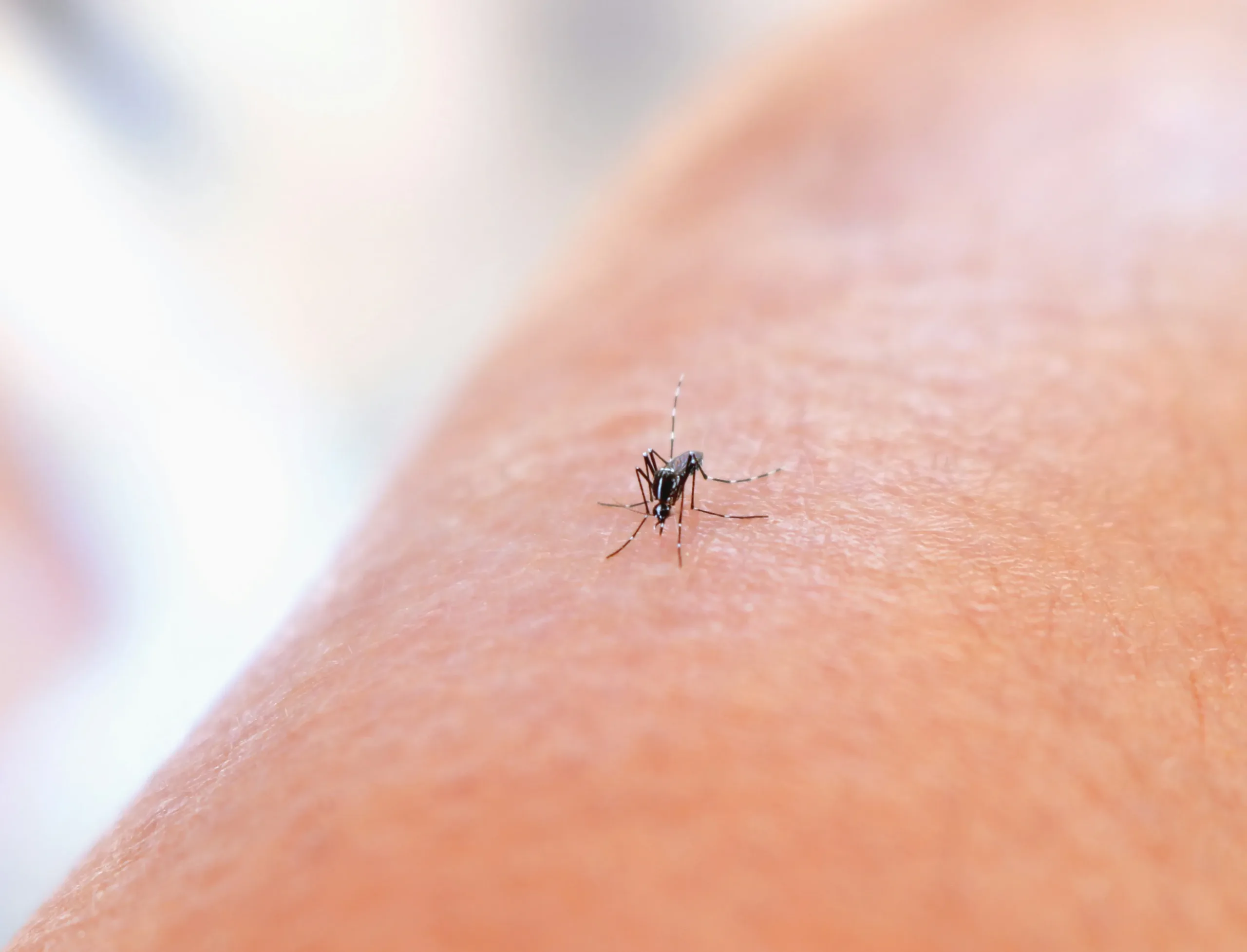
Nicosia, Cyprus. Mosquitoes remain a near-continuous nuisance in Cyprus, with different species and activity levels appearing as the seasons change, according to entomologist Dr Angeliki F Martinou. Their presence depends on local conditions, while differences in human scent and other signals help explain why some people receive more bites.
What attracts mosquitoes to people
Mosquitoes locate potential hosts by detecting exhaled carbon dioxide, body heat and odour, alongside visual signals. Research published in Cell in 2022 found that female Aedes aegypti mosquitoes were more strongly attracted to skin odour samples containing higher concentrations of certain carboxylic acids. Participants who attracted many mosquitoes, and those who attracted few, retained those differences across several years.
Body temperature and the skin microbiome may also influence attractiveness, while perspiration and dark clothes can help mosquitoes find a person. Martinou said certain species, including the Asian tiger mosquito, might favour people whose blood group is O, although temperature, carbon dioxide and body odour were major factors.
She described the notion of “sweet blood” as probably a humorous expression rather than an important explanation for bites.
Martinou, Head Entomologist and Principal Investigator at the laboratory of Vector Ecology and Applied Entomology, Joint Services Health Unit, British Forces Cyprus, said only a small proportion of the roughly 3,500 mosquito species worldwide favour humans as hosts or present a danger to them.
Only females consume blood, obtaining nutrients necessary for egg development, while mosquitoes of both sexes also consume pollen and nectar. Depending on their species, females can feed on birds, amphibians, reptiles and other mammals.
Why activity varies across Cyprus
Martinou said Cyprus could not easily be assigned one distinct mosquito season. Climate and species matter, but conditions can also differ between individual gardens or neighbourhoods. Sheltered spots may support development even when the surrounding area is otherwise unsuitable.
She explained that mosquitoes need water to develop, making substantial rainfall followed by warmth favourable to them. Rainwater left behind without evaporating can provide breeding sites. For certain species, development can take just one week when temperatures reach approximately 25C or higher.
However, Martinou said rainfall was not essential for reproduction. Garden irrigation, particularly evening watering, can leave small amounts of water in plant saucers, containers and other garden objects.
“Some mosquito species do not need a lot of water to develop, even a tablespoon of stagnant water is enough,” Martinou says.
Different species use different breeding sites
Martinou explained that water requirements vary between species. Culex pipiens, the common house mosquito, deposits eggs on water and needs more of it than some other mosquitoes. The species can carry West Nile virus.
Its preference for water rich in organic material allows it to reproduce in septic tanks and cesspools. Martinou said it had been established for a long time in Cyprus and other parts of the Mediterranean.
The Asian tiger mosquito, Aedes albopictus, and Aedes aegypti, known as the yellow fever mosquito, can instead develop in very small volumes of water. Their eggs are deposited on moist surfaces and can remain viable for months after those surfaces dry out. Subsequent rainfall or garden watering can trigger hatching.
Removing stagnant water can therefore lower mosquito numbers in the immediate area, although the differences in attraction between individuals mean that two people sharing a garden may still experience very different levels of biting.
This news item was generated automatically by Cyprus Inform from publicly available materials. Report an error →