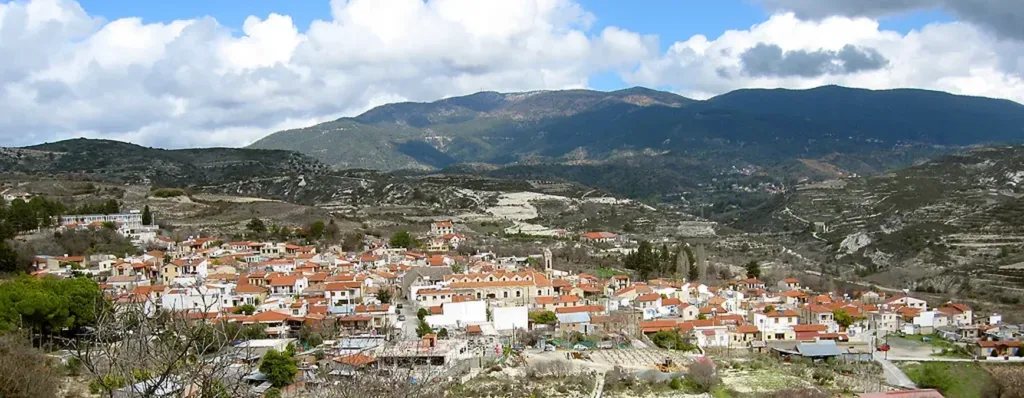
Omodos: what to see and how to plan your trip
About the place
Checked: 13 September 2026.
Omodos and its place on the itinerary
Omodos is situated in the Limassol district at an altitude of around 800 metres and is one of the wine-producing villages on the southern slopes of the Troodos Mountains. The official distance from Limassol is about 42 kilometres, but the mountain road takes longer to travel than the same distance on the motorway. It is best to plan a visit here as a separate stop on your itinerary.
The main reasons to visit are the stone-paved central square, the monastery complex, the wine-making traditions, the local arkatena biscuits and the craft shops. This is not a theme park: the residents use the streets, the church and the roads every day. Please respect private property, do not block the way, and do not turn residential courtyards into photo spots.
Omodos maintains a distinct, independent focus within the general guide to Troodos. This guide examines one village in detail, whilst the mountain hub helps you choose a regional itinerary. There’s no need to repeat the full list of all the villages or trails on this page: it’s more useful to explain how to spend a few hours in Omodos specifically.
The square, the monastery and a stroll
Start at the authorised car park outside the cramped historic centre and walk to the main square. From there, it’s easy to walk to the Monastery of the Holy Cross and the neighbouring museums or workshops. The streets are short but sloping, with uneven cobblestones and steps, so suitable footwear is more important than the short distance involved.
The monastery and church require modest dress, silence and respect for religious services. Opening hours and access to individual rooms may vary, and religious events take precedence over tourist timetables. Do not take photographs where it is prohibited, do not touch relics, and do not promise your group entry without up-to-date confirmation.
After the main square, turn into a few side streets, but keep your bearings and do not enter private property. For visitors with reduced mobility, check in advance the surface from the car park to the square and the specific entrance. The mere presence of tourist coaches does not guarantee a fully accessible environment.
Wine, zivania and responsible tasting
Omodos is closely linked to the region’s wine-making culture, and the village offers wines and zivania. Tasting is not a compulsory part of the visit and may be subject to various conditions. Before you start, check the price, quantity, any included tour and whether purchases are possible. The village’s name does not guarantee the quality or origin of every bottle.
The driver must not consume alcohol. Even a small amount can impair safe judgement, and the winding mountain roads require full attention. If the whole group wishes to take part in a tasting, use an organised transfer, a guided tour or a pre-booked taxi with a clear waiting time agreed in advance. Do not get into a car with a driver who has been drinking.
Purchases should be transported and stored in accordance with the manufacturer’s recommendations, and luggage regulations should be checked with the carrier. Zivania is a strong spirit; claims of its medicinal properties are not substantiated by the drink’s traditional status alone. Choose souvenirs based on taste and labelling, not as a health remedy.
Crafts, food and shopping
In the village, you’ll find lace, embroidery, glassware and other handcrafted goods. Ask where and by whom an item was made if local origin is important to you. The word ‘traditional’ on a price tag does not guarantee that the item is handmade. Take your time to compare quality and check the returns policy before paying.
Arkatena is a type of bread typical of Omodos, made with a special sourdough starter. Availability and freshness depend on the bakery and the time of day, so specific items cannot be guaranteed. If you have any allergies, check the ingredients directly with the seller; the product name does not replace information about sesame, nuts, milk or other ingredients.
The restaurant on the square is convenient, but it may be busy at weekends. Booking is advisable for large groups. Prices and menus are subject to change, so an old receipt is not a current price list. Allow time for a leisurely stroll after your meal and don’t try to make up for a short visit by buying too much.
How to get there and where to park
The official description indicates access routes from Limassol via the E601, B8, E802 or F825. Road numbers help with navigation, but check for current road closures and road conditions before setting off. Your sat-nav may suggest a narrower route through the village; follow the signs and do not drive where your vehicle’s dimensions are clearly unsuitable.
In Cyprus, they drive on the left. Mountain serpentine roads require moderate speed, a safe following distance and avoiding overtaking where visibility is poor. It is more difficult to return in the evening, so allow plenty of time. In winter and after bad weather, check road reports; do not attempt to bypass a closed section via a random secondary road.
Park in a designated area and finish the journey on foot. Attempting to drive right up to the square carries the risk of getting stuck in a narrow alleyway or inconveniencing local residents. Taking a bus or joining an organised tour eliminates the need to drive, but you should confirm the timetable, the duration of the stop and the meeting point in advance.
What to combine with Omodos
For a leisurely day out in Omodos, it’s enough to combine it with one neighbouring village or a short, pre-selected stop. Don’t try to squeeze in Pafos, the Troodos peak and Limassol all in one loop just because your sat-nav suggests it. The actual time required includes parking, a walk, lunch and a slow stretch of mountain road.
It’s best to set off from Limassol in the morning and return before dark. If your itinerary continues in the Troodos Mountains, choose destinations on the same side of the range. For travellers without a car, a guided tour with a clear list of stops is ideal; check that the time spent in the village isn’t reduced to just a quick shopping trip.
The annual fair around 14 September affects traffic and congestion, but the exact programme is confirmed for each specific year. On public holidays, do not expect to find standard parking or a free table. If your main aim is a quiet architectural stroll, choose a different date.
Seasonality and a checklist for your visit
In summer, the altitude makes the weather milder than on the coast, but the sun and heat remain. Set off early and take water with you. In spring and autumn, rain and slippery stone paths are possible. In winter, you’ll need warm clothing, a short itinerary and a check on road conditions. The weather forecast for Limassol does not automatically reflect conditions in the village.
Before setting off, check the road conditions, the opening hours of the monastery or museum, any booked tastings and your return route. Bring closed-toe shoes and appropriate clothing for religious sites. Appoint a driver before the trip. For people with reduced mobility, check parking facilities and access to the specific destination, rather than the village as a whole.
Once there, respect the locals, road signs and private property. If the car park is full or the road is restricted, do not create a dangerous detour. It is best to view Omodos not as a shopping trip, but as a few hours spent in a lively mountain village; always double-check opening times, prices and events for the date of your visit.
Continue planning
- Troodos: one guide to the mountain region
- Limassol: a city base for the route
- Lefkara: another craft village