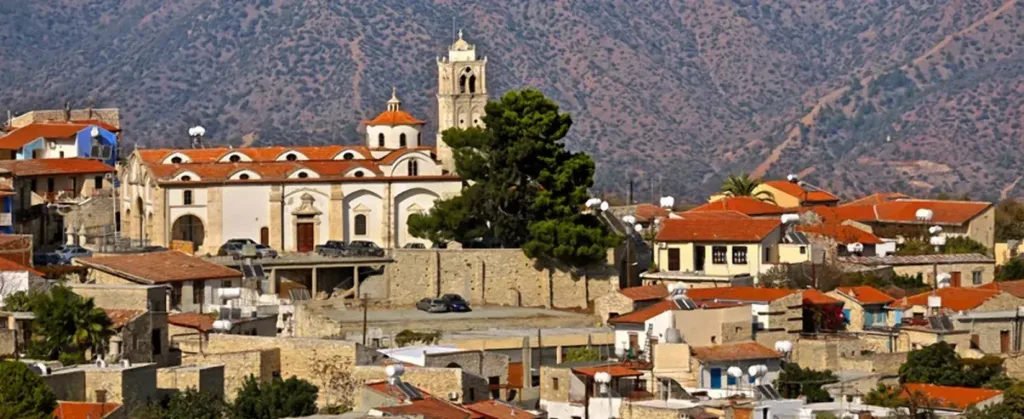
Lefkara: lace, silver and a stroll through the village
About the place
Checked: 13 September 2026.
Pano-Lefkara and the logic behind the trip
When travellers mention Lefkara, they usually mean Pano-Lefkara – a mountain village in the Larnaca district known for its stone buildings, lace and silver craftsmanship. Kato Lefkara is nearby, so it’s worth checking your destination before setting off. It’s easier to explore the historic centre on foot from a designated car park rather than trying to find a way to each individual shop.
Lefkara is ideal for a day trip of a few hours from Larnaca, Nicosia or Limassol. You can combine a visit here with a trip to one neighbouring village, but it’s not worth making it a stopover between several distant regions. The mountain road, parking, lunch and a stroll take longer than the distance on the map would suggest.
The main aim of this page is to encourage a meaningful walk and the discovery of authentic crafts. The general guide to Troodos covers regional logistics, whilst Lefkara retains a distinct role. A comprehensive list of mountain attractions is not required here: it is more important to understand the layout of the village, its cultural context and the practice of shopping.
Lefkaritika and UNESCO heritage
The tradition of Lefkara lace, or Lefkaritika, is inscribed on UNESCO’s Representative List of the Intangible Cultural Heritage of Humanity. This refers to the knowledge, patterns and transmission of skills within the community, rather than a mark of quality on any item sold in the village. Heritage status does not automatically mean that every napkin is handmade and locally produced.
When buying, ask to be shown the technique, materials and origin of the item. Handicrafts take time to make, which is reflected in the price, but a high price in itself proves nothing. Compare several workshops without feeling pressured, ask about care instructions and keep your receipt. A respectful enquiry is more helpful than attempting to haggle without understanding the labour involved.
Do not ask the artisan to pose whilst working just for a photograph, and do not take photographs of anyone without their consent. If a demonstration is offered, check whether photography is permitted. Cultural heritage thrives through practice and teaching; a purchase only serves to support it when the provenance and conditions are clear.
Silver and other handicraft purchases
Lefkara is also renowned for its silverware and filigree. Before paying, check the metal, fineness, weight, method of manufacture and the presence of a hallmark or certificate where applicable. The word ‘filigree’ describes a technique or appearance, but does not replace information about the material. Compare items in good lighting.
For expensive purchases, ask for a receipt detailing the item and check the returns policy in advance. Customs and luggage requirements vary depending on the destination country and the carrier. Do not take a seller’s promise of trouble-free transit as a legal guarantee; travellers must check the restrictions themselves before making a purchase.
Ceramics, food and small souvenirs also require you to ask about their origin. An item may be of high quality even if it wasn’t made in Lefkada, but the labelling must be accurate. Do not confuse supporting local businesses with an obligation to buy. Taking the time to chat and appreciate the craftsmanship is often more valuable than a hasty, impulse purchase.
Cobblestone streets, churches and museums
Plan your walking route around the historic streets, the square, the Church of the Holy Cross and a chosen museum or workshop. Don’t try to explore every side street: the slopes and repetitive turns quickly become tiring. Official information and signposts help to connect the points of interest, whilst short stops allow you to appreciate the details of the stone architecture.
The church remains a place of worship. Observe the dress code, maintain silence and respect photography restrictions; do not disrupt the service. Check the opening hours of museums and sites open to the public in advance, especially in winter and during public holidays. If the door is closed, this does not give you permission to look for a private entrance or disturb neighbours.
The streets have uneven surfaces, steps and a noticeable gradient. For people with reduced mobility, check the route from a specific car park to a specific site. The village’s small size does not mean it is barrier-free. It is better to choose a short, verified route than to promise a full tour without checking it first.
How to get there and park
By car, the route depends on your starting point. Cyprus has left-hand traffic, and the final mountainous section requires a moderate speed. Follow the road signs and do not mistake a narrow residential street suggested by your sat-nav for a tourist access road. Before setting off, check for road closures, fuel levels and the weather forecast; in winter, check road conditions.
Use the designated public car park and continue on foot. Do not park your car at the gate, on a bend or anywhere where it obstructs buses or emergency services. On popular weekends, arrive early or be prepared to choose a different location. Searching for a parking space is no excuse for driving into the historic centre.
Public transport and guided tours are available, but their frequency and stop durations may vary. Please confirm your return journey and exact pick-up point in advance. A guided tour is convenient as it saves you from having to drive, though the short shopping stop may not leave time for a museum visit or a leisurely stroll; check the itinerary before booking.
Food, neighbouring villages and the pace of the day
It’s best to plan lunch after your main walk, especially in summer. At weekends, popular eateries get busy, and menus and opening hours may vary. If you have any allergies, check the ingredients with the staff; traditional dish names don’t always list all the ingredients. Use prices from the old menu only as a guide.
Kato Dris or Kato Lefkara can round off the day, if the road and daylight permit. Choose one additional point of interest and check that it is actually open. Don’t add Omodos just because of the similar craft theme: there’s a mountain path between the villages, and each one deserves its own time.
For families with children, short loops and breaks in the square are helpful, but the street remains a thoroughfare for residents. Keep your child close by, do not block the way, and do not allow them to enter courtyards without an invitation. In summer, water and shade are essential before tiredness sets in.
Seasonality and final checks
Spring and autumn are ideal for long walks, but rain makes the stone slippery. In summer, set off in the morning: the altitude does not shield you from the sun and the heat. It is quieter in winter, though workshops, museums and restaurants may operate on reduced opening hours. The weather on the coast isn’t always the same as in the countryside.
Before setting off, check the route, parking, opening hours of your chosen destination and return transport. Take comfortable shoes, water and appropriate clothing for religious sites. For a significant purchase, clarify in advance any questions regarding the item’s origin, materials, receipt and returns policy. This reduces stress and helps you assess the item calmly.
Once there, please respect the local environment and the artisan’s right to refuse photography. Check opening times, prices and availability for your visit date. Lefkara is best discovered through a leisurely stroll and an appreciation of the craftsmanship, rather than by promising to buy an ‘authentic’ item from the first shop you come across.
Continue planning
- Larnaca: a base for visiting Lefkara
- Omodos: a Troodos wine village
- Troodos: the wider mountain route