Larnaca: what to see, where to stay and how to plan your trip
About the place
Checked: 13 September 2026.
What Larnaca is like and who it’s suitable for
Larnaca is a compact seaside town in the south-east of Cyprus, where the airport, the historic centre and the long seafront promenade are all relatively close to one another. It’s a convenient base for a short trip without a car: you can reach most of the main attractions on foot, whilst for more distant beaches and villages you can use the bus, a taxi or a pre-booked excursion.
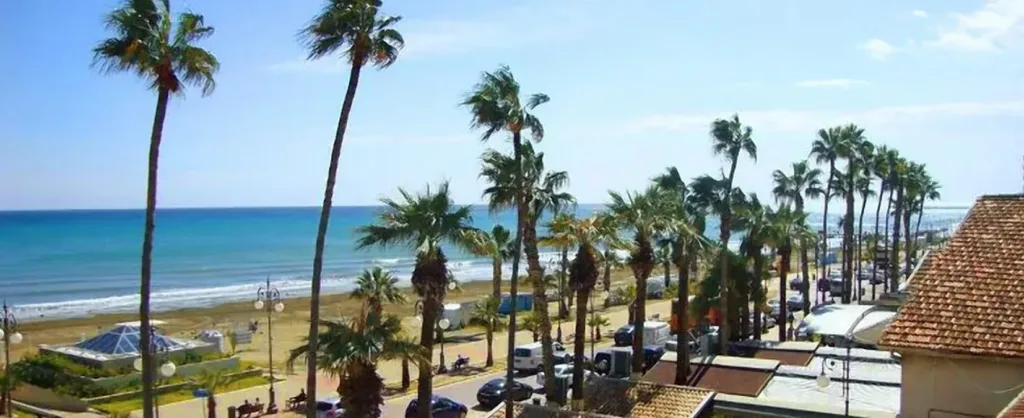
The main promenade runs from the marina along Finikoudes to the medieval castle and the neighbourhoods around St Lazarus Church. The town does not resemble a resort complex with a single enclosed area: residential streets, cafés, municipal beaches, schools and shops all sit side by side. It is therefore best to choose where to stay based on your actual daily routine, rather than simply on the distance to the sea.
Larnaca is ideal for those who value a straightforward arrival, a stroll through the town and a combination of the sea with cultural attractions. For Ayia Napa’s nightlife, the Troodos Mountains or remote nature trails, it’s worth making a separate trip.
Finikoudes, the old town and key attractions
It’s a good idea to start your first exploration at the marina and walk along the Finikoudes promenade. From here, it’s easy to head towards St Lazarus Square, the artisan streets and the castle at the southern end of the beach. An official city map helps you gauge distances and avoid turning your stroll into a mere checklist of sights: allow time to explore courtyards, small workshops and rest in the shade.
St Lazarus Church remains an active place of worship. Please dress and behave with respect for the services, and bear in mind that opening hours may vary. Check the museum, castle and other sites on the day of your visit: public holidays or restoration work may affect access.
For a deeper exploration of the city, add Camarés – the aqueduct on the western outskirts – or the old workshops district. Do not attempt to walk between distant locations in the midday heat simply because the distance looks short on the map. First, identify transport stops and safe crossings; then decide whether a separate trip is worthwhile.
The Salt Lake and the Hala Sultan Tekke Mosque
The Salt Lake lies to the south-west of the city, next to the road to the airport. Its appearance changes noticeably with the seasons: in winter, the water and migratory birds form a single landscape; in summer, the surface may dry out and become lighter in colour. There’s no guarantee of seeing flamingos on any specific date; watch them from a distance and do not stray from the designated path just to take a photo.
On the shore stands the Hala Sultan Tekke, an important Muslim complex. When visiting, wear modest clothing, keep quiet and observe the site’s current rules. Check access and opening hours separately, particularly during religious holidays. It makes sense to combine a visit to the lake and the mosque into a single trip, but do not expect continuous shade or cafés along the entire route.
The walking loop around the lake is not your typical city promenade. The heat, open spaces and sections near the road mean you’ll need water, a hat and a good understanding of your own stamina. For families with young children and people with reduced mobility, it is safer to choose a short vantage point with confirmed access rather than the full circuit.
Beaches and choosing an area to stay in
Finikoudes is ideal for those who want to be at the heart of the action and return to their room without needing transport. There are restaurants, bus stops and the old town nearby, but there is more evening traffic. Mackenzie is located closer to the airport and is known for its wide promenade and views of landing aircraft; it is worth assessing the noise levels and the journey to the centre before booking.
The town beach does not guarantee consistent water depth, wave conditions or a full range of facilities all year round. Look out for the information board, flags and lifeguard post (if in operation) whilst you’re there. Do not simply carry over a list of available beaches or lifeguard hours from an old article to your current trip: check the facilities, surfacing and duty season for your specific dates.
For a quieter stay, you might consider accommodation further from the seafront, whilst checking the lighting on the way back and evening bus services. For families, a safe route to a suitable entry point into the water is more useful than a mere ‘near the sea’ label.
Transport, the airport and travelling from the city
Buses and taxis are available from the airport to the city, but you should check the timetable and route with the operator before arrival. The name ‘Larnaca’ in your booking does not always mean walking distance from the seafront: some properties are located in neighbouring areas. Make sure you have the address, telephone number of your accommodation and your drop-off point to hand, especially if your flight arrives late.
Intercity buses connect Larnaca with other towns, whilst the local network serves the suburbs. Do not combine different transport systems using a single outdated timetable: the stop, payment method and last return journey may vary. For a day trip, book your return journey first, then plan your itinerary once you’re there.
A car is useful for visiting villages and a few remote locations in a day, but Cyprus drives on the left. Check the hire terms, insurance, parking and permitted roads. If you have little experience of driving on the left, do not plan a complex route straight after a night flight; a day in the city without a car will give you time to adapt.
A ready-made plan for a short trip
On the first day, stay in the city centre: visit the marina, Finikoudes, St Lazarus Church, the old streets and the castle. This route can easily be shortened if it’s hot and doesn’t require a car. Choose either a museum or a guided tour so that opening times don’t dictate your whole day. In the evening, head back to the seafront or Mackenzie, depending on where you’re staying.
On the second day, plan a visit to the Salt Lake and Hala Sultan Tekke, followed by some relaxation by the sea. If the season, weather or access isn’t suitable, swap the nature section for a museum visit and a stroll through the residential neighbourhoods. You could spend the third day in Lefkara, Ayia Napa or another town, but only after checking the transport timetable for the return journey.
For a longer stay, alternate a packed day out with a quiet day in town. Don’t plan several itineraries in a row under the blazing sun, and don’t treat the airport as a ‘wasted day’: the terminal’s proximity means you can save your final stroll for the end without having to travel far. You’ll need to allow extra time both before your return flight and to allow for possible road changes.
Seasonality, heat and final checks
In summer, the main constraints are the heat and intense sunshine. Long walks are best saved for the mornings and evenings; take water with you before you set off, and use a closed museum as a midday break. In winter, the town remains liveable and convenient, but beach facilities are reduced, the wind feels stronger, and the short daylight hours alter the pace of outings.
Before visiting nature areas, check for fire hazard warnings and road closures. Do not enter a closed footpath and do not leave your car at the roadside if it obstructs emergency vehicles. In the event of an emergency in Cyprus, dial 112; the operator will need your exact location, a landmark and a description of the situation.
The day before your trip, check the official map, opening times of your chosen attractions, transport options and the weather forecast. Once there, follow the signs and instructions provided by the relevant services, rather than relying on a saved screenshot. This guide provides a framework for planning; timetables, prices and availability are subject to change and must be confirmed for your specific dates.
Continue planning
- Lefkara: lace, silver and a village walk
- Ayia Napa: resort and nearby routes
- Limassol: city guide and areas