Archaeology and UNESCO Sites in Cyprus: A Practical Guide
How to combine a visit to Cyprus’s three World Heritage Sites with museums and archaeological excavations, check accessibility and ensure you comply with heritage conservation regulations.
Checked: 23 September 2026.
What’s on the UNESCO list
The Republic of Cyprus has three entries on the UNESCO World Heritage List: Pafos, the painted churches of the Troodos region, and the Neolithic settlement of Hyrakleia. A single entry may comprise several distinct sites. For example, the Pafos site comprises monuments from different areas and eras, whilst the Troodos entry consists of a group of churches.
UNESCO status does not mean that the entire old town, every museum or any ancient ruin on the island is included on the list. The Cyprus Museum, Kourion, Amathus and many other important sites are protected by national legislation and managed by the Department of Antiquities, but have a different status.
This content expands the previous page on the Cyprus Archaeological Museum into a navigation hub. The existing URL is retained to preserve links, whilst the museum becomes one of the stops on the route. Detailed site profiles remain separate and are not replaced by the general overview.
Paphos: the city as an archaeological complex
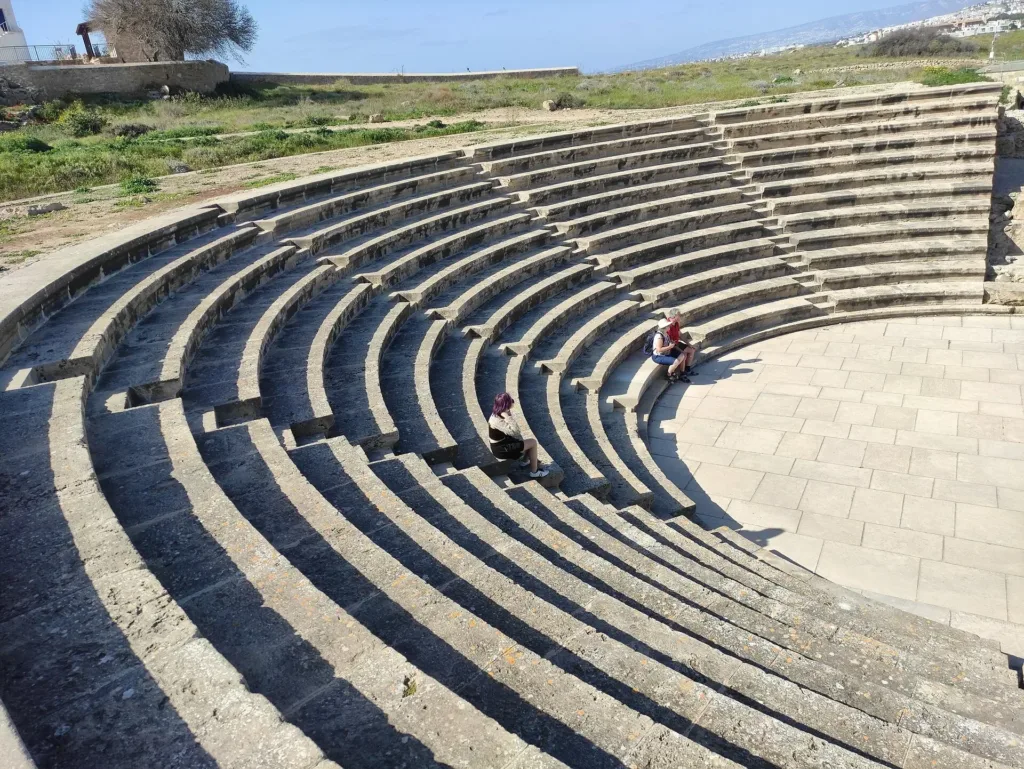
UNESCO attributes Pafos’s significance to the monuments dedicated to Aphrodite and the mosaics of Roman-period villas. For visitors, this is not just a single indoor exhibition: the archaeological park, the tombs, the sanctuary in the Kouklia area and the museum collections are located in different places and require separate visits.
In the archaeological park, most of the route is in the open air. You’ll need water, sun protection and footwear suitable for uneven ground. The mosaics are viewed from walkways, without stepping beyond the barriers. A summer’s midday can compromise both safety and the quality of the visit, so it is wiser to set off early.
Before your visit, check the opening hours and ticket information on the Department of Antiquities’ website, rather than relying on an old review. Individual areas may be closed for maintenance, whilst the rest of the complex remains open. Do not try to cram the park, the tombs and Palaea Pafos into a single short time slot simply because they are part of the same UNESCO site.
Choirokoitia: exploring the Neolithic settlement
Choirokoitia is one of the key prehistoric sites in the eastern Mediterranean. The preserved foundations of circular structures, the defensive wall and the layout of the site help to explain the life of a settled community. The reconstructed houses illustrate what the site may have looked like, but are not the original ancient buildings.
The route runs along a slope and offers almost no shade. People with reduced mobility and families should check accessibility in advance, whilst all visitors should be prepared for the heat and wear non-slip footwear. Information boards link the visible stones to the archaeological interpretation; without them, the site could easily be mistaken for a collection of foundations.
Do not climb on the masonry, do not move the stones, and do not try to find a ‘souvenir’ off the path. Even a small fragment is important because of its position within the stratum. A find does not belong to the tourist who discovered it: it should be left in situ and reported to a member of staff or the Department of Antiquities.
The painted churches of Troodos
The UNESCO site comprises churches and monastic monuments featuring Byzantine and post-Byzantine frescoes. They are scattered across mountain villages rather than gathered in a single complex. Narrow roads and the distances involved make visiting two well-chosen churches a more realistic option than attempting to tick off the entire list in a single day.
Some of the buildings remain active places of worship. Modest dress, silence and adherence to photography rules are mandatory, regardless of your status as a tourist. Opening hours may depend on the caretaker; check contact details before setting off and do not assume the door is open all day.
Frescoes are vulnerable to light, humidity and touch. Do not use a flash, do not touch the walls and do not place items on the church furnishings. If a member of staff restricts entry or photography, this is a measure to preserve the monument, not a service that can be demanded on the basis of a UNESCO ticket.
Museums as a gateway to archaeological sites
The archaeological museums in Nicosia, Limassol, Larnaca and Paphos display artefacts alongside their dates and places of discovery. Visiting a museum before visiting the excavations helps you to distinguish between different periods, materials and the purpose of the artefacts. The old name ‘Cyprus Museum’ has been retained in this page’s address, but the specific building does not represent the island’s entire archaeological heritage.
Exhibitions and access to individual galleries may vary, and major relocation or renovation projects may affect opening hours. Check the official website of the Department of Antiquities. If the search results and the official website differ, refer to the department’s information and confirm by telephone.
Photography, tripods, large bags and commercial photography may be subject to separate regulations. Do not publish unverified captions for exhibits: note down the inventory number or photograph the label where permitted. This will ensure that a museum artefact does not end up being illustrated with the wrong historical period.
Conservation rules and lawful souvenirs
Excavations are carried out with a permit, and archaeological finds are protected by law. Metal detectors, unauthorised digging and the removal of antiquities do not become lawful simply because an object is found outside the museum grounds. Do not buy an item claimed to be of ancient origin without the necessary documentation and permits.
At the site, stay on the paths, do not climb over fences and do not sit on the masonry. Drones may only be flown if all necessary permits and site approvals have been obtained. Any inscription, drawing or coin left ‘as a souvenir’ causes real damage and may result in legal liability.
A safe souvenir is a modern item purchased from a reputable seller with a receipt. A replica must be labelled as such. If you have any doubts about its origin, do not buy it and check the rules with the Department of Antiquities and Customs before your trip, rather than at the border.
How to plan your itinerary
Choose one UNESCO site or one region per day. For Paphos, combine the park with the museum or Kouklia; for Choirokoitia, the settlement with the regional exhibition; for Troodos, two churches confirmed in advance. Allow time for travel, the heat, parking and taking your time to read the information boards.
Before setting off, check the official website for each site: opening hours, ticket prices, accessibility, closures and photography rules vary. Take water and sun protection for open-air areas, and appropriate clothing for places of worship. Do not rely on a single ‘UNESCO ticket’ – the conditions are set by the specific site.
The list and official websites were checked on the date stated, but opening hours may change. This hub explains the structure of the heritage sites and provides links to detailed information sheets; confirm your actual visit with the Department of Antiquities. The preservation of the monument is always more important than a complete itinerary or photographs.
Continue planning
- History of Cyprus: a guide to the periods
- What can you bring home from Cyprus?
- Archaeological reserves in Cyprus
Official sources
- UNESCO World Heritage Centre — Cyprus, list of properties
- UNESCO World Heritage Centre — Paphos
- UNESCO World Heritage Centre — Painted Churches in the Troodos Region
- Department of Antiquities of the Republic of Cyprus — official portal
- Department of Antiquities — Choirokoitia
- Visit Cyprus — Choirokoitia Neolithic settlement