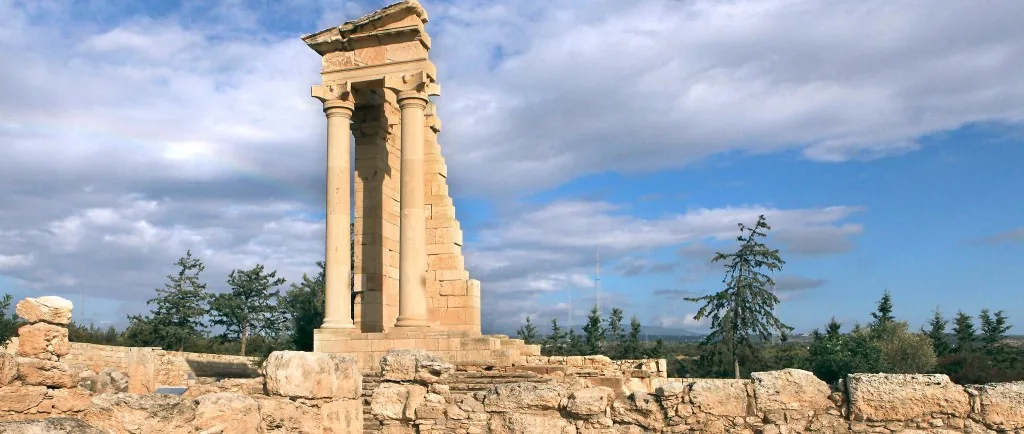
Archaeological reserves in Cyprus
About the place
Have you ever visited any archaeological parks in Cyprus? If not, then you’ve probably missed out on something during your stay on the island. After all, it is only here that you can gain a first-hand insight into the ancient archaeological and historical heritage of this small Mediterranean island and experience the rich and varied culture that existed many centuries ago. Today, we’ll be telling you about Cyprus’s most important archaeological sites.
The ancient city of Kourion
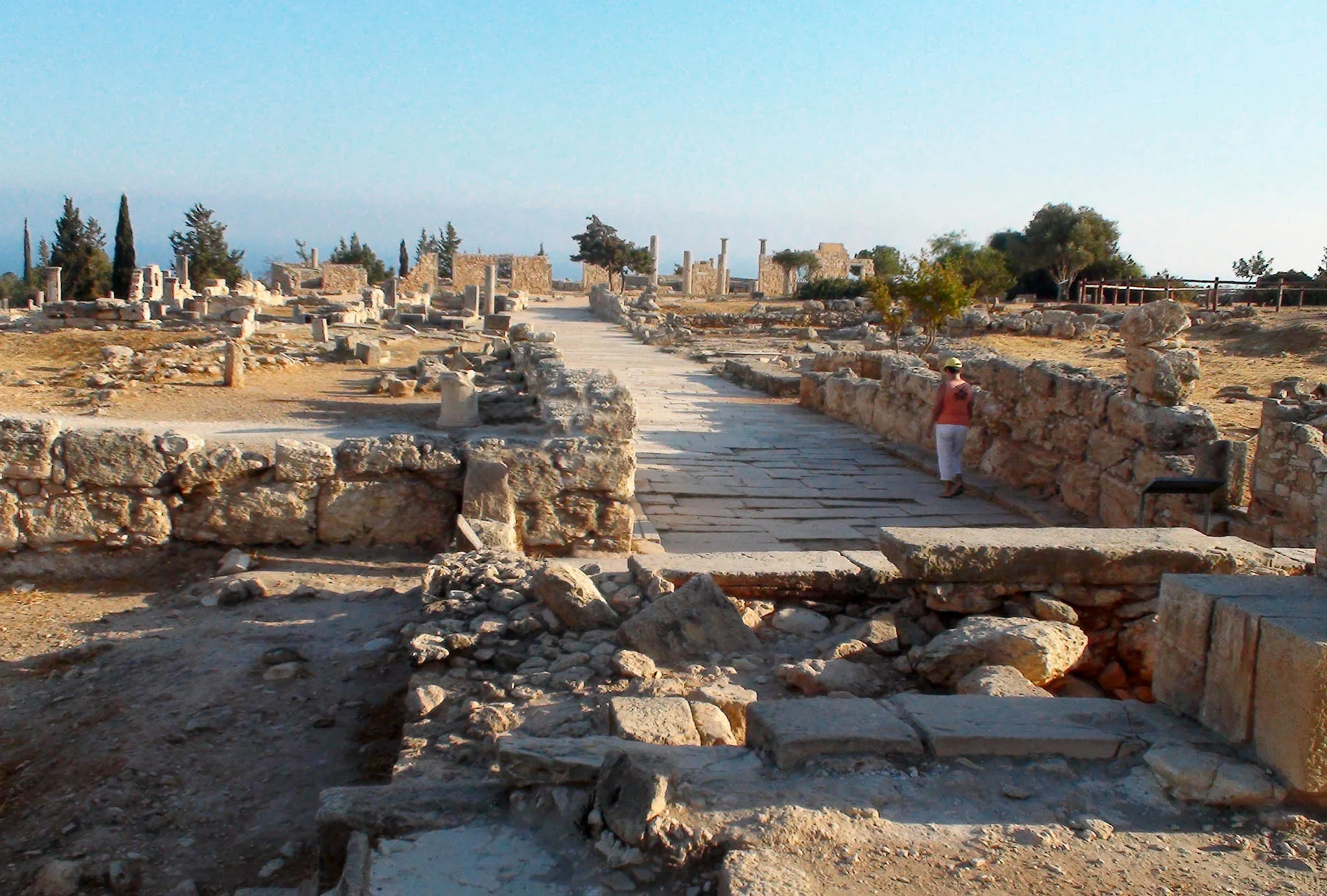 This major archaeological site in Cyprus is situated on the coast, about 5 km south-west of the village of Episkopi. Once you’ve climbed up to Kourion, close your eyes and simply imagine how people lived here in ancient times.
The ruins of Kourion that have survived to this day date back to the eras of the ancient Greeks, the Romans and early Christianity. As Herodotus wrote, the invaders’ victory during the Persian Wars (497 BC) was only made possible by the retreat of Stasenor, who ruled the city-state of Kourion. As a result, Pasikrat, the last king of Curium, fought on the side of Alexander the Great and laid siege to Tyre from the Lebanese coast.
During the period of Roman rule, Curion not only flourished economically but was also one of the main centres of worship of the god Apollo, which was abolished after the island’s inhabitants adopted Christianity. Evidence of this is the cathedral, which was built in the 4th century following a severe earthquake. After the Arab invasion in the 7th century, the bishops’ residence was moved to the neighbouring settlement of Episkopi, and Kourion lost its status.
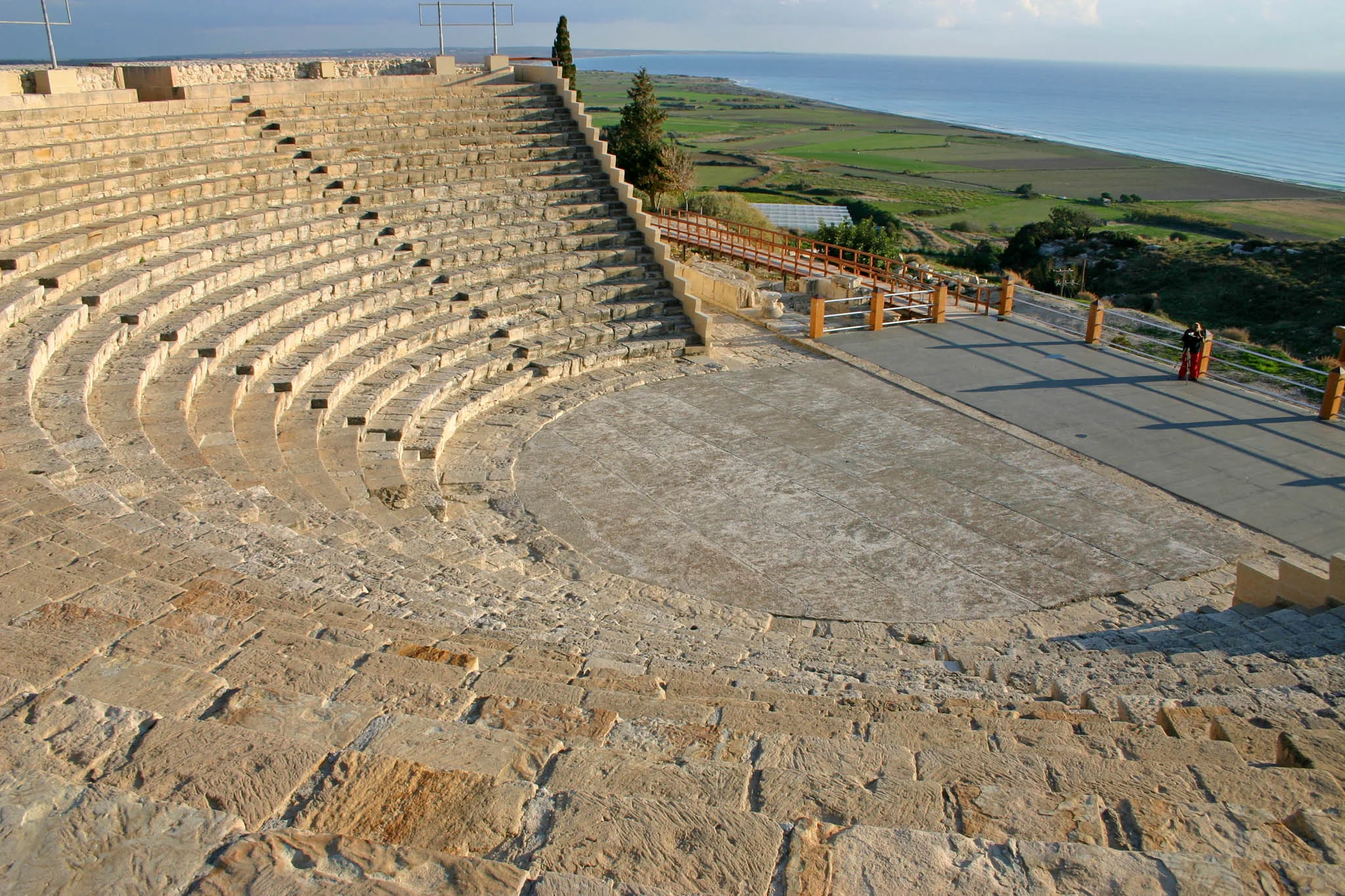 During archaeological excavations in 1933, an ancient theatre was discovered, which was built around the 2nd century BC and remained in use for four hundred years. It is quite possible that classical tragedies by Euripides, Sophocles and Aeschylus were staged on its stage. The ancient theatre has not been forgotten: nowadays, theatrical and musical evenings are also held here, during which audiences have the opportunity to enjoy unforgettable bird’s-eye views of the Mediterranean Sea.
The buildings of Curium have withstood numerous earthquakes, yet many of them have survived to this day, such as the Agora, the House of Achilles, the public baths, and the ruins of the House of Eustolios with its exquisite Roman mosaics.
Originally, Eustolios’s public house was built as a private residence; however, later, following the laying of the mosaic floors and the construction of the baths, it was converted into a public building. Eustolios’s residence comprises 35 rooms arranged around two inner courtyards and a bath complex. Upon entering the house, visitors can read the welcoming inscription: ‘Enter this house happily and for the good’. To the left of the entrance are the servants’ quarters, and the floors are adorned with ancient mosaics depicting symbols of the early Christian communities: a peacock, a fish, a partridge and so on. The baths are situated on the topmost level; their emergence was linked to the development of ancient Greek civilisation during its classical period. In those days, the baths served not only as a place for cleansing the body and ensuring physical health, but also as a common venue for meetings, socialising and entertainment.
On the south-western side lies Achilles’ dwelling, a partially preserved Roman villa with mosaic-decorated floors dating from the 4th century. The most interesting feature is considered to be the mosaic depicting the scene in which Achilles reveals his name to Odysseus at the court of King Lycomedes. It is believed that this room served as a reception area for high-ranking guests.
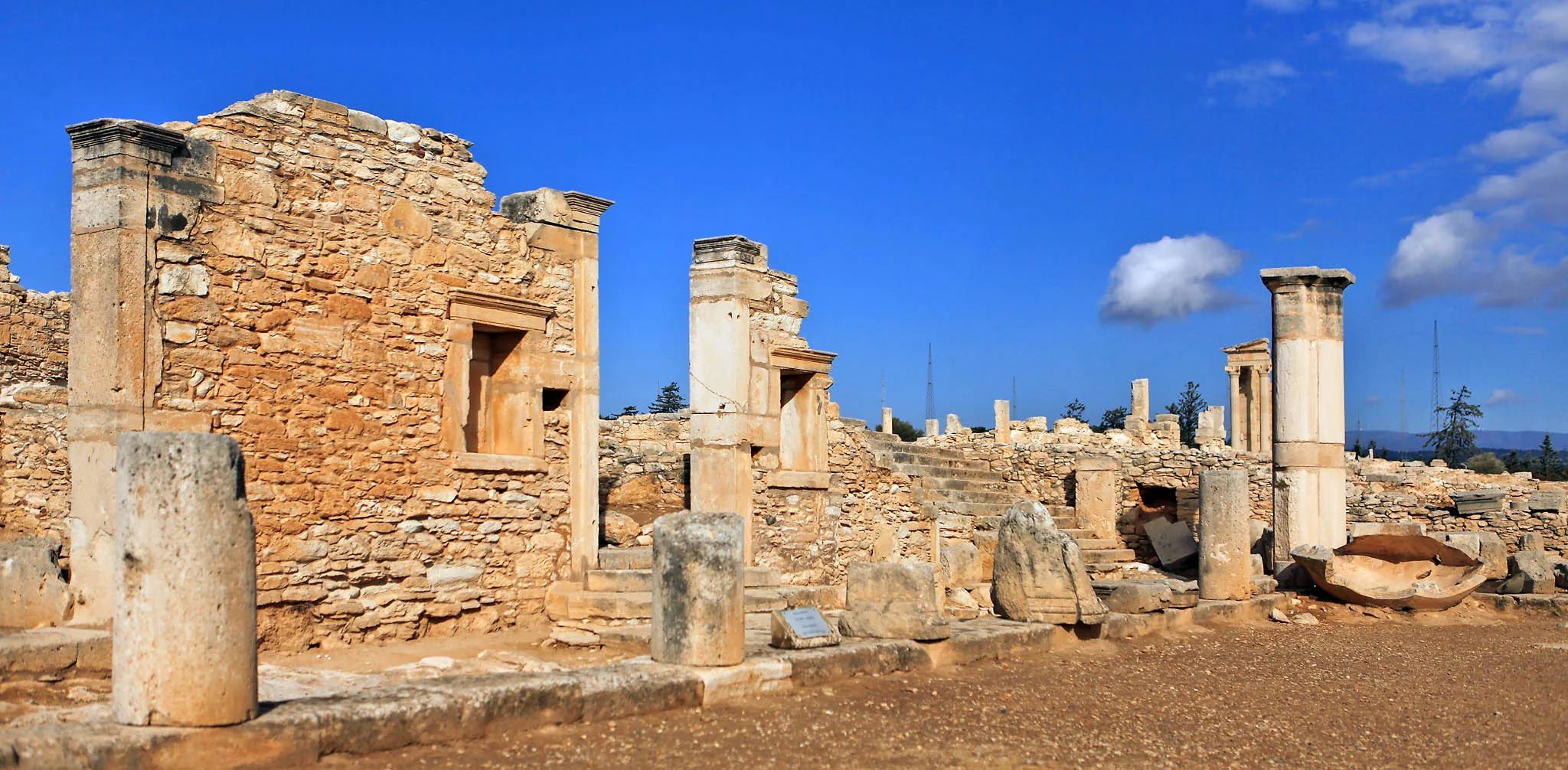
Nea Paphos
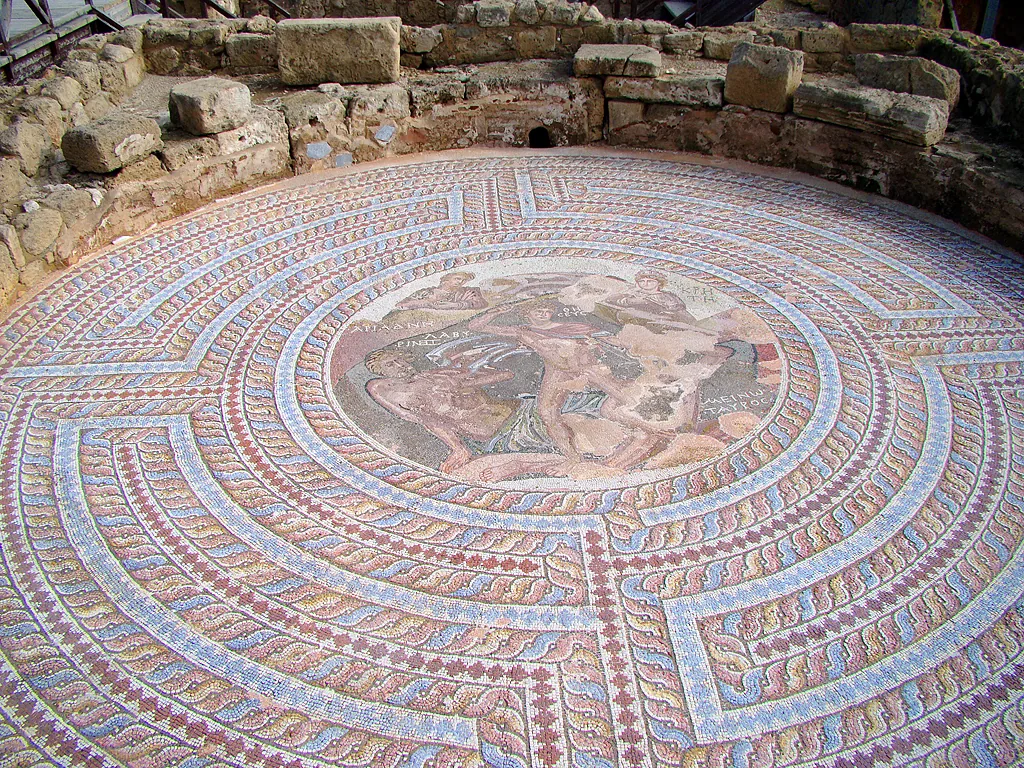 Nea Paphos is situated on a low headland on the south-western coast of Cyprus. According to written sources, it was founded in the late 4th century BC. By the end of the 2nd century BC, Nea Paphos had come to play a significant role as the island’s economic and political centre. Even after the Roman conquest of Cyprus, Nea Paphos remained the capital of Cyprus. Following a devastating earthquake in the 4th century AD, the capital of Cyprus was moved to Salamis. However, Nea Paphos still dominated the other Cypriot cities and only fell into decline after the Arab raids in the mid-7th century. Following a decline that lasted several hundred years, Nea Paphos shrank considerably in size. Its economic and political significance was restored during the Byzantine period and the Middle Ages.
To this day, the area boasts magnificent mosaics in the Houses of Orpheus, Theseus, Eon and Dionysus, as well as structures from the Roman period: the Odeon music school, the Agora and the Asklepieion.
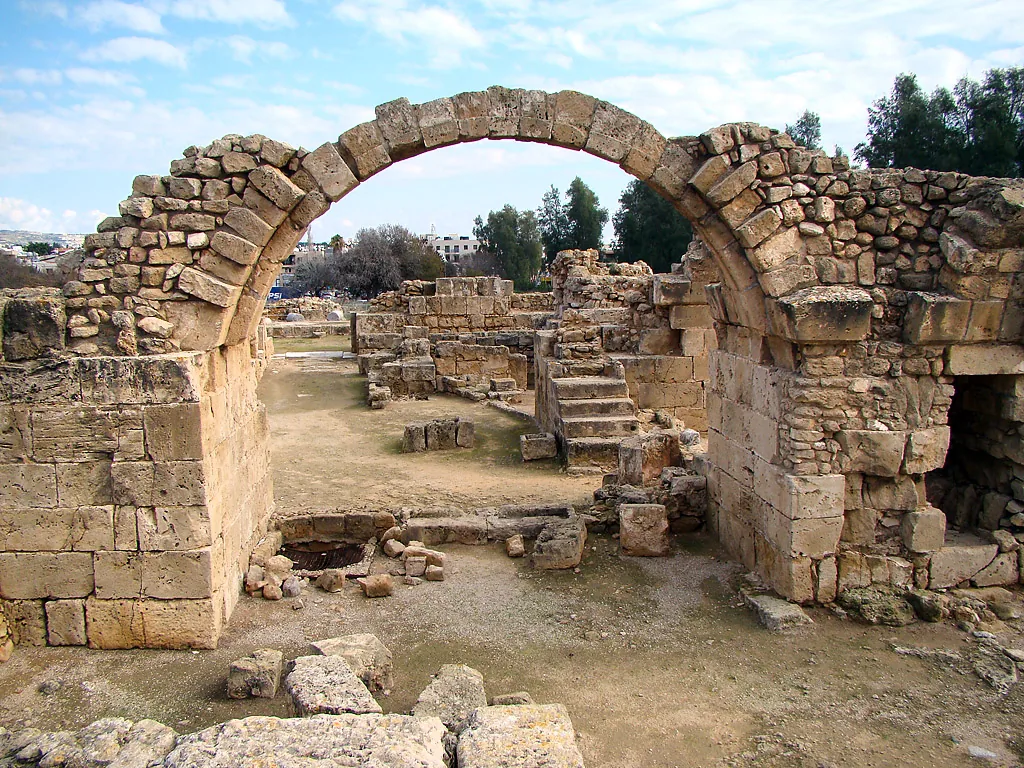 The House of Dionysus is a magnificent Greco-Roman-style building, with rooms arranged around a central courtyard. It is thought that the house was built in the late 2nd century AD, but was destroyed and abandoned following earthquakes. The house covers an area of around 2,000 square metres, of which more than 500 are covered with mosaics depicting hunting scenes from Greek mythology and scenes featuring Dionysus.
The House of Orpheus is also one of the opulent Greco-Roman houses with a central courtyard. This villa was built in the late 2nd – early 3rd centuries AD. The northern part of the building, which housed the baths and reception rooms, richly decorated with floor mosaics, has survived to the present day. The largest mosaic depicts Orpheus amongst wild beasts; at the top, the name of the house’s owner, Titus Gaius Restitus, is inscribed in Greek. In the adjoining room, the mosaic floors depict a scene of Heracles’ struggle with the Nemean lion.
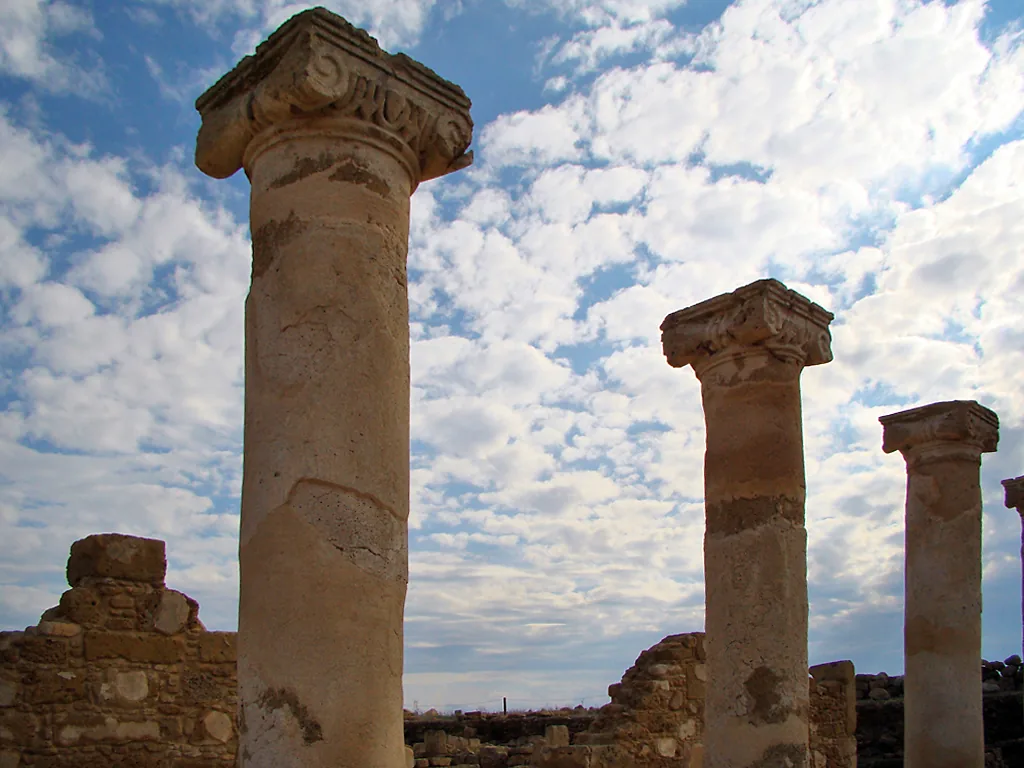 The House of Theseus, built in the second half of the 2nd century AD, is believed to have been the residence of the governor of Cyprus due to its considerable size (over 100 rooms). Most of the rooms are covered with mosaics featuring geometric symbols; there is also a well-known mosaic depicting the battle between the Minotaur and Theseus. In the largest hall, which was most likely an audience chamber, there is a well-preserved mosaic illustrating the scene of Achilles’ first ablution.
In this article, we have discussed the two most significant archaeological parks in Cyprus; however, your exploration of the island’s history and culture need not end there. After all, there are several other smaller, but no less significant, archaeological sites, such as Salamis, Hirokitia, Amatus and many other interesting places.