Tomato confit
Confit, like many culinary delights, was invented by the French. Traditionally, this term refers to a method of cooking meat (most commonly poultry). The meat is braised for a long time in fat at a low temperature, resulting in an exceptionally tender texture. Meat prepared in this way, covered in duck fat, keeps well for […]
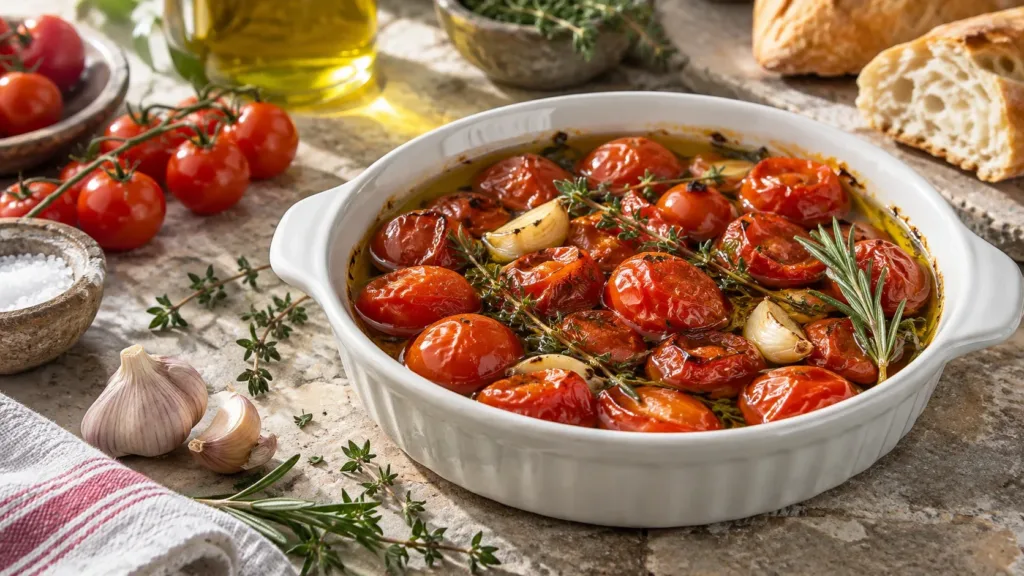
Confit, like many culinary delights, was invented by the French. Traditionally, this term refers to a method of cooking meat (most commonly poultry). The meat is braised for a long time in fat at a low temperature, resulting in an exceptionally tender texture. Meat prepared in this way, covered in duck fat, keeps well for a long time, with its flavour only improving as it matures.
Applying this term to tomatoes is a bold move. I first came across the phrase ‘tomato confit’ thanks to the charming Nika Belotserkovskaya, who lives in Provence. Unable to resist the temptation to try this unusual dish, I got busy in the kitchen and didn’t regret it…
– Gogi, do you like tomatoes?
– I like them in a meal, but otherwise, not really…
I love that joke, but as for tomatoes… I hardly ate them at all as a child; I only acquired a taste for the ‘plump little gentleman’ once I’d grown up.
Cyprus grows some wonderful tomatoes. All year round, you can buy tomatoes in the supermarkets that have soaked up the sun and the fresh sea air. A friend of mine, who used to visit the island regularly on business, would bring half a suitcase full of ripe tomatoes back from Cyprus to Moscow and throw a feast at home with his friends.
The confit made from local tomatoes turns out wonderfully: tender, with a rich sweet-and-sour flavour, enhanced by the aromas of fresh herbs and olive oil. This dish is very different from sun-dried tomatoes, and if the latter leave you cold, then perhaps this dish is for you. Let’s get started!
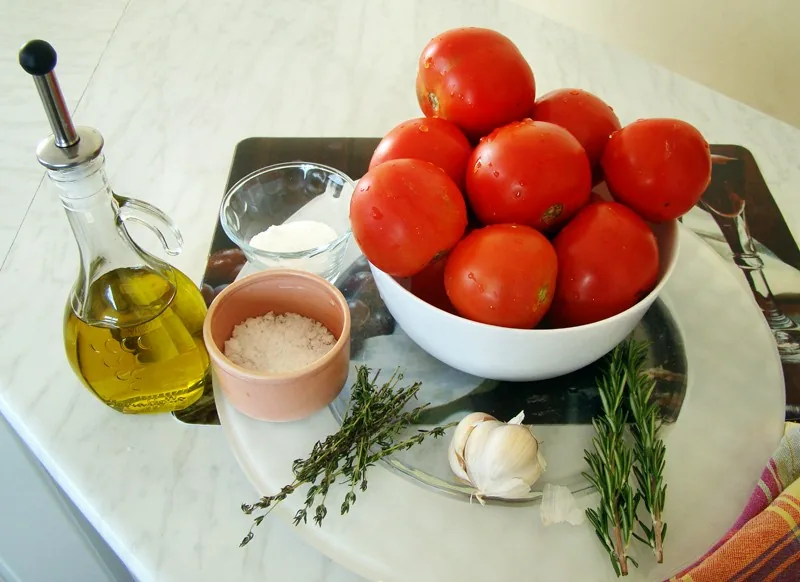 |
We’ll need: 1. a dozen tomatoes; 2. 4–5 sprigs of thyme; 3. a couple of sprigs of rosemary; 4. half a head of garlic; 5. sugar; 6. coarse sea salt; 7. good-quality extra virgin olive oil. I love cooking with ingredients like these: the freshness of Mother Nature, gathered on the table, is a feast for the eyes and inspires culinary exploits! |
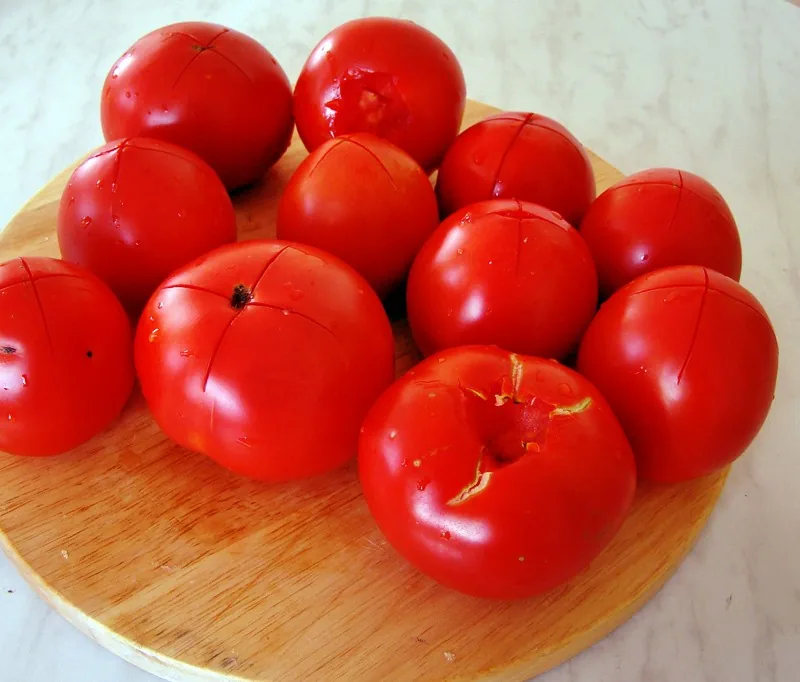 |
First, I peel the tomatoes. To do this, I bring a pan of water to the boil, score the tomatoes crosswise and cut out the ‘bottom’. |
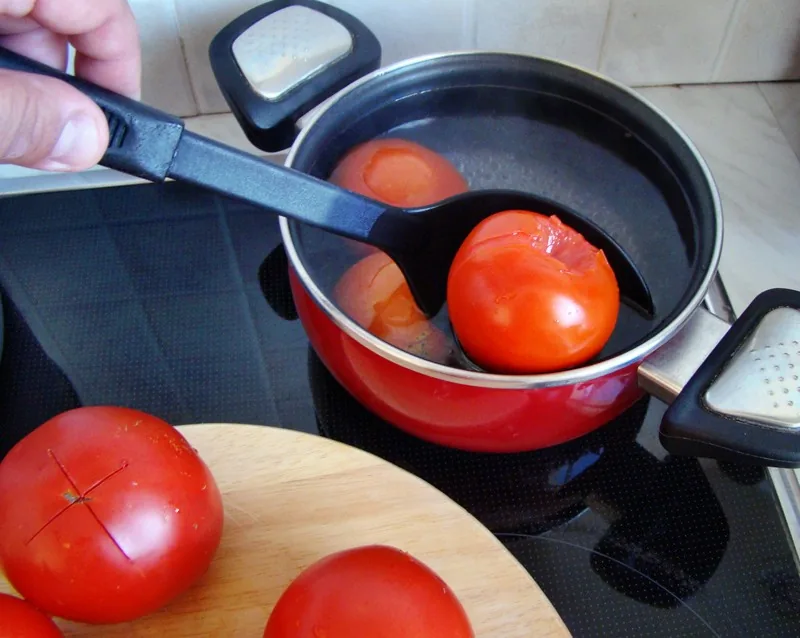 |
I place a few tomatoes at a time into the boiling water, take them out after just 10 seconds (they don’t need to be cooked, just blanched) and plunge them into cold water. |
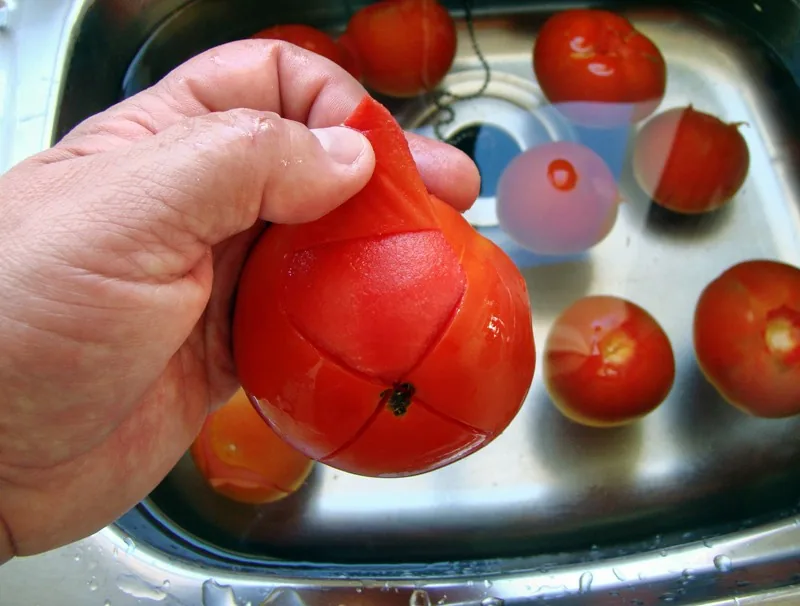 |
Look, the skin comes off easily, revealing juicy, tender tomato flesh underneath. I usually take 1 or 2 extra tomatoes, because they’ll disappear somewhere during the cooking process anyway |
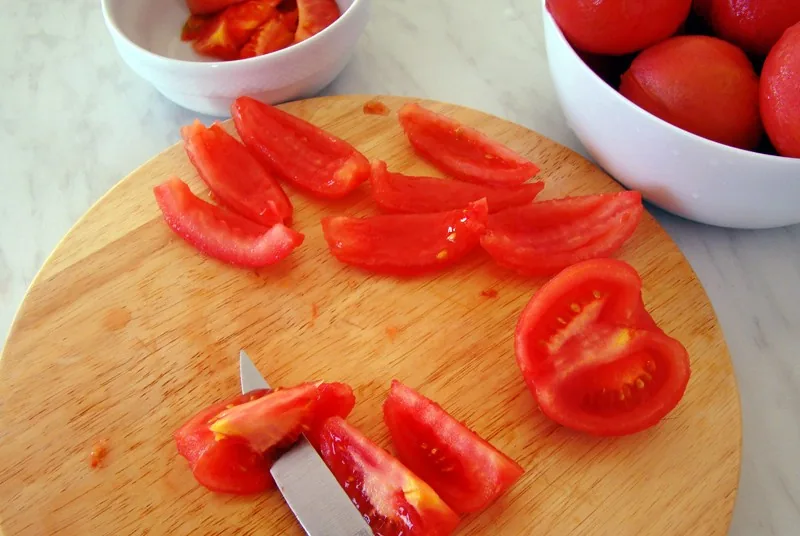 |
Next, I cut the tomatoes into 6–8 slices (depending on the size of the ‘señor’) and cut out the inner partitions, removing the seeds. Only the outer walls remain – tender and fleshy. |
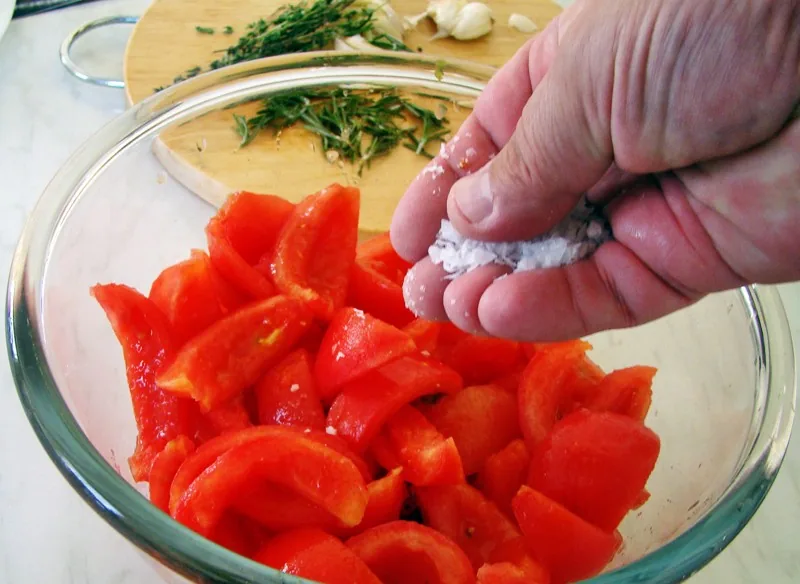 |
I place the prepared tomatoes in a bowl, add a generous pinch of salt and the same amount of sugar, pour in a little olive oil and mix gently. |
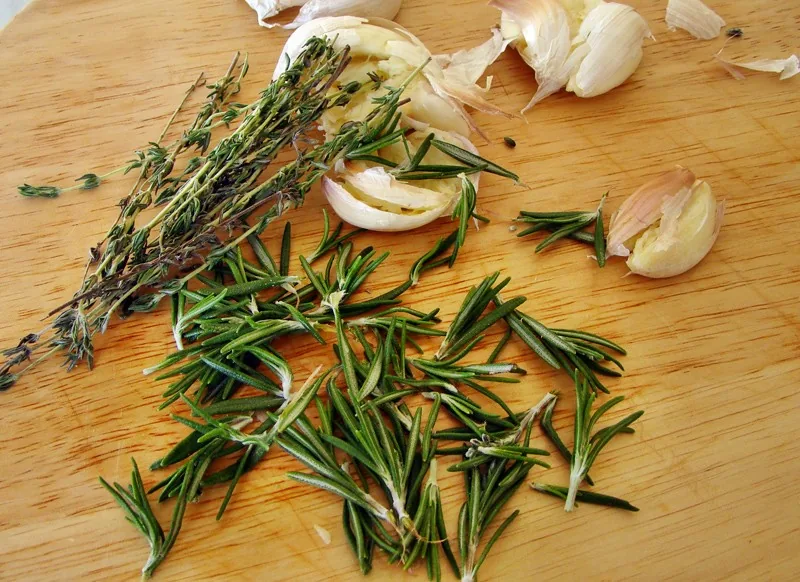 |
Now it’s time for the herbs. I add the thyme in sprigs, and strip the rosemary ‘sprigs’ from the thick stem. I crush the garlic with a knife and then remove the skin. There you go. |
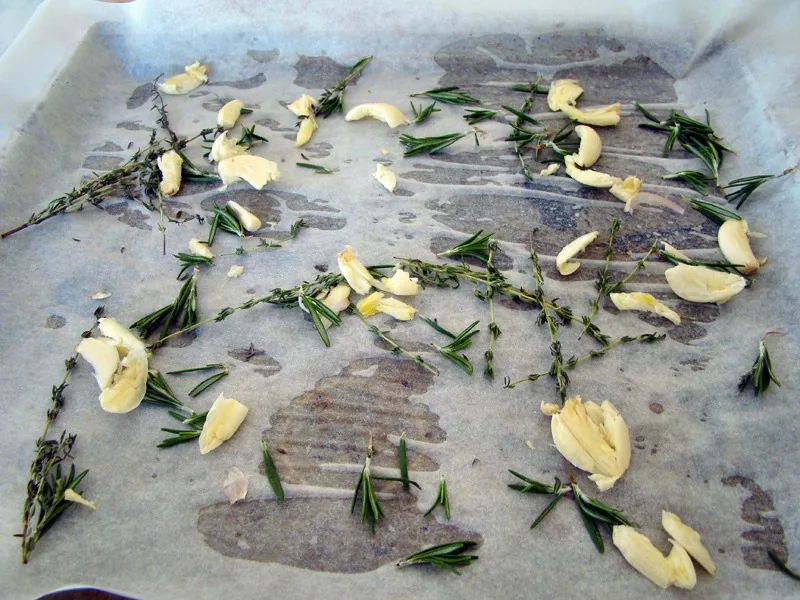 |
I line a baking tray with baking paper, having dampened it with water first – this way the paper sticks better to the metal and doesn’t bunch up. I spread the herbs and garlic evenly across the tray. |
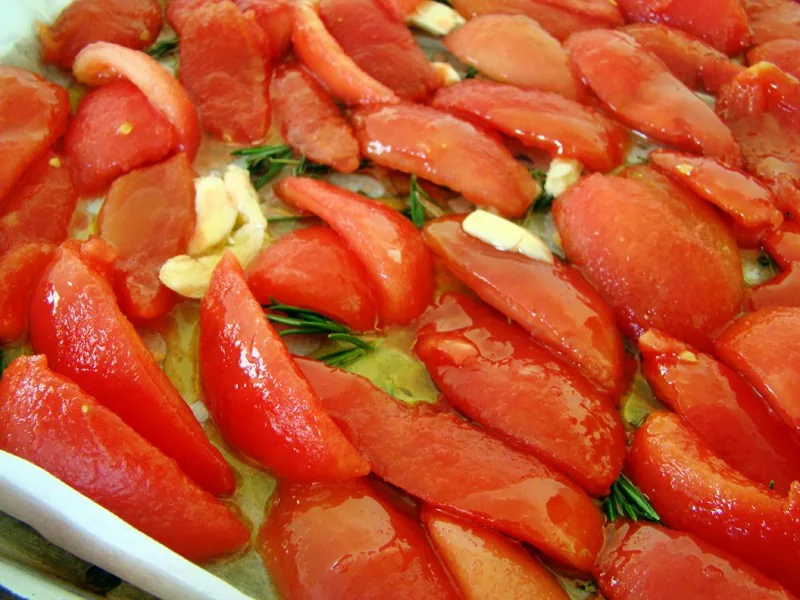 |
I arrange the tomatoes in a single layer on top and drizzle them with olive oil. Look how lovely it is! At this stage, something inexplicable happens: a few tomato wedges seem to vanish into thin air. |
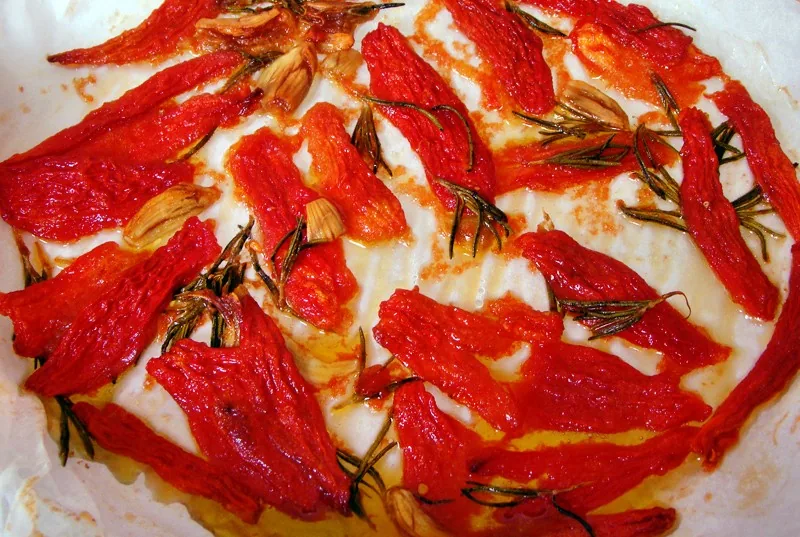 |
And now I pop all this splendour into the oven, preheated to 110°C on the fan setting. You can forget about the tomatoes for two hours. My confit usually takes between 2.5 and 3 hours to cook. This is what you should end up with. |
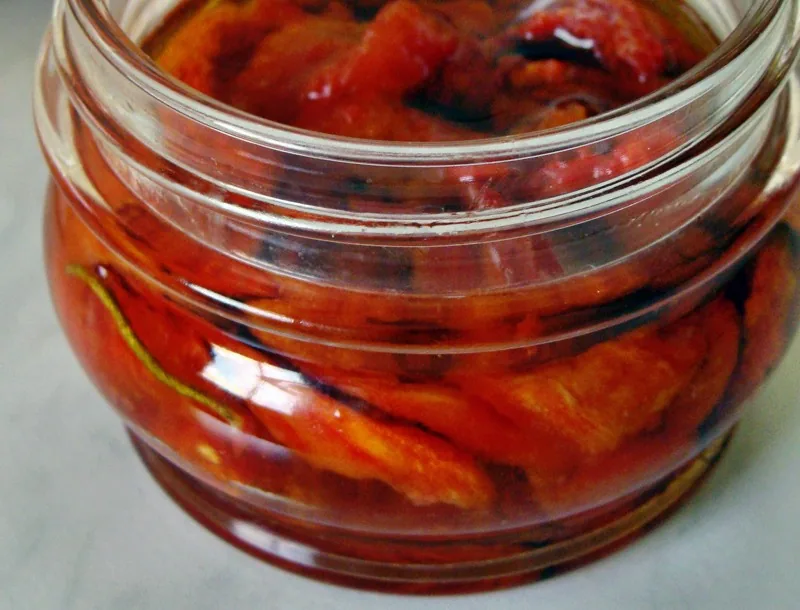 |
The herbs and garlic have already released their flavours into the oil and are no longer needed, but the oil is just as important as the tomatoes – under no circumstances should you pour it away! I transfer the tomatoes to a jar and carefully pour the oil off the paper. I add fresh olive oil to just cover the tomatoes. Done! |
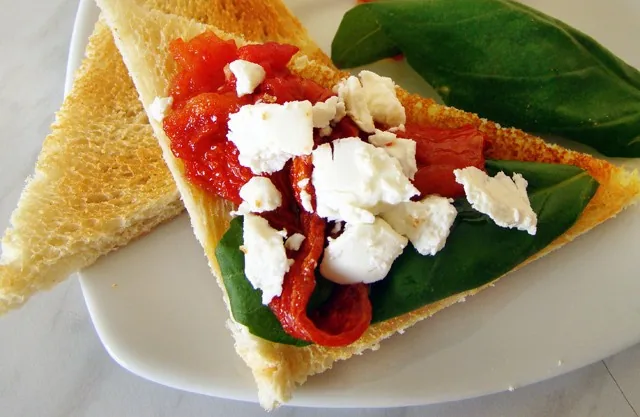 |
There are loads of ways to enjoy this dish. It can be served as an appetiser with fresh baguette or ciabatta. You could make small sandwiches, adding fresh basil and sheep’s cheese, or use them to garnish a plate with a main course – they look absolutely brilliant. Bon appétit! |