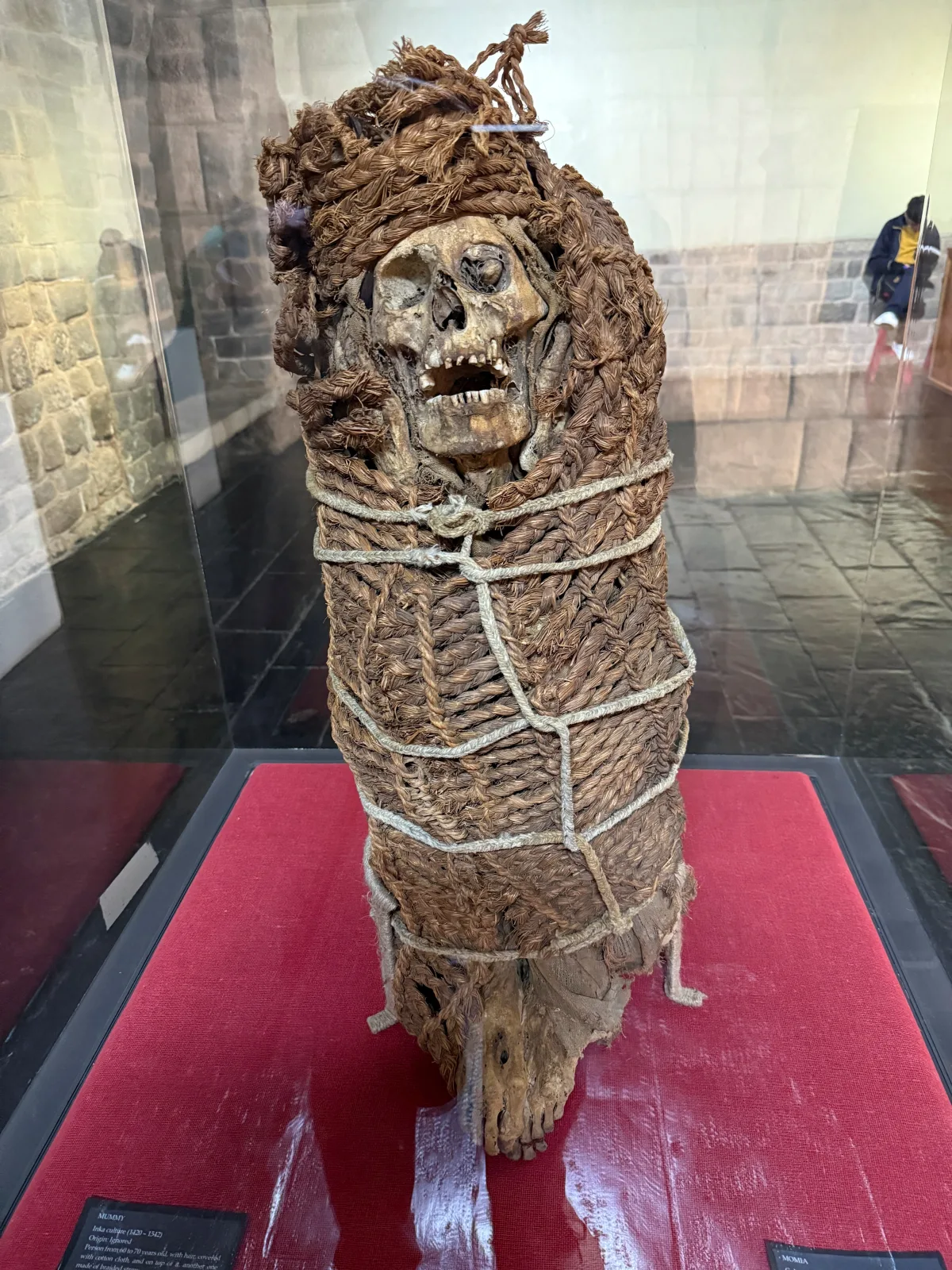
Santiago, Chile. Researchers have recovered ancient variola virus DNA from the mummies of two people who died during the early Spanish colonial period in an Inca community in northern Chile, providing the first direct molecular evidence of smallpox brought from the Old World to the Americas.
Evidence from colonial-era mummies
The two individuals lived in the southern reaches of the former Inca Empire, at a site near the Pacific coast close to Camarones Cove in Chile.
One was a woman aged 30 to 35, while the other was a man aged 18 to 20. Their bodies were naturally mummified and buried in bundles, wrapped in camelid wool blankets and accompanied by grave goods, according to study co-author Constanza de la Fuente Castro, a Universidad de Chile biological anthropologist specialising in ancient DNA.
Extinct viral lineage
Smallpox is caused by the variola virus. Genome analysis showed that the viruses found in the two bodies belonged to an extinct lineage positioned evolutionarily between strains known from medieval Europe and those that circulated in later centuries.
The study, led by Trinity College Dublin geneticist and doctoral student Bruno Romero González, was published in the journal Science.
Impact on indigenous populations
Spanish conquistadors arrived in the Americas about five centuries ago with muskets, cannons, armour, horses and attack dogs as they colonised the region. However, smallpox and other infectious diseases had the greatest impact on indigenous populations.
Europeans arrived in the Americas in 1492. Indigenous people had not previously been exposed to smallpox and had no natural immunity. Transmitted through person-to-person contact, the virus contributed to a major population collapse.
The earliest documented smallpox outbreak in the Americas occurred in 1518 on Hispaniola, now shared by Haiti and the Dominican Republic, while the island was being settled by Spain, Romero González said.
Global disease history
Smallpox was one of the most devastating infectious diseases in human history, according to Trinity College Dublin geneticist and study co-author Shigeki Nakagome.
The disease is thought to have affected human populations for at least 1,500 to 2,000 years, and possibly longer, before its eradication through a global vaccination campaign in 1980. Before eradication, it caused repeated epidemics worldwide and is estimated to have killed hundreds of millions of people.
In the Americas, smallpox and other viral diseases killed roughly 90% of indigenous people, according to some estimates. The population losses helped Spain defeat the Aztec Empire in modern-day Mexico, Maya city-states in Central America and the Inca Empire, which extended from modern-day Ecuador through Peru and into Chile.