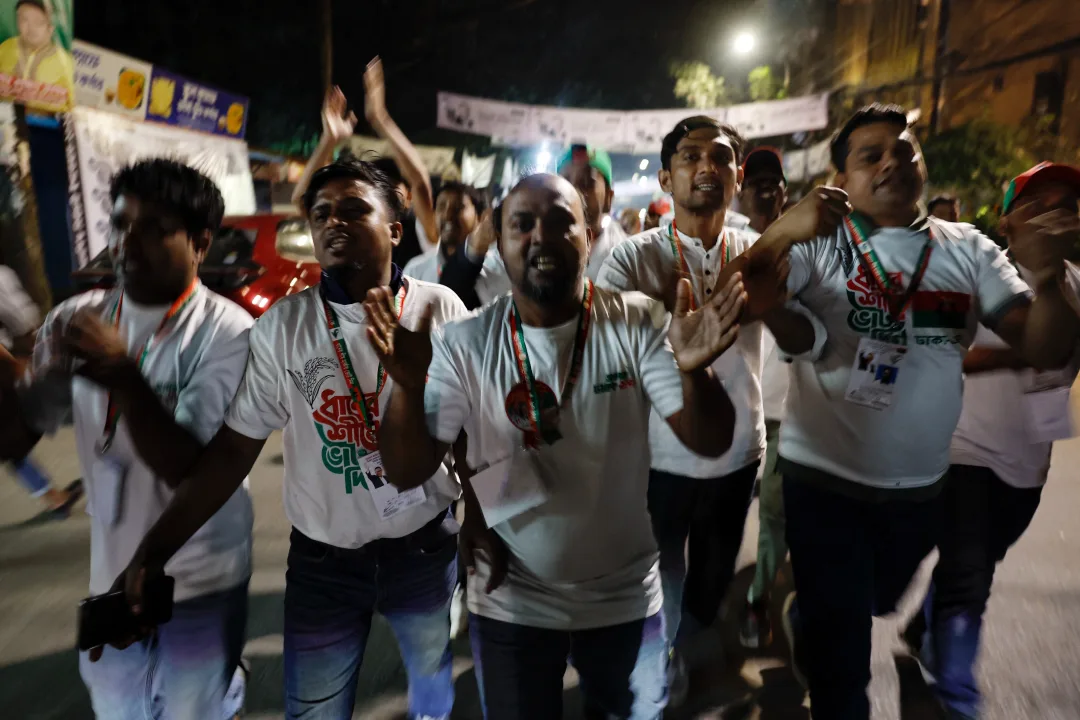
Dhaka, Bangladesh. The Bangladesh Nationalist Party (BNP) won a two-thirds majority in Friday’s general elections, a result seen as key to restoring stability after months of turmoil following the 2024 ouster of former Prime Minister Sheikh Hasina in a Gen Z-led uprising.
Seat counts and official results
Latest counts reported by domestic TV channels showed the BNP and its allies winning at least 212 of the 299 seats in the Jatiya Sangsad, or House of the Nation. The opposition Jamaat-e-Islami and its allies won 70 seats.
The Election Commission said the BNP had 181 seats, Jamaat-e-Islami 61 and others 7, with full official results not expected before noon (0600 GMT) on Friday.
BNP response and post-election conduct
The BNP, returning to power after 20 years, thanked the public and called for special prayers on Friday for the nation and its people.
“Despite winning … by a large margin of votes, no celebratory procession or rally shall be organised,” the party said in a statement.
Performance of National Citizen Party
The National Citizen Party (NCP), led by youth activists who played a key role in toppling Hasina and was part of the Jamaat-led alliance, won five of the 30 seats it contested.
Stability concerns and reform outlook
A clear outcome had been seen as important for stability in the Muslim-majority nation of 175 million after months of deadly anti-Hasina unrest disrupted everyday life and industries such as garments, in the export of which Bangladesh is No.2 globally.
“A strong majority gives BNP the parliamentary strength to pass reforms efficiently and avoid legislative paralysis. That alone can create short-term political stability,” Selim Raihan, an economics professor at the University of Dhaka, told Reuters.
Leadership expectations and policy priorities
BNP leader Tarique Rahman is widely expected to be sworn in as prime minister. The son of the party’s founder, former president Ziaur Rahman, he returned in December to Dhaka after 18 years abroad.
In its manifesto, the BNP said it would prioritise job creation, protect low-income and marginal households and ensure fair prices to farmers.
What do you think the new government should prioritise first to restore stability and support livelihoods?