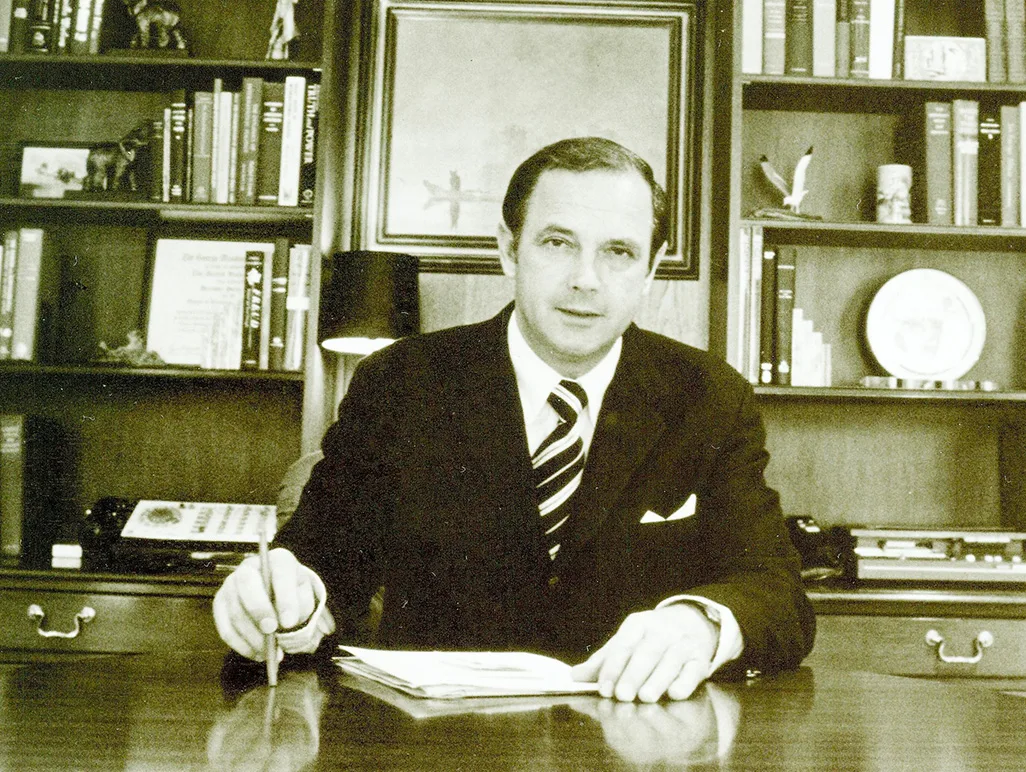
San Diego, United States. Alexander Butterfield, the former White House aide who disclosed President Richard Nixon’s secret audio taping system during the Watergate investigation, has died at age 99.
Death confirmed by family
Butterfield’s death was confirmed by his wife, Kim, to The Washington Post and the New York Times. The newspapers reported he died at his home in the La Jolla area of San Diego about a month before his 100th birthday, and no cause of death was cited.
Role in revealing the recording system
Butterfield’s disclosure of the White House listening devices and recording system triggered a legal battle over the president’s right of executive privilege. He later told journalist Alicia Shepard that he disliked being known for exposing the tapes because it made it seem as if he had “eagerly and breathlessly” told the Watergate congressional committee about them.
Military and White House service
A native of Pensacola, Florida, who grew up in California, Butterfield attended UCLA before joining the U.S. Air Force in 1948. He served as a combat pilot during the Vietnam War and commanded a squadron of tactical reconnaissance aircraft. He later worked as a military assistant to a high-ranking Pentagon aide, a role that brought him exposure to the White House.
Butterfield left the Air Force to join the White House staff as a deputy to Nixon’s chief of staff, H.R. Haldeman, a friend from UCLA. His duties included keeping a historical record of the presidency, which involved overseeing installation of the voice-activated taping system.
Watergate testimony
Butterfield had left the White House for the top job at the Federal Aviation Administration as the investigation into the June 17, 1972, break-in at Democratic headquarters in the Watergate building intensified.
One of the few in the White House who knew about the recording system, Butterfield learned he would be questioned by the Senate Watergate Committee, officially the Select Committee on Presidential Campaign Activities. He decided neither to lie nor volunteer information.
In a private preliminary session, a Republican staff attorney asked whether the White House had a recording system, and Butterfield reluctantly acknowledged that it did. On July 16, 1973, three days after his initial closed-door disclosure, he appeared before the Senate committee at a televised meeting, where Fred Thompson, then counsel for the Republicans on the committee, asked the same question.
What do you consider Butterfield’s most significant contribution to the Watergate investigation?