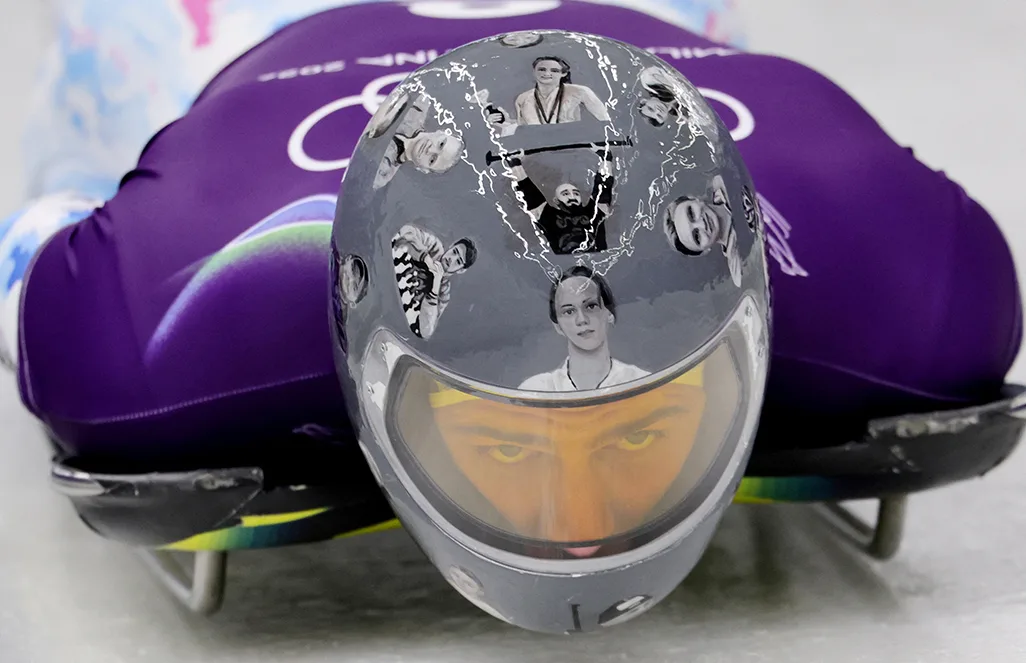
Milan, Italy. The Court of Arbitration for Sport (CAS) on Friday dismissed Ukrainian skeleton racer Vladyslav Heraskevych’s appeal to be reinstated in the Milano Cortina Olympics after he was disqualified over his “helmet of remembrance.”
Disqualification and neutrality ruling
The 27-year-old was removed from the Olympic programme on Thursday when the International Bobsleigh and Skeleton Federation jury ruled that imagery on his helmet, depicting athletes killed since Russia invaded Ukraine in 2022, breached rules on political neutrality.
CAS decision and hearing
“The CAS ad Hoc division dismissed the application and found that freedom of expression is guaranteed at the Olympic Games but not on the field of play which is a sacred principle,” CAS secretary general Matthieu Reeb said, reading from a statement following an eight-hour hearing.
Heraskevych had sought reinstatement or, at minimum, a run supervised by CAS ahead of the final two runs in his competition on Friday evening.
Response from Heraskevych
“CAS has failed us. We will consider our next steps,” he told Reuters.
IOC involvement and proposed compromise
The case has dominated headlines at the Olympics, with International Olympic Committee President Kirsty Coventry meeting Heraskevych on Thursday morning at the sliding venue in a failed last-minute attempt to broker a compromise.
The IOC suggested he wear a black armband and display the helmet before and after the race, but said using it in competition breached rules on keeping politics off fields of play.
Athletes can raise issues of interest or concern to them at team meetings, with journalists and on social media, but not during competition or medal ceremonies.
Threat claims and criticism of IOC decision
Before the start of the CAS hearing, Heraskevych told reporters he was getting threats from Russians, which he did not specify further, and blamed the IOC’s decision for that.
“I believe that these Games now and this act of the IOC also serves as an instrument of propaganda for Russia,” Heraskevych said. “I still receive a lot of threats from the Russian side.”
What do you think the ruling means for athletes seeking to express concerns during Olympic competition?