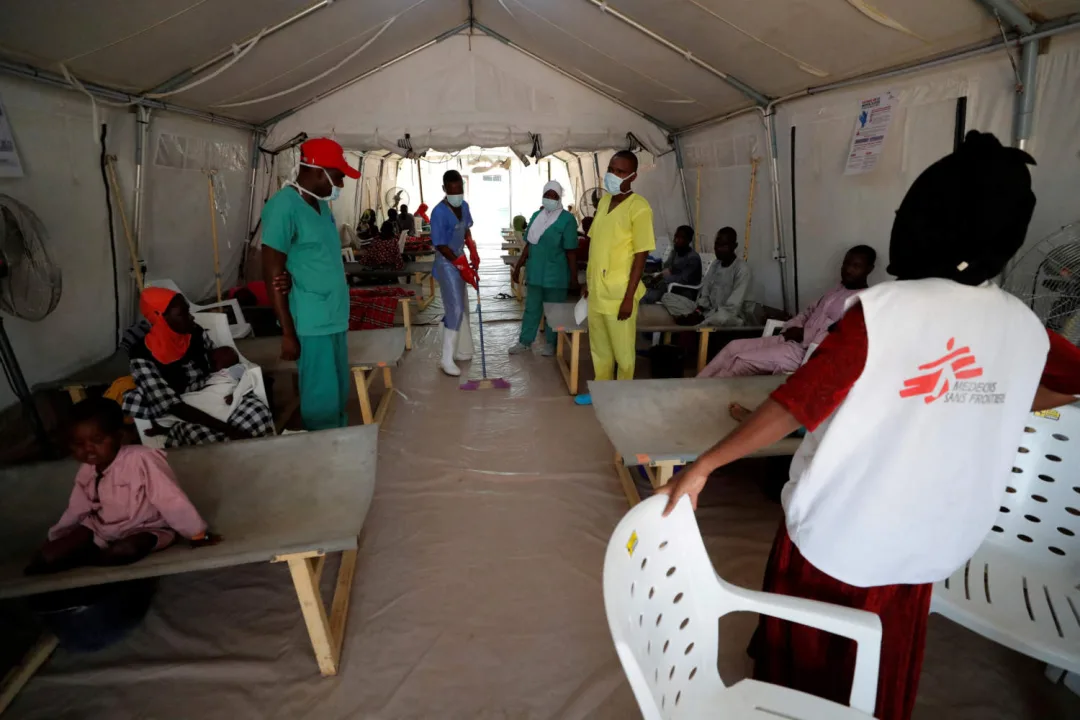
Maiduguri, Nigeria. A cholera outbreak that began in early May in Nigeria’s northeastern Borno state has killed at least 74 people and infected more than 7,800, overwhelming health facilities, Médecins Sans Frontières said on Tuesday. The aid group said infections were rising sharply each day across the affected areas.
Outbreak spreads across Borno
Médecins Sans Frontières said 7,850 suspected cases had been recorded across 14 local government areas as of June 7, citing the state ministry of health.
Pressure on fragile health system
The outbreak is straining an already fragile healthcare system in a region affected by a 17-year Islamist insurgency, mass displacement, and poor water and sanitation, raising the risk of wider spread if containment efforts fail.
Response in Maiduguri
Médecins Sans Frontières, working with the state ministry of health, has set up a cholera treatment centre in the capital, Maiduguri, to support the response.
“Every day, we see more people arriving with severe watery diarrhoea and dehydration, many of whom have travelled long distances to reach care,” said Bienfait Tombola, MSF project medical coordinator for the surge response in Maiduguri.
Treatment and planned vaccination campaign
Médecins Sans Frontières said it had treated 7,439 patients, averaging about 230 admissions per day, with more than 500 cases recorded on June 5 alone, the highest number admitted in a single day since the response began.
Cholera, a waterborne disease, thrives in areas lacking clean water and sanitation. Authorities are planning a vaccination campaign, Médecins Sans Frontières said, as the aid group continues to scale up treatment, hygiene and surveillance to contain the outbreak.