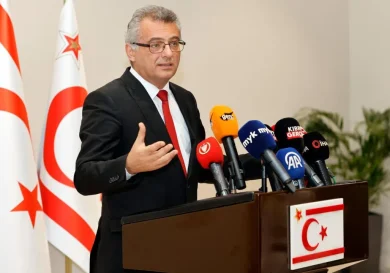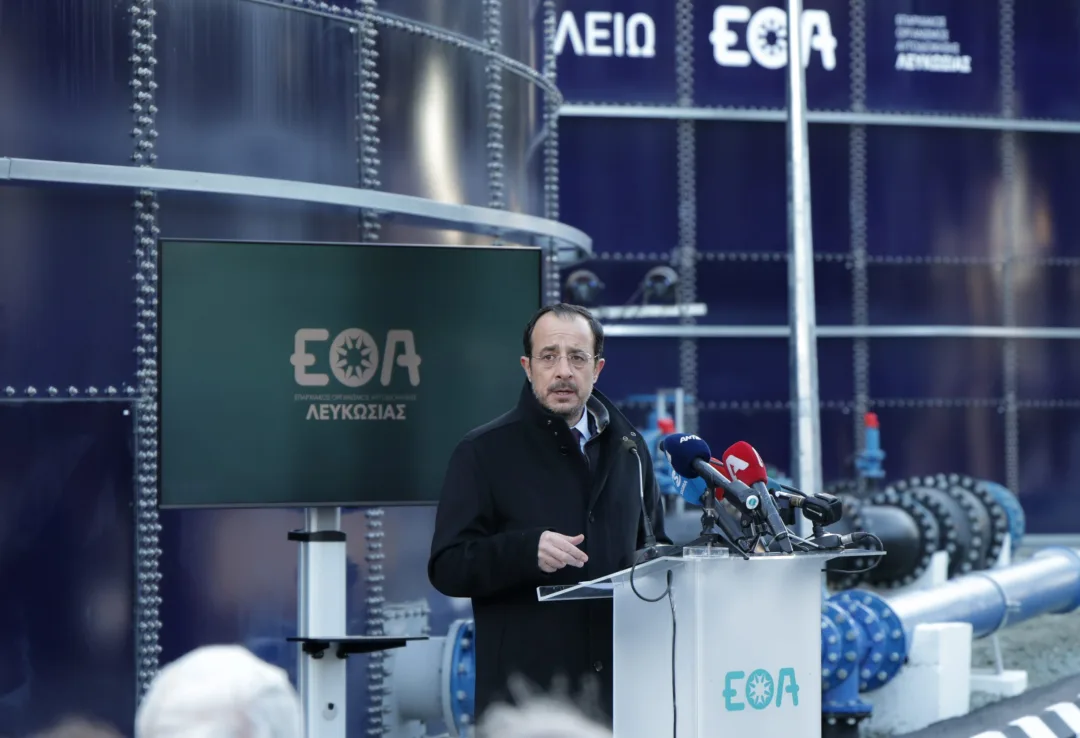
Nicosia, Cyprus. President Nikos Christodoulides inaugurated two glass-lined-steel water tanks with a capacity of 17,200 cubic metres at the Nicosia district local government organisation (EOA) on Monday. He said the project substantially increases Nicosia’s water sufficiency, covering needs for more than 36 hours in the event of a water supply interruption.
New tanks and water security goals
Christodoulides described the project as of “decisive strategic importance” for the capital and a crucial step towards achieving water security in Cyprus. He said the tanks significantly enhance the ability to store and safely supply water in an area with greatly increased needs, adding that the challenges arising from extreme weather phenomena and water scarcity are matters of security, autonomy and resilience.
Project origins and wider strategy
Christodoulides said the initial idea for the water tanks, named ‘Cleo’ and ‘Eratos’, emerged before Cyprus was hit by its current water scarcity crisis. He said the government aimed to ensure water through specific actions including increasing the available quantity through unconventional sources, expanding and improving water storage and transportation infrastructure, and reducing demand.
Water use and desalination plans
He said Cyprus has one of the highest water usage rates among European Union member states, with some areas exceeding 500 litres per person per day, calling the rate unjustifiable. He said measures to increase available water include investments in mobile and small desalination plants, as well as ending the previous policy of using desalination plants solely for reserves, which meant stopping their operation in the event of rain.
Christodoulides said that if in previous years the desalination plants had operated at full capacity, around 110 million cubic meters would have been added to the country’s intensive balance. He said efforts were under way to ensure that mobile desalination units in Garylli and the port of Limassol would be completed by March 2026, allowing for a 20 per cent increase in current desalinated water production capacity alongside units already operating in Kissonerga and Moni.
How do you think Cyprus can reduce per-person water consumption while maintaining reliable supply?