Kathmandu, Nepal. Cypriot mountaineer Alex Larin has documented a 21-day expedition to Mount Kailash, reaching the closest permitted point to the 6,638m peak. The journey was later turned into a film titled Kailash.
Mount Kailash restrictions and significance
Mount Kailash is subject to strict climbing regulations set by the Chinese government, aimed at protecting its spiritual importance for millions of Hindus, Buddhists, Jains and Bon followers. Buddhists regard the peak as the cosmic axis, or Mount Meru, described as the spiritual centre of the universe.
Planning the September 2024 expedition
Larin and an international team of ten set out in September 2024 from Kathmandu. He said reaching Mount Kailash is no longer as difficult as it was when explorer Sven Hedin documented the region in the early 20th century, but he described it as still unpredictable.
Larin said that when he searched online for material about the mountain, he found limited content. He said some material was overly long and heavy, while other content focused mostly on spiritual interpretations, which he said left room for a more direct account of the mountain and the journey.
Film project and approach
Larin’s film Kailash uses the tagline “geography of the sacred.” He said he would like the sentence to speak for itself.
Weather and access challenges
Larin said weather was the first challenge, noting that even the narrow access window does not guarantee safe conditions. He said storms or snowfall can disrupt plans within the periods generally considered safer.
He also cited bureaucracy as a major obstacle. Entry into Tibet requires a travel permit issued by Chinese authorities, and he said groups can be stopped, delayed, or turned back after security checks even when documentation is in place.
Kailash kora and the 21-day journey
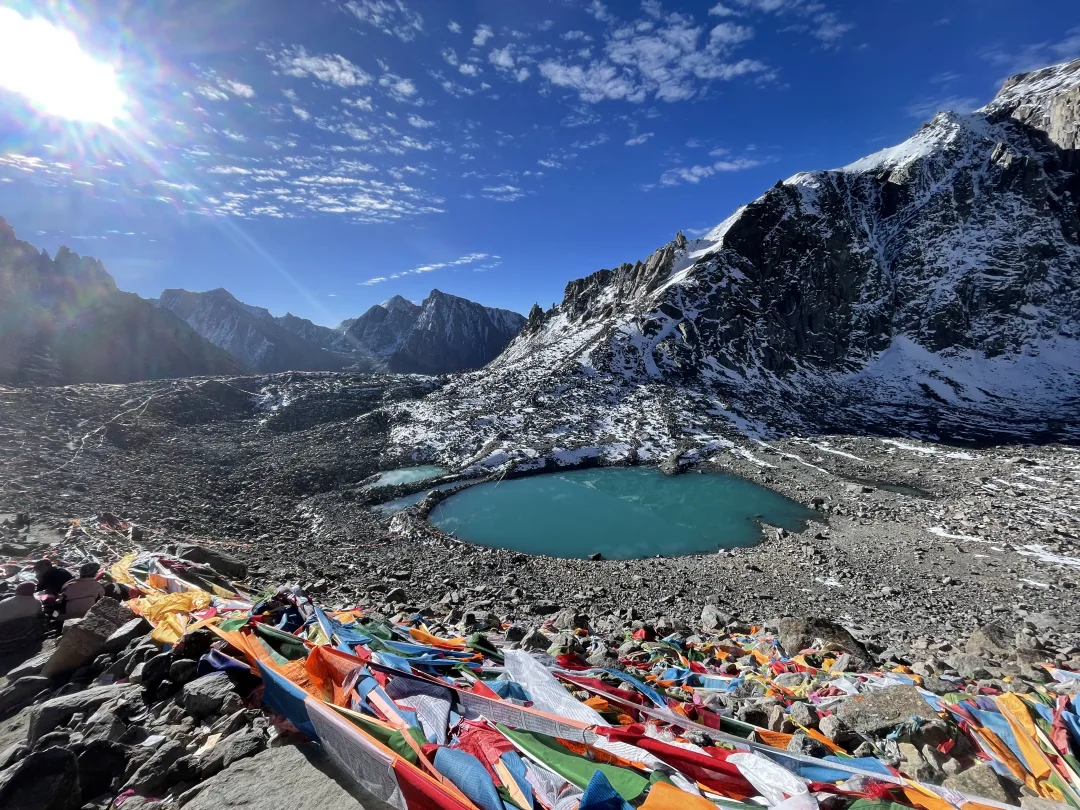
The expedition lasted 21 days. Larin said the Kailash kora, a pilgrimage involving walking around a sacred site, tested endurance as it covers 51km at altitudes above 4,000m and crosses the 5,630m Drolma La Pass. He said the route required constant attention to factors beyond the group’s control.
Floods after departure from Nepal
Shortly after the team left, heavy rains caused floods that damaged roads and sent mountain tracks downriver, closing access from the Nepalese side for the rest of the season. Larin said the group passed through in time to reach Kathmandu and board their flight, adding that the same flooding killed more than 30 people.
From raw footage to finished film
Larin said he had dreamed for years of encountering a place considered sacred and rarely seen. He said the decision to make a film followed after he showed raw GoPro footage to filmmaker friend Markus Schuetz, who recognised its potential and handled production.
During their departure from Kathmandu during the floods, Larin also recorded footage on his phone, describing collapsing roads, overflowing rivers, and parts of the route being erased in real time.
Pilgrimage rituals observed
Larin said the most lasting impression came from seeing the full prostration ritual known as “five-point veneration,” in which pilgrims lower themselves so their palms, elbows, knees, toes and forehead touch the ground. He said some travellers complete the entire 53km circuit around Kailash in this way.
Mountaineering interest in Cyprus
Mountaineering has been growing in popularity in Cyprus, with more Cypriots showing interest in adventure and exploration. However, Larin noted that Tibet remains a less popular destination among European travellers compared with major peaks such as Everest and K2.
What part of Larin’s Mount Kailash journey would you most want to learn more about?