Brussels, Belgium. Cyprus has positioned water security as a central pillar of European resilience policy, with a senior official warning that water has become a strategic resource tied to resilience, security and stability.
Water policy framed as strategic issue
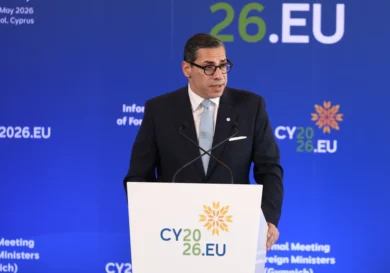
Speaking during discussions held in parallel with the EU council of environment ministers, the agriculture ministry’s permanent secretary, Dr Costas Constantinou, said water policy now extends beyond environmental management into economic planning, climate adaptation and geopolitical stability.
He said water is no longer only an environmental issue, placing it within the EU’s broader strategic agenda as rising temperatures and declining rainfall intensify pressures.
Mediterranean warming and pressure on systems
Constantinou said the Mediterranean basin is warming faster than the global average, with reduced precipitation and more frequent extreme weather events increasing strain on agriculture, energy systems and food security.
Cyprus water model and supply status
Cyprus presented its approach as an example of long-term adaptation to scarcity, with more than 70 per cent of domestic water supply derived from desalination and over 85 per cent of treated wastewater reused to support irrigation and reduce dependence on overexploited aquifers.
Current desalination output stands at about 245,000 cubic metres per day, with plans to expand capacity to 12 operational units by the summer period.
Reservoir levels were reported at around 22.7 per cent of capacity, or about 63 million cubic metres, compared with 25.1 per cent at the same point last year.
While recent rainfall has improved inflows, authorities are continuing to manage supply risks, including rotational water cuts in parts of Larnaca linked to operational issues at desalination plants.
Management tools and investment gap
Constantinou highlighted public-private partnerships and digital systems as tools to improve efficiency and transparency in water management, while also referring to a structural investment gap across the sector.
How should EU countries balance investment between desalination, water reuse, and demand reduction to strengthen water security?