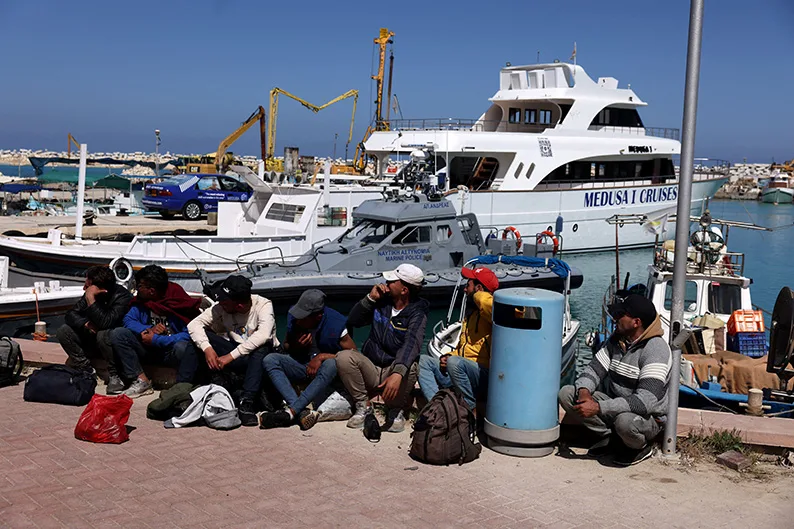
Nicosia, Cyprus. Cyprus Deputy Migration Minister Nicholas Ioannides welcomed the European Union’s new agreement aimed at enabling faster return procedures for irregular third-country migrants, calling it a landmark measure for the bloc’s migration policy. He said the deal was particularly significant for frontline member states such as Cyprus.
Agreement on return procedures
Ioannides said the swift conclusion of the file within a tight timeframe reflected the commitment of EU institutions to establish a set of common rules on effective returns as part of a holistic migration system.
He said the agreement sent a clear message that irregular entry could not lead to long-term residence in the European Union.
Impact on asylum systems
According to Ioannides, effective returns help decongest national asylum systems, protect social cohesion and prevent abuse of asylum procedures.
He said an effective return policy was a necessary element of a functional migration and asylum management system in the EU.
Link to the migration and asylum pact
The provisional agreement is set to complete the new European Pact on Migration and Asylum, which enters into force on June 12, 2026.
Ioannides said the return regulation, together with the new pact, would strengthen the European effort to better manage migration flows, speed up decision-making and implementation, protect those entitled to international protection and effectively return those without the right to remain.
Return hubs and obligations
The new regulation provides for the creation of so-called return hubs in third countries for illegal migrants. The hubs are intended to serve either as the migrant’s final destination or as transfer centres to facilitate return to their home country or another third country.
It also sets strict obligations for illegally residing migrants, making it mandatory for them to leave the member state concerned and cooperate with local authorities, while outlining consequences for non-compliance.
Possible penalties
The consequences include reduced allowances or benefits, or refusal to grant incentives intended to promote voluntary return.
Member states may also impose criminal sanctions, including imprisonment, where this is permitted under applicable national law.