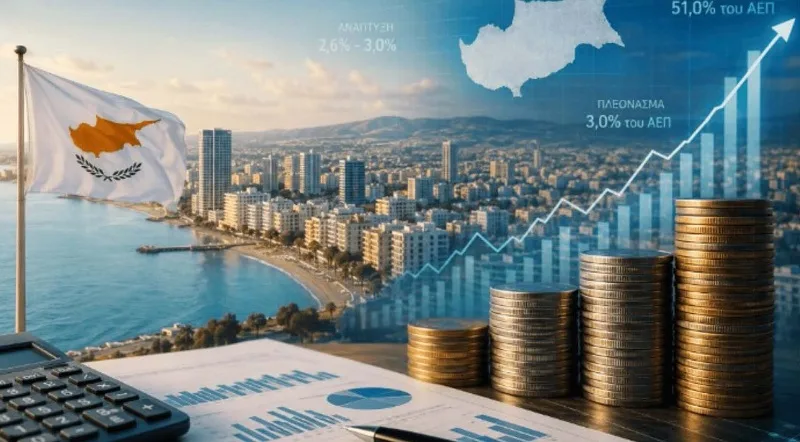
Nicosia, Cyprus. Cyprus has recorded strong growth, fiscal surpluses, declining public debt and low unemployment in 2026, but economists say macroeconomic stability alone is not enough. They argue the country must shift from attracting wealth to producing knowledge, technology and greater domestic value added.
Strong macroeconomic position
Cyprus is described as being in a strong economic position in 2026, with growth remaining well above the euro area average, the fiscal balance still in surplus and public debt declining at a pace that compares favorably with many European economies. The country has also moved away from a period of persistent macroeconomic imbalances.
The article says this improvement is real and should not be underestimated, citing fiscal consolidation, investment credibility, strong growth and low unemployment.
Warning against complacency
The article warns that the strength of the indicators can become dangerous if it leads to complacency. It says the recovery of macroeconomic indicators does not automatically mean the productive model has changed.
According to the article, Cyprus continues to operate largely as an economy based on services, real estate, consumption and tax attractiveness. It states that while GDP is expanding, the productive engine remains old fashioned.
Stabilisation versus transformation
The article draws a distinction between post-crisis stabilisation and the creation of a high value added economy. It says the first objective has largely been achieved, while the second remains open, difficult and politically demanding.
It adds that economic policy should be judged not only by improvements in indicators, but also by whether a country produces more domestic value, retains the wealth it creates and turns stability into productive resilience.
Balance of payments as a measure
The article says the most revealing indicator of the Cypriot productive model is not GDP but the balance of payments, as it shows whether income produced by the economy remains in the country or whether the country functions as a transit space for value.
In Cyprus, the picture is described as mixed. The country exports services successfully, but it also imports goods on a large scale and records a substantial outflow of primary income.