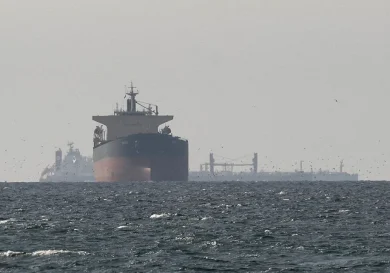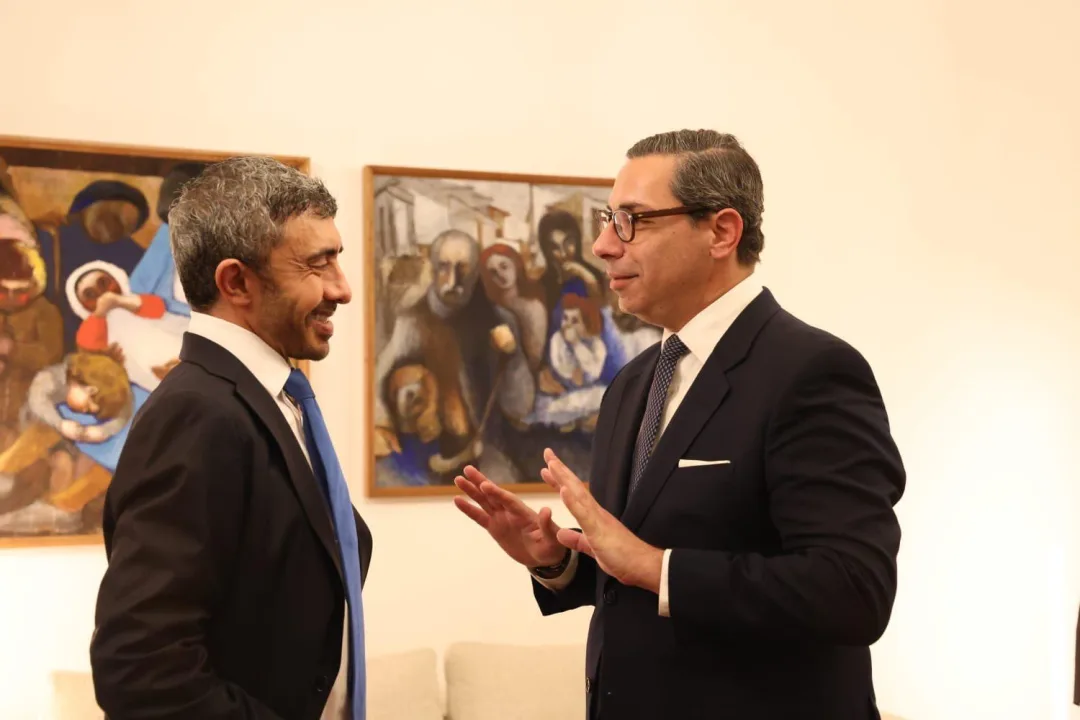
Nicosia, Cyprus. President Nikos Christodoulides and Foreign Minister Constantinos Kombos met United Arab Emirates Foreign Minister Abdullah bin Zayed Al Nahyan on Monday as the UAE faced recent strikes amid the broader conflict involving the United States, Israel and Iran.
Meeting and remarks on regional developments
Kombos said in a social media post that the three held a “substantive discussion” on “the profoundly concerning developments in the region”.
He said Cyprus’ solidarity was reiterated “in the face of the indiscriminate and unjustifiable attacks against the United Arab Emirates,” adding that “diplomacy and dialogue is the only sustainable path to de-escalation and stability”.
UAE reports bombardments and security response
Major cities in the UAE, including Dubai and Abu Dhabi, have been targeted by Iranian bombardment in recent days.
The UAE declared that it was in a “state of defence” on Sunday after receiving more than 1,000 ballistic missiles since the start of the month.
The UAE foreign ministry described the strikes as a “direct threat” to internal security, while saying it does not wish to be drawn into the conflict as a party.
It also said it “reaffirms its full right to take all necessary measures to safeguard its sovereignty, national security, and territorial integrity, and to ensure the safety of its citizens and residents”.
Earlier Cyprus-UAE declaration on disputed islands
Cyprus previously backed the UAE in a dispute with Iran last year when it signed a joint declaration stating its “principled support for the sovereignty of the United Arab Emirates, especially as regards its three islands, Greater Tunb, Lesser Tunb and Abu Musa”.
Abu Musa, Greater Tunb and Lesser Tunb are located in the Persian Gulf. Abu Musa, the largest, is roughly at the midpoint between Dubai and the Iranian coastal town of Bandar Lengeh and has a commercial airport served by flights to mainland Iran.
Greater Tunb and Lesser Tunb lie further northeast, near the Iranian island of Qeshm, and have a combined population of around 300.
In the modern era, the dispute over the islands’ ownership dates to the period when Britain ruled the Trucial States, the predecessor to the modern UAE.
How do you think Cyprus’ position could affect its diplomatic role in the region?