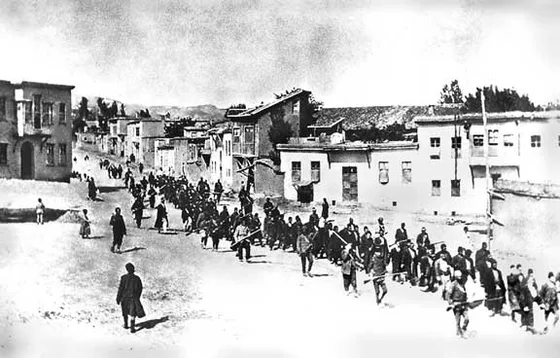
Nicosia, Cyprus. Political parties in Cyprus issued statements on Friday to mark Armenian Genocide Remembrance Day, calling for international recognition of the events of 1915.
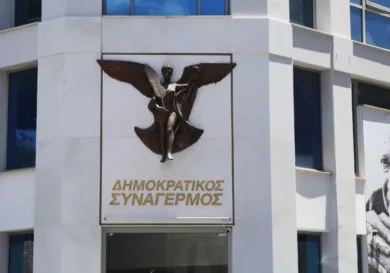
Disy statement
Disy described the events of 1915 as the start of “a campaign of extermination” against the Armenian people by “the Ottoman Empire and the Young Turk movement”.
The party said Cyprus would “continue to stand by the Armenians and support efforts for international recognition of the genocide”, noting that the Cypriot government, along with Armenia, France, Germany, Greece, and the United States, recognises the death of an estimated 1.5 million Armenians in 1915 as a genocide carried out by the Ottoman Empire.
Disy said Turkey, Azerbaijan, and Pakistan consider the deaths to be casualties of the first world war, while countries including the United Kingdom and Spain have not formally declared them to be a genocide.
It added that “the more Turkey refuses to acknowledge the crimes it committed, the further it moves away from the principles of international law”, stressing that “history remains unchanged and recorded, offering us all the necessary lessons”.
Disy expressed “full support” for the Armenian people and diaspora in what it described as their “just struggle for international recognition of the genocide”.
Akel statement
Akel said the Armenian genocide remains “a black page in the history of humanity”, paying tribute to the victims and expressing “unlimited respect” for the diaspora.
The party highlighted the presence of the Armenian community on the island as “a living and valuable part of our history and society”.
It said “the universal recognition of the Armenian genocide is, and must be, the duty of every modern state”, adding that recognition of historical truth is “a necessary condition for reconciliation and peace”.
Akel also said that “everyone, and especially Turkey, must recognise historical truth and restore it”, while expressing support for “democratic voices within Turkey itself”.
What do you think international recognition of the events of 1915 would mean for reconciliation and peace today?