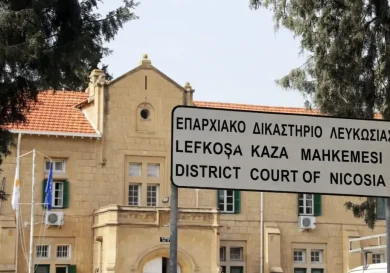
Nicosia, Cyprus. Cyprus’s post-crisis economic recovery has been cited as a success marked by a return to investment-grade credit ratings, robust growth led by the ICT sector, and a declining debt-to-GDP ratio. The same account says the recovery carried major costs tied to the 2013 banking collapse and resolution measures.
Recovery indicators and stated cost
The account describes the official narrative of the recovery as a triumph of “neoliberal economics” and responsible governance, noting investment-grade ratings, robust growth driven by a burgeoning ICT sector, and a debt-to-GDP ratio on track to reach 51 per cent. It also cites what it calls a “price of recovery” involving a systemic transfer and destruction of wealth totaling more than twice the island’s 2013 GDP, or more than €40 billion, depending on what is included in the calculation.
Banking-sector scale and exposure before the crisis
By the end of 2012, the account says Cyprus’s economy resembled a hyper-leveraged investment fund, with the banking sector reaching €126.4 billion, or 650 per cent of national GDP. It says the sector consisted of domestic loans, loans in Greece via branches, a securities portfolio including large holdings of Greek government bonds, and other assets linked to foreign subsidiaries and illiquid deferred tax assets.
Greek debt haircut and emergency liquidity
The “Private Sector Involvement” (PSI), described as the Greek debt haircut, is presented as a decisive event, with Greek government bonds treated as “risk-free” and held without capital buffers. The account says the PSI produced a €4.1 billion loss, undermining capital adequacy, and that by late 2012 the system relied on €10 billion in Emergency Liquidity Assistance (ELA) amid deposit outflows.
March 2013 bail-in proposals and parliamentary vote
In March 2013, Cyprus is described as the site of the Eurozone’s “bail-in” experiment. The Eurogroup proposal of 16 March is described as a one-off levy on deposits of 6.75 per cent on insured amounts and 9.9 per cent on uninsured amounts, aimed at raising €5.8 billion.
On 19 March 2013, the Cypriot Parliament rejected the bill, with 36 voting against and 19 abstentions, and one MP absent. The account describes this outcome as a catalyst for subsequent measures.
Allegations cited from Simmoria (The Gang)
The account references investigative journalist Makarios Drousiotis and his book Simmoria (The Gang), saying he argues the parliamentary rejection was a smoke-screen to protect Russian capital. It says Drousiotis alleges President Nicos Anastasiades was behind the “No” vote and prioritized high-net-worth clients of his former law firm over domestic savers, and that the approach shifted the burden toward a targeted seizure at the two largest banks while allegedly allowing time for “insiders” to move funds through foreign branches.
Final resolution, asset sale, and deposit seizures
The final resolution on March 25, 2013, is described as a “controlled demolition.” The account says Greek operations of Cypriot banks were carved out and sold to Piraeus Bank at under-valued prices, insulating the Greek system while finalizing the insolvency of the Cypriot parent banks.
It says €8 billion in uninsured deposits were seized, including €4.2 billion from Laiki Bank and €3.8 billion from the Bank of Cyprus, with depositors converted into shareholders of an institution they did not intend to support.
Capital bonds marketed to retail investors
The account says losses also came through “capital bonds,” including Convertible Capital Securities and Enhanced Capital Securities marketed between 2010 and 2012 to retail investors and pensioners as high-yielding bank bonds. It describes them as Tier 1 capital instruments and says that in 2013 about €2 billion in capital value disappeared, with the issue being addressed in 2026 through belated, partial compensation schemes.
What do you think were the most significant long-term effects of the 2013 bail-in on Cyprus’s economy and public trust?