Nicosia, Cyprus. Energy Minister Michalis Damianos said small and medium-sized businesses must be placed at the centre of Europe’s competitiveness agenda to strengthen the EU’s resilience, strategic autonomy and industrial base.
Meeting focus and theme
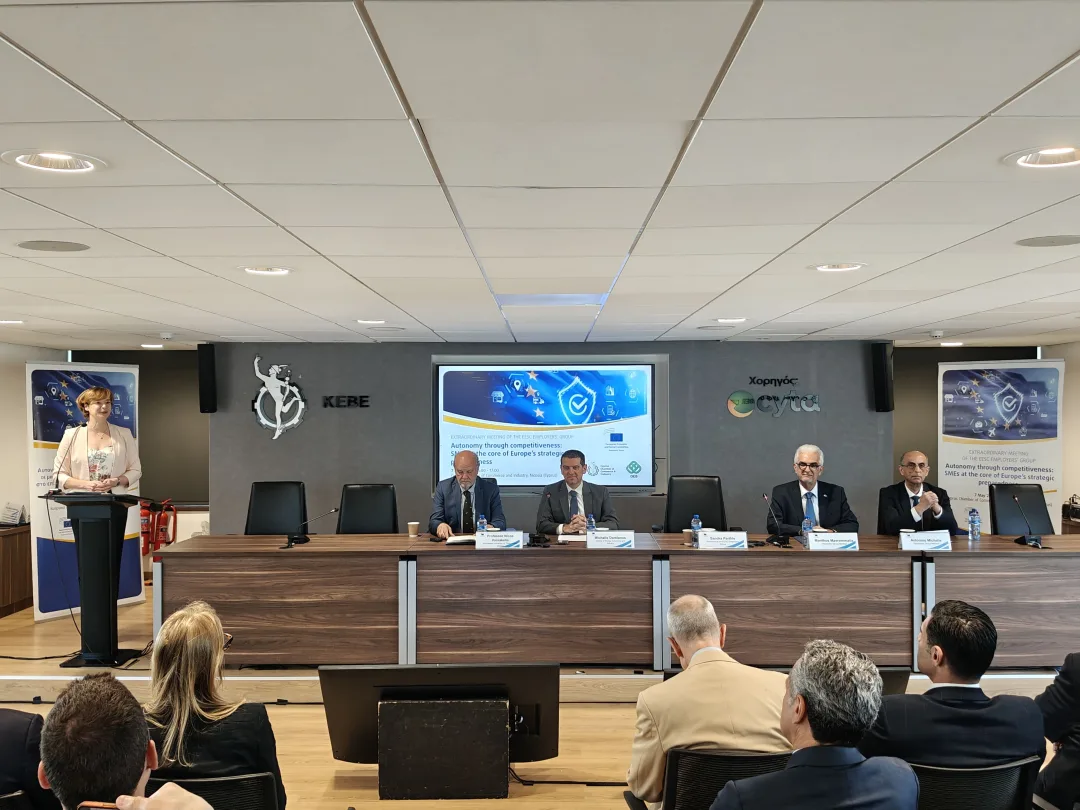
Damianos made the remarks at an extraordinary meeting of the Employers’ Group of the European Economic and Social Committee (EESC), hosted by the Cyprus chamber of commerce and industry (Keve). The meeting, held in Cyprus as part of the country’s Presidency of the Council of the EU, focused on “Autonomy through competitiveness: SMEs at the core of Europe’s strategic preparedness.”
Strategic autonomy and competitiveness
Damianos said the theme reflects the direction the EU must take, adding that strategic autonomy is a practical necessity shaped by geopolitical uncertainty, technological disruption and the urgency of the green transition. He said Europe’s ability to respond to geopolitical uncertainty, technological change and the green transition will depend on whether SMEs are given the tools to grow.
Cyprus SME profile and challenges
Damianos said the issue is especially pressing for Cyprus, where about 99 per cent of around 125,000 enterprises are SMEs, which he described as the backbone of employment, innovation and growth and a key support for local communities and regional development. He said SMEs are among the most exposed to Europe’s long-standing weaknesses, including regulatory complexity, high energy costs, limited access to finance and persistent skills gaps, and said addressing these constraints must be central to policy.
National measures and EU funding
Damianos said the ministry has placed SMEs at the centre of its policy framework, with measures aimed at improving competitiveness, productivity and adaptability. He listed support for entrepreneurship, better access to finance, industrial modernisation, and efforts to reduce structural barriers, including production costs, skills mismatches and weak links between services and industry. He said Cyprus has secured €227.3 million through Cohesion Policy Funds for 2021-2027, along with €124.5 million from the recovery and resilience fund and the new REPowerEU Plan, to channel more resources into the real economy.
What measures do you think would most help SMEs grow while dealing with high energy costs and skills gaps?