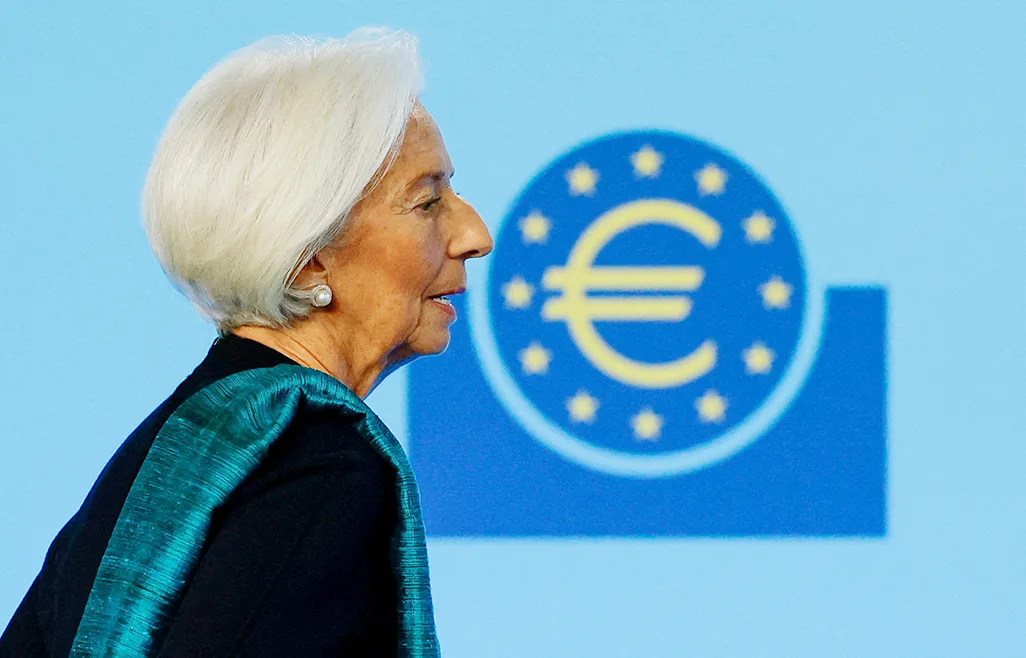
Brussels, Belgium. The European Central Bank raised interest rates by 25 basis points on Thursday, citing mounting inflation pressures linked to the war in the Middle East. It warned that the conflict poses growing risks to both prices and economic growth across the euro area.
Rate decision
The ECB Governing Council said it remains committed to ensuring inflation returns to its 2 per cent target over the medium term. It described the latest increase in borrowing costs as robust under a range of scenarios regarding the evolution of the conflict.
With the move, the deposit facility rate will rise to 2.25 per cent, the rate on main refinancing operations to 2.40 per cent, and the marginal lending facility to 2.65 per cent. The changes will take effect on June 17, 2026.
Inflation outlook
The central bank said the war in the Middle East is generating inflationary pressures and has forced it to revise its outlook for prices and economic activity.
According to the latest Eurosystem staff projections, headline inflation is expected to average 3.0 per cent in 2026, before easing to 2.3 per cent in 2027 and returning to the ECB’s target at 2.0 per cent in 2028.
Inflation excluding energy and food is projected to average 2.5 per cent in both 2026 and 2027, before declining to 2.2 per cent in 2028.
Compared with projections published in March, the ECB revised inflation forecasts higher for 2026 and 2027 because of rising energy prices, which are expected to spill over into food, goods and services prices.
Growth outlook
At the same time, the central bank cut its growth expectations, with euro area output now forecast to expand by 0.8 per cent in 2026, 1.2 per cent in 2027, and 1.5 per cent in 2028.
The ECB said the downward revisions reflected the stronger impact of the conflict on commodity markets, confidence and household incomes.
Risk assessment
The Governing Council warned that uncertainty remains exceptionally high, with upside risks to inflation and downside risks to growth depending on the intensity and duration of the energy shock and its wider effects on the economy.