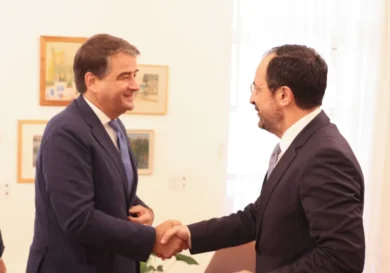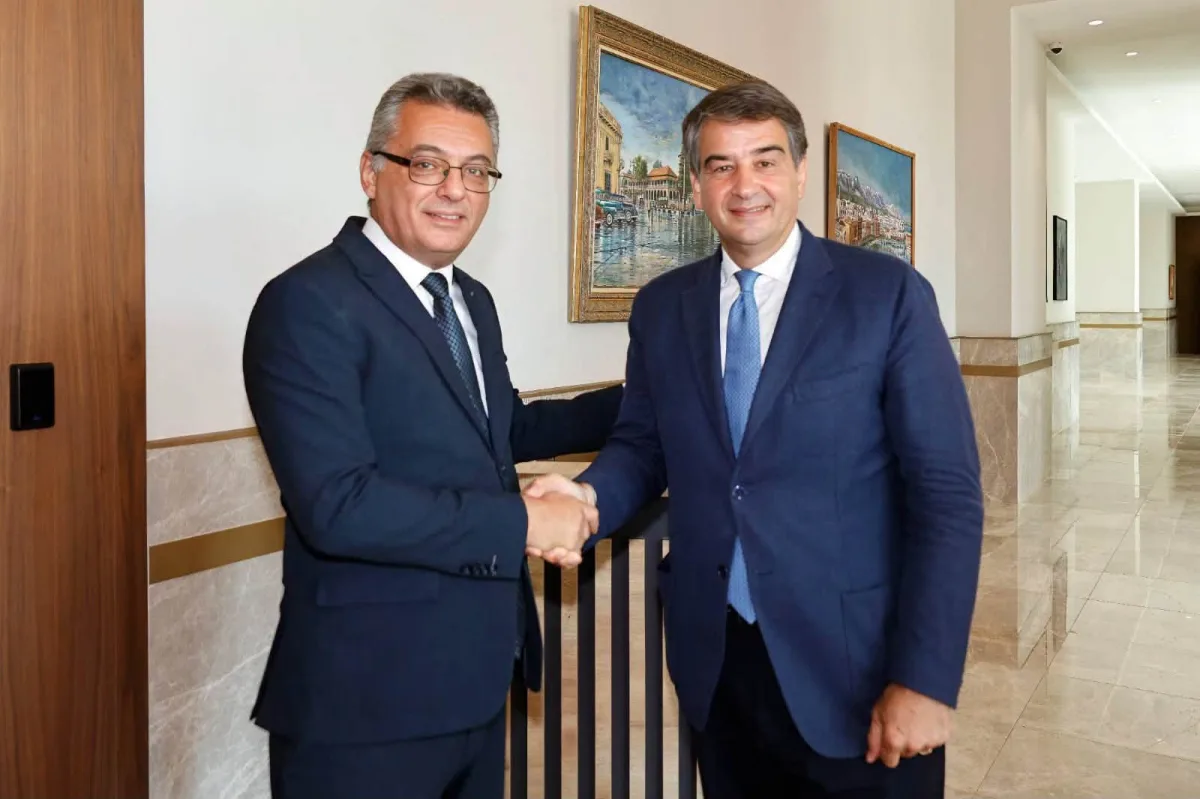
Nicosia, Cyprus. Turkish Cypriot leader Tufan Erhurman said on Friday that confidence-building measures are needed both between the island’s two sides and between the Turkish Cypriot community and the European Union, following his first meeting with European Commission Cyprus problem envoy Raffaele Fitto.
He said recent actions and decisions by EU institutions, particularly the European Parliament, had further undermined trust in the bloc.
Concerns over EU actions
Erhurman said he told Fitto that what he described as unilateral and biased attitudes, behaviours and decisions by EU institutions had damaged confidence in the EU.
He referred to a European Parliament resolution passed earlier this month on sexual violence suffered by Cypriot women during Turkey’s invasion of the island in 1974, as well as comments made by European Commission President Ursula von der Leyen during Cyprus’ tenure holding the rotating presidency of the Council of the EU.
He said confidence-building measures were needed not only with the Greek Cypriot leadership but also with the EU.
EU role in negotiations
Erhurman said he had told Fitto that, for what he described as well-known reasons, the EU could not be a party at the negotiating table. He said the bloc could nevertheless play a positive role through EU-related confidence-building measures if it wished to contribute to a fair and lasting solution on the island.
He has previously said that the EU cannot act as a mediator because the Republic of Cyprus is an EU member state.
Direct trade and Green Line issues
The meeting also addressed the implementation of the direct trade regulation, difficulties in applying the Green Line regulation, and developments concerning EU citizenship and property issues for Turkish Cypriots, Erhurman said.
The pending direct trade regulation would allow goods certified by the Turkish Cypriot chamber of commerce to be exported directly to Europe via the Green Line and receive preferential treatment within the European single market as European goods.
The regulation was proposed in July 2004, three months after the Greek Cypriot side rejected the Annan plan in a referendum and shortly after the Republic of Cyprus joined the EU.
Erhurman said he told Fitto that the isolation of Turkish Cypriots should end and that obstacles preventing them, particularly children, from becoming part of the international community should be removed.