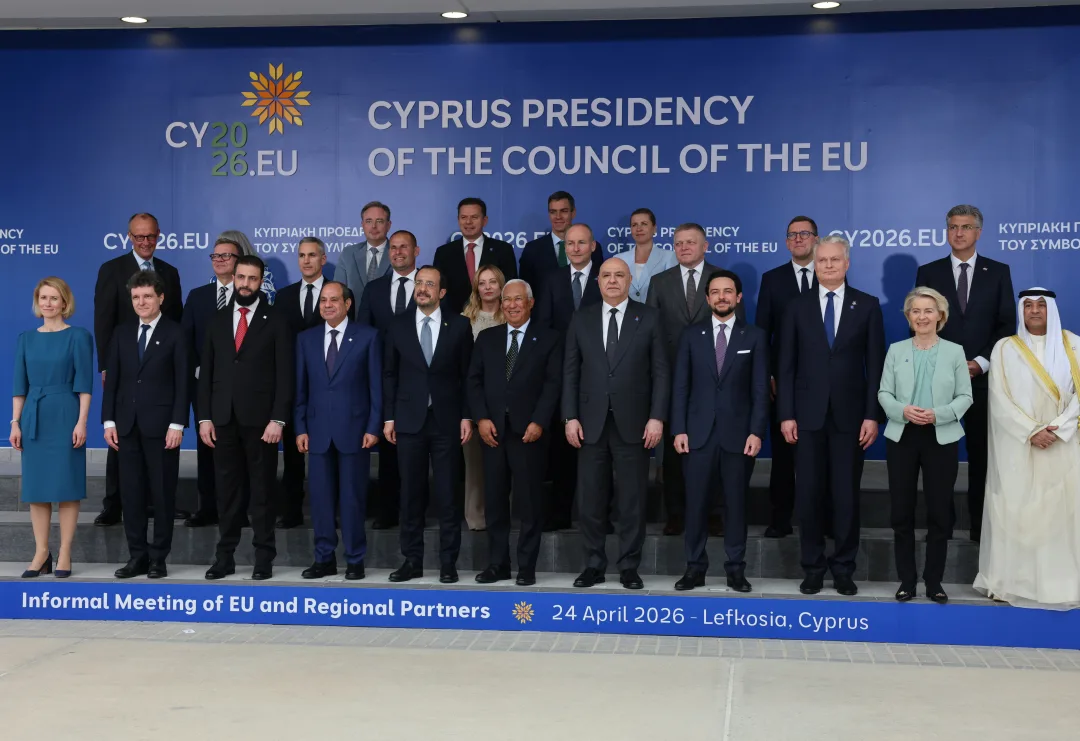
Nicosia, Cyprus. European Union leaders agreed on Friday to demand the creation of a defence “playbook” to guide responses if a member state triggers the bloc’s mutual defence clause. Cypriot government sources said “nothing has been done” in the decade since the clause was first activated.
Call for a defence blueprint
Cypriot government sources said there remains no formal operational plan or international military structure linked to Article 42.7 of the Treaty of the European Union, also known as the Lisbon Treaty. They said there is “no clear picture of procedures, capabilities, or response times across member states.”
President Nikos Christodoulides confirmed that leaders had reached an agreement with the European Commission at the summit in Ayia Napa on Thursday night for the commission to “prepare a blueprint on how we respond in case a member state triggers Article 42.7”.
Background to Article 42.7
France triggered Article 42.7 after terrorist attacks in Paris in November 2015. The treaty text states that if a member state is the victim of armed aggression on its territory, other member states “shall have towards it an obligation of aid and assistance by all the means in their power.”
Other EU member states contributed to international military missions in 2015, enabling France to redeploy troops domestically. In 2022, the European external action service released a “lessons learned” paper aimed at shoring up and formalising the EU’s mutual defence infrastructure.
Concerns over coordination and obligations
Cypriot government sources said that despite the 2022 paper, progress has not followed. They cited a lack of clarity on what support can be requested, what each member state may provide, and how quickly assistance can be delivered.
They also pointed to potential coordination problems, noting that EU institutions have no assigned role after the clause is triggered unless the state that triggers it specifically requests it. The sources stressed that assistance under Article 42.7 must not be optional, calling it “a legal obligation, not a political choice,” and said member states cannot question the reasons behind triggering the clause provided that an armed attack has taken place.
What steps do you want EU leaders to prioritise in defining procedures for responding under Article 42.7?